Editor : Martin Simamora, S.IP |Martin Simamora Press
Tampilkan postingan dengan label ASEAN. Tampilkan semua postingan

Selasa, 22 September 2015

Pesawat Tempur dan Kapal Perang Perkuat Perairan Natuna


Pemerintah Indonesia melalui Kementerian Pertahanan (Kemhan) akan memperkuat perairan Natuna dengan menambah sejumlah kapal perang dan kapal patroli serta pesawat tempur guna mengamankan wilayah Pulau Natuna dari kejahatan laut dan konflik Laut Tiongkok Selatan.

"Kita akan perkuat di sini (Natuna), baik dari TNI Angkatan Darat, Angkatan Laut maupun Angkatan Udara," kata Menhan Jenderal TNI (Purn) Ryamizard Ryacudu saat melakukan kunjungan kerja ke Pulau Natuna, Kepulauan Riau,
Rabu (16/9/2015).

Menurut dia, Pulau Natuna wajib diperkuat sejumlah alat utama sistem persenjataan (alutsista) yang dimiliki TNI. Sebab, pulau ini berbatasan langsung dengan Laut Tiongkok Selatan yang saat ini dirundung konflik.

"Di sini pulau yang paling jauh di utara, salah satu pintu gerbang Indonesia. Di utara, di Laut Cina Selatan masih ada ketegangan, antara Tiongkok dan beberapa negara ASEAN, seperti Malaysia, Vietnam, dan Filipina. Tentu Amerika juga akan hadir di tengah-tengah ketegangan ini," katanya.

Senin, 21 September 2015

China Membangun Landasan Pesawat Ketiga Di Kepulauan Laut China Selatan


Previous satellite pictures of construction and dredging under way at Mischief Reef in the Splatly Islands. © Getty Images

China terlihat sedang membangun landasan pesawat ketiga pada  teritori yang sedang diperebutkan di kawasan Laut China Selatan, seorang pakar Amerika Serikat telah mengatakan hal itu  belum lama ini pada Senin 14 September, menanggapi  serangkaian foto satelit yang diambil  seminggu sebelumnya.

Foto-foto tersebut diambil untuk Center for Strategic and International Studies atau CSIS  Washington, yang memperlihatkan pembangunan di Mischief Reef [jadi ini adalah kepulauan batu karang], satu dari sejumlah pulau-pulau buatan China yang telah diciptakan dalam kepulauan Spratly.

Sabtu, 19 September 2015

Thales Memasok Sistem Pertahanan Udara ForceShield Kepada Angkatan Bersenjata Malaysia


Thales telah menandatangani sebuah kontrak dengan The Westar Group’s Global Komited untuk memasok sistem pertahanan udara tingkat lanjut terintegrasinya, ForceSHIELD, kepada Angkatan Bersenjata Malaysia.

Sistem ini mencakup misil-misil STARStreak,  sistem radar CONTROLMaster 200 dan sistem-sistem koordinasi senjata, sistem-sistem persenjataan bergerak atau mobile: RAPIDRanger dan RAPIDRover.

CEO Thales Inggris, sebagaimana dilansir airforce-technology.com, mengatakan: “Saya senang bahwa negara lain telah memutuskan untuk membeli ForceSHIELD.
“Sensor-sensor generasi termaju ini   akan menjadi solusi yang membawa perubahan  besar yang akan memberikan  Malaysia sebuah kapabilitas berkelas dunia dengan teknologi termaju.

Jumat, 18 September 2015

ASEAN and China to step up crackdown on cyber crime

Lu Wei speaks at the China-ASEAN Information Harbor Forum
held in Nanning, Sept. 13. (Photo/CNS)

An official with China's Ministry of Public Security on Monday called on his country and members of the Association of Southeast Asian Nations to strengthen cooperation in the fight against cross-border cyber crime.

"There are new trends in cyber crime, for example terror cells using the internet to spread extremism, recruit members, plot attacks and conduct money laundering," said Zhong Zhong, deputy chief of the ministry's Internet Security Bureau.

Addressing the China-ASEAN Information Harbor Forum held in Nanning, capital of south China's Guangxi Zhuang autonomous region, Zhong said more than 90% of online fraud and gambling sites that target Chinese citizens use overseas servers and virtual private networks (VPNs).

Zhong said China-ASEAN cooperation has yielded results. In a joint-police operation against online gambling between China, Vietnam and Myanmar in 2014, 119 suspects were arrested and 64 million yuan (US$10 million) was frozen, he said.

Minggu, 13 September 2015

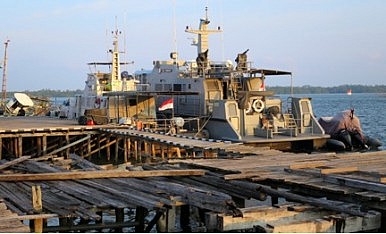
A New Indonesia Military Boost Near the South China Sea?

Indonesian navy vessels at dock, Natuna Island.
Image Credit: Victor Robert Lee

The country’s defense minister says it will strengthen its air defenses “to be prepared.”
Earlier this week, the Indonesian defense minister said that the country would boost its defenses near the South China Sea in anticipation of future threats.

Defense Minister Ryamizard Ryacudu said that Indonesia will equip the Natuna islands near the South China Sea with a port and extend its military air base runway so that it can accommodate more planes. He also added that more jet fighters would be stationed at the Ranai military air base in Natuna.

“We are not in a war situation, but the South China Sea is very close to us,” Ryamizard added. “We have to be prepared. Our weapon systems are good, but we need to add more so that we don’t need to worry all the time.”

Sabtu, 12 September 2015

What is holding up Philippines' e-government?


If you lament the slow-moving traffic in the Philippines, you shouldn’t feel impatient with other things that may move even slower in this country when it has something to do with public administration and governance.

Next to the snail’s pace in the delivery of justice in this country, we nominate the formation of an overseer for information and communications technology (ICT) as the next worst.

Now over a decade in the making, the establishment of a government body that would be in charge of developing, planning, and promoting the government’s ICT agenda is still in limbo despite being tagged as a priority measure. How difficult can this task be?

On closer scrutiny, this is a case where the horses are running full speed ahead, except someone forgot to hitch them to the chariot. We have individual ICT programs for most government agencies that thinks it needs one.

Jumat, 06 Juli 2012

Australia Memperkuat Manajemen Bencana Alam Bali

Bali Bombing 2002-
Gerry Meyers Photography
gerrymeyers.com
Pemerintah Australia berencana untuk memperkuat  sistem manajemen bencana yang ada di Bali, yang  menangani berbagai bencana baik bencana yang diakibatkan oleh manusia maupun oleh alam di pulau  itu  dengan membantu menata dan mendisain  rencana-rencana tanggap darurat yang efektif.

Gubernur Made Mangku Pastika, yang turut serta dalam delegasi yang dipimpin oleh Presiden Susilo Bambang Yudhoyono yang berkunjung ke Australi, kepada para reporter menyatakan bahwa komitmen pemerintah Australia untuk mendukung sistem manajemen bencana merupakan salah satu hasil-hasil penting dari pertemuan-pertemuan bilateral antara Indonesia dan Australi di Darwin pada awal minggu ini.

Rabu, 06 Juni 2012

Vietnam conducts comprehensive assessment of govt websites

On 25 May, Workshop on Information Security Policies towards Developing of E-Governance was hosted by Vietnam Information Security Association (VNISA) and Vietnam Computer Emergency Response Team (VNCERT), to implement Prime Minister’s Instruction and the Guidelines of Ministry of Information and Communications (MIC) on the protection of websites.

Sabtu, 10 Maret 2012

Brunei climbs 14 places to 54 on UN e-Gov't ranking

BRUNEI's e-Government structure has climbed up 14 notches to 54 out of 193 countries this year, according to the "United Nations E-Government Survey 2012 - E-Government for the People". Commenting on Brunei's previous ranking at 68th place two years ago, the Minister of Energy at the Prime Minister's Office Pehin Datu Singamanteri Colonel (Rtd) Dato Seri Setia (Dr) Hj Mohd Yasmin Hj Umar, said this is "good news" for the country. He added that among ASEAN countries, the Sultanate is third behind Singapore and Malaysia.


"This is because of the way the e-Government project has been implemented and this is good news. Moving up 14 steps is quite a good sign and improvement," he told The Brunei Times in a telephone interview yesterday evening.

The minister also commended the team at the E-Government National Centre (EGNC) for the hard work they have been putting in, noting their efforts are appreciated. Brunei's current e-Government ranking, however, did not take into account EGNC's eDarussalam, a single online portal integrating all e-government services, he said. "Next year if we look at eDarussalam and the completion of the Fibre-to-the-Home (FTH) project, that will definitely improve our standing a lot," Pehin Dato Hj Mohd Yasmin said. Pehin Dato Hj Mohd Yasmin said the EGNC will continue to work hard, and aims for Brunei to be ranked top 40, if not 30, in the next survey.
In the United Nations survey assessment of progress, it is stated that eGovernment is increasingly being viewed among countries in the vanguard as going beyond service delivery towards a framework for a smart, inclusive and sustainable growth for future generations.

Its website added the overall conclusion that emerges from the 2012 Survey in today's recessionary world climate is that while it is important to continue with service delivery, governments must increasingly begin to rethink in terms of e-Government and e-Governance.

By placing greater emphasis on institutional linkages between and among the tiered government structures, synergy can be created for inclusive sustainable development. In a foreward message, Sha Zukang, Under-Secretary-General for Economic and Social Affairs and Secretary-General of the United Nations Conference on Sustainable Development said, "The increasing role of e-Government in promoting inclusive and participatory development has gone hand-in-hand with the growing demands for transparency and accountability in all regions of the world."

"This report shows that with the right institutional framework, policies and capacity-building efforts, progress in enhancing the contributions of e-government to sustainable development is within reach," he added.

The Brunei Times

Senin, 05 Maret 2012

Indonesia Hosts Clean Power Asia To Embrace Cleaner and Renewable Energy

Asian Countries Increase Spend More on Renewable and Clean Power Than Other Developed Nations “Asian countries are overtaking developed ones in terms of spending on renewable and cleaner fossil power projects,” said Daria La Valle, the conference manager of Clean Power Asia. This is clearly illustrated by the 27 case studies of recent and upcoming clean power projects in the Asian region which will be presented at Clean Power Asia 2012 which is taking place in Bali, Indonesia in May. The annual conference and exhibition will gather some 600 leading Asian renewable and cleaner fossil power experts, utilities, energy ministries, regulators, investors and technology and service providers to discuss the latest renewable and cleaner fossil power developments in the region as well as the main challenges that utilities face to adopt greener power sources.

Future of renewable energy in developing world

The future of renewable and clean energy is now in the developing world” says Daria La Valle, “and new government policies have made it more palatable for foreign investors to finance clean power projects here in Asia through various financial instruments and clearer regulatory frameworks.”

The Clean Power Asia conference manager continues: “Indonesia has announced a master plan for the development of renewable energy resources and set a target for renewables to represent 25% of total energy consumption in 2025. Malaysia is hoping that the recently launched National Renewable Energy Policy Plan will help the country hit its targets and the new feed-in-tariffs that recently came into effect will certainly help achieving those targets. Thailand launched its 15-year Renewable Energy Development plan last year and aims to increase renewable energy from 6.4% to 20% in 2022.”

Indonesia the next regional powerhouse

Clean Power Asia’s Daria La Valle says Indonesia in particular has huge potential to be a leading power player in the region: “Indonesia is actually the country with the biggest potential for both renewable as well as cleaner fossil power generation in Southeast Asia. The country sits on the largest geothermal energy resources in the world and has great bioenergy, solar and hydropower potential. Combine this with extensive coal resources and a low electrification rate, and you can see the potential of Indonesia to be the powerhouse of the region.” ===

In addition, she notes, the fall in equipment costs and growing appetite for clean technology has resulted in increased policy support measures and increased investment in cleaner fossil power investments. She adds: “Thailand is involved in clean coal pilot projects, Indonesia is building its first ultra supercritical coal fired power plant. TNB Malaysia has increased its operational efficiency by upgrading 6 existing plants. Successful CO2 sequestration achievements are made and much effort is being made in power plant optimisation and efficiency increase resulting in tremendous CO2 emission reduction results.”

Clean Power Asia’s conference programme will feature more than 80 experts, including:
  • Datuk Loo Took Gee, Secretary General, Ministry of Energy, Green Technology and Water, Malaysia
  • Dr. Songpope Polachan, Director General, Department of Mineral Fuels, Ministry of Energy, Thailand
  • Hatsady Sysoulath, Director General of Institute of Renewable Energy Promotion, Ministry of Energy and Mines, Lao PDR
  • Dr Direk Lavansiri, Chairman, Energy Regulatory Commission, Thailand
  • Dr Kardaya Warnika, Director General of New, Renewable Energy and Energy Conservation Ministry of Energy and Mineral Resources, Indonesia
  • Nu Pamudji, President Director, PT PLN (Persero), Indonesia -Shinta W. Kamdani, Vice Chairwoman in KADIN Indonesia (Indonesian Chamber of Commerce and Industry), Owner and Managing Director of Sintesa Group, and Steering Committee of IBCSD (Indonesian Business Council for Sustainable Development)
  • Y. Bhg. Dato’ Mohd Nazri Shahruddin, VP of Power Generation, Tenaga Nasional Berhad (TNB), Malaysia
  • Yokihiro Hirabayashi, Department Deputy Director, International Business Development Dept., J-POWER, Japan
  • Dr. Nattakit Parkpoom, Specialist System Power Planning, Generation Division, EGAT, Thailand -Heru Dewanto, Commissioner, PT Cirebon Electric Power, Indonesia
  • Anupam Datta, General Manager, Calcutta Electric Supply Corporation (CESC Ltd), India

Event dates and location:

14 - 16 May 2012
Bali International Convention Centre, Bali,
Indonesia

Jumat, 02 Maret 2012

CARTES in Asia to Showcase Government Identity Technology

The convergence of biometrics, global operational standards and the integration of public and private services are forging government identity technology ahead in the Asia Pacific region. Identity technology developers and government decision makers at CARTES in Asia conference and exhibition on 28 and 29 March will be able to see and hear about new developments in this sector. On the second day of the exhibition, there will be a full day dedicated to ID Management and e-Government covering innovations, privacy and security issues.

With a population that reaches nearly four billion, the biometric identity industry has been going from strength to strength in Asia Pacific. In the last couple of years countries in South East Asia such as Brunei, Cambodia, Indonesia, Malaysia, Myanmar, Philippines, Singapore, Thailand and Vietnam have embraced technologies such as ePassports, eIDs and eVisas in a bid to communicate with their people and protect their identities. Vietnam is due to issue its first electronic passport by the end of this year and by 2014 the Philippines is expected to be the world’s sixth-largest issuer of ePassports, behind India, the US, Brazil, and Britain.
In order to facilitate interoperability across countries, the ICAO (International Civil Aviation Organization) has introduced e-passport standards: Basic Access Control (BAC) and then Supplemental Access Control (SAC). These new security standards are designed to help countries migrate from traditional paper-based travel documents and protect the passport’s data confidentiality, integrity and anti-cloning.

Isabelle Alfano, Director of CARTES events, Comexposium, said: “A new era of government biometric technology is upon us here in Asia Pacific and across the world. The concept is also changing with more functions being incorporated including social security information, driving licenses, healthcare, banking and transportation applications. And standardization is making the technology more secure and interoperable across different countries. Visitors and exhibitors to CARTES in Asia will be able to find out about all of this and much, much more at CARTES in Asia next month.”

Present in more than 70 countriesworldwide, Oberthur Technologies is one of the key players in identity sector, providing secure documents and issuance systems for more than 60 government programs.

“Oberthur Technologies participates in identity document programs in Asian countries including national electronic ID cards in Cambodia, electronic Driving Licenses for Bangladesh and Passports or electronic Passports in Thailand, Philippines, Taiwan and Nepal” said Mr Cheong Chung Chin, Vice president ID division Asia Pacific. “Oberthur Technologies is glad to take part in the third session of CARTES IN ASIA exhibition to meet our customers and show our latest innovations, products and solutions expertise at our booth”.

On March 28 CARTES in Asia will also provide an insight into major trends shaping ID Management and eGovernment at their conference. The ID Management and eGovernment all-day session will include speakers from Datacard, Gemalto, Global Platform, HID Global, JDSU, Keynectis, Komsco, Natural Security and Oberthur Technologies. The two day conference, which will bring together more than 300 high level conference attendees and over 70 keynote speakers will also cover Mobile Payment, NFC Applications, e-Transaction/e-Banking, Prepaid & Loyalty Programmes, IT Security & Internet of Things.

About CARTES in Asia
Date: 28-29 March 2012
Opening times: 9.30am to 5.30pm
Place: Hong Kong – AsiaWorld-Expo
Organizer: Comexposium
Website: www.cartes-asia.com

koreaittimes.co.id

Selasa, 21 Februari 2012

South Korea to Fund $100M to Vietnam’s Data Center

The government of South Korea will provide an official development aid worth $100 million for Vietnam to build a data center at Hoa Lac Hi-tech Park, aiming to help improve the latter’s IT infrastructure in the future. Vietnam’s Ministry of Information and Communication announced that it will kick off the project on building the Government Information Data Center (GIDC) costing total $117.327 million within this year. The Vietnamese government will contribute $17.327 million in reciprocal capital, the An Ninh Thu Do newspaper reported
In the first quarter, the ministry will open a bid to choose a designing consultant for the project. GIDC, expected to cover 20,000 square meters at the Hoa Lac Hi-tech Park in Hanoi’s outlying district of Thach That, will provide servers and network infrastructure for the data preservation of government agencies and localities.
It is capable of integrating and managing information infrastructure to boost IT application at state-run agencies, part of the country’s efforts to modernize the state administration on the way to deploy an e-government system.

When demand for data storage increases in the future, Vietnam is likely to build two other data centers like GIDC in the central and southern regions, the ministry added. Developing e-government is among key tasks that Vietnam will focus on in the next decade to become a stronger IT country. (An Ninh Thu Do – Capital Security Feb 17 p2) 

ngocentre.org.vn

Jumat, 03 Februari 2012

ICT Ministry plans cyber-security framework

acceler8or.com
The Information and Communications Technology Ministry will draw up a national cyber-security policy framework to fight online crime and fraud, expecting to submit it to the Cabinet by the end of the year. ICT Minister Anudith Nakornthap said the framework would comprise four areas: national security, the economy, peace in the country, and national infrastructure. The fourth area would include network infrastructure, utility services and energy. The ministry will set up a National Cyber Security Policy Committee to develop the draft of the framework in the near future. It will also revise two relevant laws, the Cyber Crime Law and the E-Transaction Law, to support the policy framework.

Moreover, the ministry has set up two new agencies to handle online malfeasance, the Cyber Security Operation Centre and the Thai Computer Emergency Response Team (ThaiCERT). About 300 cyber-attacks have been reported to ThaiCERT and the agency has been able to solve about 80 per cent of the problems, usually within a couple of days.
Prinya Hom-anek, president of ACIS Professional Center, said this was the right time to develop a framework for cyber-security policy. However, he urged the ministry to choose experts and specialists with experience both internationally and domestically to help develop the draft. Anudith said: "I think this is the first step in Thailand's creation of a security framework to give people, businesses and government confidence to run online transactions, which will drive e-commerce and protect it from cyber-attacks and crime.

As the next step, the framework will lead to a national master plan for cyber-security." He said the ministry expected that the first draft would be completed by next month, and then it would be submitted for public hearing. The ministry will submit it to the Cabinet by year-end. He said various cyber-attacks such as phishing, spam and malware were causing damage and waste for business and the country as a whole.

"I think the national cyber-security policy framework will create confidence [that we will] cope with threats and protect against illegal attacks in cyberspace," Anudith said. On another matter, he said the ministry would submit to the Cabinet within a few days the conclusion of its evaluation of the performance of the executive board of the Software Industry Promotion Agency.

nationmultimedia.com

Senin, 30 Januari 2012

‘The missing piece in a smart government’

Chinese evening newspaper Lianhe Wanbao broke the story on CPIB's probe of two top-ranking government officials. …
It was a memorable and bold moment in Singapore journalism. Earlier this week, a dogged reporter's patience and persistence combined with a brave editor's decision to throw caution to the wind ended in an exclusive that brought back memories of the good old days of old-fashioned reporting — and put the government in an embarrassing spot.
The Chinese evening newspaper, Lianhe Wanbao, went ahead with a report on the corruption investigations into the activities of two top public service officers — Singapore Civil Defence Force chief Peter Lim Sin Pang and Central Narcotics Bureau chief Ng Boon Gay — without a government confirmation.

It named names and gave details, like the involvement of a woman in the scandal, knowing fully well that there was a chance — a very small chance, maybe — that it could get some important details wrong. When the government statement came — on the same day but after the paper had published the report — the news had already caught fire with the on-line world hammering out posts and reports and raising pointed issues that ranged from transparency to arrogance.

The most damaging statement, unintended though it was, came from the Corrupt Practices Investigation Bureau. In response to media queries, it said that the narcotics man was arrested on Dec 19 and the civil defence boss on Jan 4, many days before the government put out its statement on Jan 24.

It was too long a lapse and was made worse by the rapid-fire news cycle punishing even those who take a couple of hours to come out with its side of the story. Why this long delay? In response to a query by The Straits Times, the government said the investigations are continuing and "it is only fair that we accord the officers assisting with investigations a fair hearing in accordance with the civil service disciplinary process and the law."

It is understandable that you want to give those involved, especially when the investigations are still on-going, a good shot at fair play. That occasion passed when the two were arrested. That was the moment when officialdom should have bitten the bullet and said: The tipping point has been reached. And we have to go public with the story.

But it remained silent until the unlikeliest of sources — the traditional media, fed by a regular diet of press releases and official speeches — put the story in the public domain. The end result: A government caught with its back against the wall and in a reactive mode.

High pay and low corruption

When the Parliamentary debate on political salaries took place from Jan 16 to 18, the one critical point that never came up was that of a clean Cabinet and civil service. The silence on this issue was understandable because corruption in high places in government is extremely rare.

But this new development, where two very senior public service officials were under investigation for "serious personal misconduct", could have been brought up and could have added a new dimension to the debate. The salary-corruption link is important.
High pay was one way to discourage officials from wanting to have their palms greased. Lee Kuan Yew highlighted that point when he pushed vigorously for top salaries. No reasonable-minded Singaporean would have expected a corrupt-free public service, even with high pay; those who want to get round the laws will always find loopholes to exploit. But you can make sure that corruption cases are as rare as possible. And that corrupt officials, once exposed, will face the full brunt of the law. Even ministers have not been spared.

Former National Development Minister Teh Cheang Wan, who was praised by Lee Kuan Yew a number of times, chose to end his life when he faced the heat of an unyielding group of anti-corruption officers way back in the 1980s.

Making the CPIB report directly to the PMO gives them the latitude and freedom to investigate even the high and mighty without too many encumbrances. All these could have made the Parliamentary debate more meaningful and relevant.

But an opportunity to explain the historical backdrop and context to Singapore's war on corruption was lost. The ruling party kept silent; so did the Opposition. I am more inclined to sympathise with the members of the Opposition because there was no way for them to have information on the latest investigations.

Lessons not learnt


Since GE 2011, the government seems to be on its backfoot with communication blunders becoming a regular occurrence. From the Mas Selamat case (official statement was issued four hours after the terrorist escaped from the Internal Security Department's detention centre) to the wrong signatures on YOG appreciation certificates (Minister Vivian Balakrishnan said that it was an embarrassment but not a disaster) to the PAP's electoral defeat in Aljunied (Lee Kuan Yew warned residents that they will repent if Opposition won), it is clear that the government has yet to get a handle on how to communicate effectively in a new world. That is really strange.

This is not a stupid government, it has done a lot of good things for its people, it is respected overseas and its model of governance is highly sought after. Yet, one of the basic attributes of a smart government -- squaring with its citizens and carrying them along -- seems to be missing.

P N Balji has more than 35 years experience as a journalist. He is now a media consultant.

http://sg.news.yahoo.com

Rabu, 25 Januari 2012

Public sector ICT in ASEAN: a tale of five cities

The FutureGov team has spent much of the last few months on the road. My colleagues have been busy travelling to Australia, New Zealand, Taiwan, Korea, Hong Kong and mainland China - and I’ve had the good fortune to catch up with over 120 government officials in Malaysia, Indonesia, Brunei, The Philippines and most recently Thailand.

Part of this time was invested in recruiting journalists and researchers, to beef up FutureGov’s Country Intelligence Reports. This is an emerging area of focus for FutureGov as we look to distil the hundreds of conversations we have with senior officials in Asia Pacific in to monthly market assessments.

We now have specialists covering Indonesia, The Philippines, Thailand, Australia, New Zealand, Taiwan, Hong Kong, mainland China - and are about to put the last piece of the jigsaw puzzle in place with the recruitment of an analyst covering Malaysia.
This has helped us really increase our bandwidth to cooperate with governments in the region - an example of which is the work we’re now doing with the Department of Communications and Informatics, the State Ministry of Research & Technology, and the National ICT Council in Indonesia, as part of our fourth annual FutureGov event in Indonesia, as well as on their data centre consolidation plans in a number of agencies.

The work of Ministry of Finance, as well as the Immigration Department is particularly noteworthy - and underlines that the country’s highly decentralised bureaucracy is still capable of delivering major transformation programmes.

Despite progress on the recruitment front, the primary reason for my travels was simply to sit down and directly discuss the plans of senior officials. I’m lucky enough, after eight years with FutureGov, to have ended up with a role that satisfies my twin passions: coffee & curiosity. And as always, if you ask enough questions, patterns emerge.

I’ll be sharing more detailed assessments of individual agencies in the coming months in FutureGov’s country-by-country reports, but here’s a few observations from six weeks living out of a suitcase:

Politics is local, but…
One of the reasons I’ve stayed in the region for the last 14 years is that I fell in love with the cultural diversity of Asia in general, and ASEAN in particular. So it follows that searching for commonalities between differing bureaucratic cultures would be a fool’s errand. And yet if you scratch the surface - the key countries of ASEAN are looking to create greater value from their interactions, through a mixture of information leverage and automation, with the emphasis on the former. The language of implementation reflects domestic political priorities - but what’s being done is essentially the same. Thailand may be focused on applying technology to education, flood prevention, and disaster management - whereas Indonesia is pushing ahead with consolidating government data centres and providing a common accounting platform for government. But look closer - Indonesia’s data centre consolidation is partially driven by a requirement to have disaster recovery centres established for all key agencies. Meanwhile Indonesia’s US$250 million move to a common accounting platform is intended to improve the productivity of central government spending in rural areas - which is the same driver as Thailand’s ambitious plans to overhaul education.

Central government is centralised, but…
From the outside government looks so big, but it never feels that way when you’re inside the corridors of power looking out. It is hard to underestimate the tension between departments when they are called to collaborate - which explains why collaboration remains so infrequent. I asked a Director-General of one Finance department whether he’d compared notes with his counterparts from other agencies in government, as I knew that they were approaching the same issue from a different angle. His response was that he didn’t care what other departments were doing, didn’t care what the central IT agency had recommended, and was happy to build his own team to oversee the project with minimal inputs from elsewhere. The same approach can be seen, sadly, with the growing turf war between India’s Planning Commission and the Ministry of Home Affairs over the status of the Unique ID Authority’s Aadhar card.

CIOs have been appointed, but… There’s a big difference between someone who is nominally, as opposed to functionally, the CIO of the organisation. This has a huge impact on an agency’s ability to digest and contextualise its technology options. Those countries with a pan-government CIO have a more mature approach to ICT deployment. For now nominal CIOs with other ‘primary’ job responsibilities remain in the majority. It can be a challenge to keep these nominal CIOs engaged with longterm, technically demanding projects.

These observations will have to do for now, but if you’re looking for a bit more meat, then look out for the first of the Country Intelligence Reports I mentioned earlier - the countries we’ll be covering each month are: Malaysia, Indonesia, Vietnam, Thailand, Taiwan, and The Philippines. Watch this space (as well as the weekly newsletter) for further details.

futuregov.asia

Jumat, 06 Januari 2012

Government Cloud Computing launched


.NetApp, Cisco, VMware, Microsoft and CAT Telecom have joined the government cloud-computing initiative, whereby a new information-technology platform will be designed to pool resources and reduce the government's IT spending. Information and Communications Technology Minister Anudith Nakornthap said at the launch today that the scheme should help reduce the government's IT spending by at least 30 per cent, while ensuring regularly updated technology as well as advancement in electronics-based public services.
 
He noted that each year, government units spent nearly Bt50 billion on hardware and software, but they ended up buying old but pricey technology. Asia-Pacific countries such as Australia have deployed cloud computing to provide services to their citizens. 

Many Thai and foreign private firms in Thailand have also adopted the cloud-computing system, so it is inevitable that government agencies will begin to adopt this technology, he added. He said the use of cloud computing would enhance Thailand's image in terms of technology and boost its competitive edge in terms of public services. 

Under the government cloud-computing platform, computer systems and networks could also be relocated from risky areas to protect electronic data. Much electronic data was damaged during the flood disaster. The Electronic Government Agency will be in charge of a pilot project that will pave the way for national implementation in April. 

The three-month pilot project will encompass 10 government units. The initiative aims to reduce IT spending and energy use as well as promote the e-government concept and public services, Anudith said. The Electronic Government Agency is estimating the cost involved. According to the agency, the government's IT spending last year totalled Bt59.8 billion. Of the total, spending on data centres and the disaster recovery centre topped Bt2.6 billion, excluding the cost of hiring experts and equipment. 

nationmultimedia.com


Kamis, 05 Januari 2012

MALAYSIA LAUNCHES ELECTRICITY SUPPLY APPLICATION E-SERVICE


Tenaga Nasional Berhad (TNB), Malaysia’s state grid, has introduced an e-service called ‘e-Application’ for residents and businesses to apply for electricity supply online.The application also helps customers monitor the status of their applications and verify documents. “It will quickly allow customers to decide on any follow-up action, if necessary, to speed up the application process,” according to TNB chief operating officer and chief executive Datuk Azman Mohd. 
 
Datuk Azman Mohd also said that the system would not only assist developers in managing their request for electricity supply but also help TNB in planning for the future. 

E-Application will also facilitate the sharing of information with registered TNB contractors registered with the Energy Commission. Customers, by selecting contractors through the online service, will not run the risk of engaging unauthorized contractors.


.futuregov.asia

Selasa, 03 Januari 2012

SINGAPORE INTRODUCES E-SERVICE FOR CONVEYANCING


Singapore has introduced a new electronic service to enhance the conveyancing workflow, according to its Ministry of Law.Singapore Land Authority’s ‘Electronic Payment Instruction’ or ‘ePI’ service will enable lawyers to notify banks of the details of conveyancing money paid through electronic means instead of hard copy forms.
 
The Inland Revenue Authority of Singapore, the state’s tax office, will also accept electronic stamp duty payments through ePI, streamlining the conveyancing transaction workflow and reducing processing time. In August last year (2011), the country introduced measures to regulate how lawyer can receive and hold conveyancing money, in an attempt to protect such funds. 

The measures required lawyers to hold conveyancing money in conveyancing accounts with one of the seven specially appointed banks. 

futuregov.asia

Rabu, 28 Desember 2011

Thailand aims to be cloud service hub

Software Park Anual Conference 2011
It was very well received for the Software Park Annual Conference 2011 “Software Industry Towards ASEAN Economic Community – AEC 2015 on 13 September 2011 at Ballroom, Queen Sirikit National Convention Center. The key objective of the event was to create awareness and to provide knowledge about ASEAN Economic Community and the impacts to IT Industry. Vnohow also participated in this event.
The US and Taiwanese governments have agreed to stimulate adoption of rental cloud-based services among small and medium-sized enterprises for the Asia Pacific Economic Cooperation forum to improve competitiveness. The move promotes their cloud systems in the global marketplace, as growing cloud technology is expected to be valued at US$82.9 billion by 2016. Software Park Thailand wants to promote the country as a cloud outsourcing hub in the region over the next five years to create new IT job opportunities and attract revenue.
 
Cloud computing is set to enter the mainstream in Asia-Pacific next year. Frost & Sullivan predict 30% of companies in the region will adopt the technology. Speaking at a recent seminar, Craig Allen, a representative of the International Trade Administration under the US Department of Commerce, said his country is planning to introduce cloud for both developed and developing countries.

Ming-Cheng Sheng, director-general for the IT division of the Institute for Information Industry Chinese in Taipei, said it aims to export cloud-related products and services, especially a cloud data centre.
It is also promoting domestic use of cloud among government, manufacturing, media and small and medium-sized enterprises (SMEs). Wimonkan Kosumas, deputy director-general of the Office of Small and Medium Enterprise Promotion, said the Thai government needs to strengthen IT capability for its 2.9 million SMEs to compete with more companies as free trade liberalises markets, particularly the planned Asean Economic Community.

Dr Wimonkan said cloud enables companies to use technology at a lower cost through a subscription-based service, compared to traditional licence and purchasing models that require large investments upfront. Thanachart Numnonda, director of Software Park Thailand, said Thailand could use cloud to build new IT skills to develop cloud-enabled applications.
"We could become a cloud outsource centre within five years," Dr Thanachat said. To achieve that goal, Software Park is cooperating with the Association of Thai Professionals in America and Canada to train cloud developers on the global cloud platforms of Amazon EC2, Google App Engine and Microsoft Azure.

"We are preparing to form a cloud Thailand alliance by gathering all related authorities to promote cloud in the country," he said. Dr Thanachart added that in order to achieve its goal, Thailand needs a reliable high-speed broadband infrastructure nationwide plus a data privacy protection law.

.bangkokpost.com

Senin, 26 Desember 2011

More 1M’sia Products, Services In The Pipeline: PM

NJOI , TV Satelit Gratis bagi segenap  rakyat Malaysia
The government plans to roll out more 1Malaysia products and services for the rakyat, Prime Minister Datuk Seri Najib Abdul Razak announced. Speaking at the launch of the country’s first free satellite TV station called NJOI, Najib said the government is committed to ensuring the people experience the benefits put in place by his administration. “This free satellite TV launched today is truly a 1 Malaysia product for the people,” Najib said after launching NJOI at the PPR Cochrane flats.  
“For the good of the rakyat, God willing, there will be more of such products and services in time to come,” he said. Najib said more than 50,000 households, especially from the lower income group, will soon enjoy the services of NJOI, made available through Astro in collaboration with the government’s e-Kasih programme.

NJOI will feature 18 TV channels, including Bernama TV and 19 radio stations. Astro will distribute 50,000 NJOI decoders and satellite dishes to recipients under the e-Kasih programme for free. “1Malaysia is not just a philosophy to guide us in nation building,” Najib said. “It is also used to develop products and services that will benefit Malaysians of all walks of life.

All Malaysians must be able to enjoy the benefits and facilities provided by the Government,” he added. On Sunday, Najib launched the first internet protocol television station called 1Malaysia TV which can be accessed online. The 1Malaysia TV, Najib said, was to disseminate fast and accurate information in real-time to the people so that they would not have to rely on other news sources which are often inaccurate and false.

The NJOI service is aimed at narrowing the digital gap, especially among the rural folks and those from the low income category. NJOI services will be made available to all customers by the first quarter of next year. Customers will only need to purchase the decoder and satellite dish without having to pay a monthly subscription fee like conventional Astro users. Meanwhile, Astro’s chief executive officer, Datuk Rohana Rozhan said Astro would introduce NJOI in three phases.

She said in the first phase, Astro would distribute 50,000 NJOI decoders and satellite dishes to recipients under the eKasih programme. “The second phase involves making the NJOI service available to all by the first quarter of 2012, where a customer can purchase the decoder and dish, install them and start to enjoy the services.

“In the third phase, NJOI customers can choose to buy additional content at their own discretion, from a menu of product and services through a prepaid mechanism, which will be available by the middle of 2012,” she said at the launch of NJOI here today, reports Bernama. Rohana said NJOI’s customers could enjoy the 37 TV and radio services such as Astro Tutor, Astro Vanavil, Astro Prima, Astro Oasis, Astro Awani, Bernama TV, Astro AEC, Jia Yu, Makkal TV, iView, iMus, TVi, TV1 and TV2. She also said Astro planned to offer its services or selection of its services via smart devices for its existing customers. “This will be made available in the second quarter of next year,” she said.

.thesundaily.my

Corruption Perceptions Index 2018

Why China is building islands in the South China Sea

INDONESIA NEW CAPITAL CITY

World Economic Forum : Smart Grids Explained

Berita Terbaru


Get Widget