
Tampilkan postingan dengan label Reformasi Birokrasi. Tampilkan semua postingan
Tampilkan postingan dengan label Reformasi Birokrasi. Tampilkan semua postingan
Jumat, 13 September 2019


Rabu, 08 November 2017
Hong Kong govt's digital transformation commitment detailed

Apart
from the unprecedented focus on technology and innovation development, the
latest Policy Address announced last month also demonstrates Chief Executives
Carrie Lam’s commitment to transform the government’s technology practice.
Policies that include a new procurement arrangement and CE-led Steering
Committee on Innovation and Technology are considered by industry veterans and
former civil servants as a digital transformation within the Hong Kong SAR
Government.
“The
overall direction is positive and encouraging, but it also raises a lot of
question marks, particularly around the implementation,” Raymond Wong, the
former assistant director (information systems) of the Hong Kong Immigration
Department said.
“With
Carrie’s personal commitment in technology development and close collaboration
between her executive council members, I am confident with the upcoming
development in technology,” said Fanny Law, chairman of the board of directors
at the Hong Kong Science and Technology Park (HKSTP). “Of course, the results
remain to be revealed upon the deployment of these policies.”
Senin, 13 Februari 2012
Public sector employees block customers’ transactions!
 |
| .crikey.com.au |
Government employees fail to provide proper service to the public, reported Al-Riyadh newspaper on Sunday, quoting unsatisfied customers.
They claim they have nowhere to turn to with their complaints. The customers’ grievances vary widely. They said employees arrive late for work, disregarding the inconvenience they cause. They are forced to search for employees, going from one office to another, while an employee had gone out for a break. Others were on the phone to discuss matters that were obviously not work-related. Employees would excuse themselves from work early, when they had nothing to do. The list of accusations seems endless.Costumers were also annoyed to not receive a response about their complaints. When one customer tried to contact a manager to discuss issues, it appeared he had taken leave from work for trivial reasons.
Complicated
Ali Al-Hamoud, a private sector employee, said he avoids going to government departments unless there is a very urgent matter to resolve, because of the inertia. He said the staff would complicate matters by shifting documents from one employee to another without any justified reasons. He said: “The responsible employee is usually absent, because he had to collect his children from school. This would certainly take time, due to traffic jams and then the work day would end without the return of the employee.” Al-Hamoud also said that his manager would reprimand him if he had left his work to finish a private transaction, let alone collect his children from school. Public sector employees are required to work a number of hours to serve the company’s customers. “My manager used to send me to review documents at a government department, but he would get irritated when I couldn’t get my job done. Even though he knew I failed because of the slow routine of the government employees.
Closing time
Some government departments have very busy days, causing a lot of pressure on staff that are trying to meet all requests as much as possible. There are also those who do not have any sense of responsibility and who perform carelessly. This reflects negatively on a customer who can barely get excused from his work in the morning, and is still not serviced by the time the department closes down for business. Some government departments close at noon, some stay open until later, causing confusion among private sector employees. They are unsure when they should come, in order to prevent a delay that might lead to penalties.
Dedication
Sadiq Jabir noted that some staff members are dedicated to their work, despite the intense pressure. However, others do not have such high standards. “Once I spent a long time waiting in front of a door with a large crowd. We were shocked to find that the staff had not yet bothered to come in.” Such actions make customers lose their patience. Some exploded in anger when they saw staff members leaving to collect their children from school. Customers then entered into fights and bitter debates with the staff. It would have been easy to avoid all this tension through a sense of responsibility and ownership.
E-government
A study, prepared by the Court of Monitoring, revealed that 70% of employees in the government sector are lethargic at work. 94% of them are absent from work continuously. Customers are demanding to quickly implement electronic technology in many government agencies, especially after the successful experiences at Civil Affairs. They are now able to control the movement of clients, facilitate the waiting and terminate proceedings clearly and swiftly.
Motivation
Abdullah bin Nasser Al-Askar, executive director of customer satisfaction in government departments in the Eastern Region, said: “The laziness of the staff has a negative impact on customer satisfaction. Unfortunately there are careless staff members in many departments and government agencies, disturbing the customers.” The director said that leaving to complete private transactions or to collect children from school are unacceptable reasons to leave work. “Our employees can use a driver, or get other forms of help. We should better control and follow-up our employees, distribute the workload fairly and adopt programs to motivate employees to perform their duties the best way possible.”
http://arabnews.com
They claim they have nowhere to turn to with their complaints. The customers’ grievances vary widely. They said employees arrive late for work, disregarding the inconvenience they cause. They are forced to search for employees, going from one office to another, while an employee had gone out for a break. Others were on the phone to discuss matters that were obviously not work-related. Employees would excuse themselves from work early, when they had nothing to do. The list of accusations seems endless.Costumers were also annoyed to not receive a response about their complaints. When one customer tried to contact a manager to discuss issues, it appeared he had taken leave from work for trivial reasons.
Complicated
Ali Al-Hamoud, a private sector employee, said he avoids going to government departments unless there is a very urgent matter to resolve, because of the inertia. He said the staff would complicate matters by shifting documents from one employee to another without any justified reasons. He said: “The responsible employee is usually absent, because he had to collect his children from school. This would certainly take time, due to traffic jams and then the work day would end without the return of the employee.” Al-Hamoud also said that his manager would reprimand him if he had left his work to finish a private transaction, let alone collect his children from school. Public sector employees are required to work a number of hours to serve the company’s customers. “My manager used to send me to review documents at a government department, but he would get irritated when I couldn’t get my job done. Even though he knew I failed because of the slow routine of the government employees.
Closing time
Some government departments have very busy days, causing a lot of pressure on staff that are trying to meet all requests as much as possible. There are also those who do not have any sense of responsibility and who perform carelessly. This reflects negatively on a customer who can barely get excused from his work in the morning, and is still not serviced by the time the department closes down for business. Some government departments close at noon, some stay open until later, causing confusion among private sector employees. They are unsure when they should come, in order to prevent a delay that might lead to penalties.
Dedication
Sadiq Jabir noted that some staff members are dedicated to their work, despite the intense pressure. However, others do not have such high standards. “Once I spent a long time waiting in front of a door with a large crowd. We were shocked to find that the staff had not yet bothered to come in.” Such actions make customers lose their patience. Some exploded in anger when they saw staff members leaving to collect their children from school. Customers then entered into fights and bitter debates with the staff. It would have been easy to avoid all this tension through a sense of responsibility and ownership.
E-government
A study, prepared by the Court of Monitoring, revealed that 70% of employees in the government sector are lethargic at work. 94% of them are absent from work continuously. Customers are demanding to quickly implement electronic technology in many government agencies, especially after the successful experiences at Civil Affairs. They are now able to control the movement of clients, facilitate the waiting and terminate proceedings clearly and swiftly.
Motivation
Abdullah bin Nasser Al-Askar, executive director of customer satisfaction in government departments in the Eastern Region, said: “The laziness of the staff has a negative impact on customer satisfaction. Unfortunately there are careless staff members in many departments and government agencies, disturbing the customers.” The director said that leaving to complete private transactions or to collect children from school are unacceptable reasons to leave work. “Our employees can use a driver, or get other forms of help. We should better control and follow-up our employees, distribute the workload fairly and adopt programs to motivate employees to perform their duties the best way possible.”
http://arabnews.com
Kamis, 15 Desember 2011
Bill Clinton praises Oman's e-Government efforts
 |
| Former US president Bill Clinton delivers a keynote address at the Sultan Qaboos Award for Excellence in e-Government in Oman. |
Former US president Bill Clinton has urged Oman to make prudent use of Information Technology (IT) for a brighter future of the children.
Delivering a key note address at the Sultan Qaboos Award for Excellence in e-Government on Monday, Clinton said: "Use IT to make government more responsible and in the process to empower the citizens of your growing nation to make more of their own life and to give their children a brighter future."
A government that is excelling in information technology services is more productive, more efficient and alternately less costly leaving more money to invest in education, more technology and economic development," he pointed out.
Clinton also stressed that IT was critical to the success of the efforts by the country's ruler to modernise and diversify the economy.
"In an inter-connected world we can more rapidly than ever before share what we are good at, make trade something that benefits broad masses of people and create jobs and opportunity and give education to people," he said. "This is how I see the eGovernment efforts in Oman. You are knitting together the people of Oman in their shared opportunity - first access to government, then to improve their education, then to diversify and strengthen their economy, and then to reach the rest of the world," said Clinton.
The patron of the awards and Personal Adviser to the Sultan, Sayyid Shihab Bin Tarek Al Saeed, said the award was a clear evidence of Sultan Qaboos' interest in promoting the government performance to push forward the wheel of development and upgrade the e-government services.
He added that the award plays an important role in enhancing the efforts to promote e-Oman strategy and promote the e-government services rendered for everyone.
The Sultan's Personal Adviser also pointed out that the public organisations which won the award had to play a role in bridging the gap, opening communication links among the different categories of society, therefore providing the high quality service aspired by the government.
Ali Bin Masud Al Sunaidi, Sports Affairs Minister and Chairman of ITA, pointed out that the Sultanate had developed a national strategy for the building of digital Oman society and the e-government.
A total of 44 e-projects, representing 23 government institutions in the Sultanate, participated in this year's edition of the award. The Ministry of Manpower's portal won the Best eContent Award and Muscat Municipality bagged the Best eReadiness award. Oman Education Portal by Ministry of Education won in the Best eProject (individual) category.
The Award for Best eProject (collaborative) was given to the project employment collaboration project by the Ministry of Manpower. The award for the eEconomy category was granted to ‘One-Stop-Shop' by Ministry of Commerce & Industry. The award of the Best eService Government to Government was granted to Integrated Financial System of Ministry of Finance.
The project which won the award of the Best eService (Government to Citizens) was students evaluation report of the Ministry of Education. The award of the Best eService Government to Employees went to eOffice: Ministry of Housing. The winner in the category of the Best eService for Mobile Service was iMuscat by Muscat Municipality Portal. The award of the Best eService Government to Business was withheld, as no submitted project met the award criteria.
Senin, 12 Desember 2011
Are we e-fficient?
 |
| .zdnet.co.uk |
Four years ago, Tony Blair set a target: he wanted 100 per cent of government services to be online by 2005. Time's running out. So how has the Civil Service fared?
Four years ago, Tony Blair set a target: he wanted 100 per cent of government services to be online by 2005. Time's running out. So how has the Civil Service fared?
The Cabinet Office says that 74 per cent of government services are now "e-enabled", and that to date more than one million people have filed tax-credit claims online, for example. In the financial year ending April 2004, about 1.1 million self-assessment tax returns were filed online, as well as 65 per cent of new company registrations and three-quarters of first-time vehicle registrations.
At local government level, the latest survey of authorities by the Society of Information Technology Managers is based on data that's now nearly a year old. Then, only 22 of the UK's hundreds of local councils had websites that could handle transactions such as paying council tax or parking tickets.
The number has gone up since then.
Richmond Borough Council in Surrey is not one of those 22, but it has one of the highest rates of penetration of broadband and internet access in the UK. In 2003, it launched an online system for reviewing and commenting on planning applications. In the year since the system went live, more than 100,000 searches have been carried out.
"I think there is a suppressed demand," says Lance Quantrill, the Richmond councillor responsible for e-government, who worked in IT at 3M for 20 years.
Using the council's system, residents can not only pay tax, but report missed garbage pick-ups, dead streetlights and abandoned cars, and get replies from the relevant staff within a day or so. Richmond, Quantrill says, aims to be a "fast follower", adopting systems as soon as they are proven elsewhere.
This year, however, there has been a notable shift in national emphasis towards back-office efficiency. This is partly due to the Gershon report, which reviewed procurement in the civil service.
Take the appointment of Ian Watmore to take over from the former e-envoy Andrew Pinder. Watmore has said that where Pinder's role was to direct a social programme to get the UK, including government, online, he sees himself as more like a chief information officer in a big company: "My focus is purely on the Government as a service provider."
So the question is whether the headline target is the right one. Quantrill says: "The 100 per cent target is not so much a dream as a nightmare." For one thing, he says, the law of diminishing returns kicks in, making the final stages an undesirable drain on resources.
"E-government is not electronic," he says. "The 'e' should stand for enabling, because it's about what happens when that is applied. We must ask, 'What's the point, and how does it benefit the citizen?'" William Heath, the chairman of the research consultancy Kable, which specialises in the public sector, agrees that the goal is too limited.
"It's simplistic to think we're at a certain point on an inevitable journey from A, offline, to B, online, with B being inevitably good." Heath set up the Ideal Government ( www.idealgovernment.com) site for people to contribute their best ideas about what electronic government should be.
One of his own key questions concerns the deep suspicion surrounding the back end of "joined-up government" - shared databases, particularly the proposed national register that is to lie behind the ID card scheme, which could allow detailed profiling of citizens.
If we trusted our government, he says, single registers would not be such a concern. "I don't think bad e-government, like websites with endless forms or call centres, will restore our trust." Arguably, we have the right to make demands. We are talking about a huge investment at the taxpayer's expense.
According to Kable, total government expenditure on IT in 2003/04 is about £12.1bn, most of it central funding. Spending is projected to rise to £16.6bn in 2006/07. This includes projects such as modernising the IT systems of the NHS (£2.3bn) and the Department of Work and Pensions (£5bn).
"There are volumes of expenditure being poured into this stuff," says Stefan Magdalinski, the organising force behind www.theyworkforyou.com, a site that allows anyone to see a full profile of their MP, including their statements in Parliament, how many votes they've attended, how they voted, and so on.
"And it's so untied to anything people might want."
One thing he himself wants is for the Government to get out of the business of creating portals that the public is supposed to use as a gateway - an approach that went out on the commercial web in 1995.
"They should get good at search-engine optimisation and which service-delivery points they want to optimise. If they want serious uptake, promote the places where you can actually pay your road tax above all the other areas."
More than that, says Magdalinski, they need to do a lot more to make data feeds available in formats that third parties can use.
His own website is a case in point. "The e-government framework has been going on for some years, but they still publish everything in PDF." PDF, Adobe's portable document format that preserves formatting and can be read on almost any computing device, is good for forms and material that is going to be printed.
But why produce the recent listing of MPs' expenses in that way, which makes it impossible to search them and to sort them meaningfully?
For the kinds of services Magdalinski builds, PDF is a hindrance. He wants data published in standard machine-readable formats designed to allow re-use by third parties.
By the next general election, theyworkforyou.com should be able to provide a detailed scorecard on every MP: voting record, speeches made in Parliament, expenses claims. And why shouldn't charities like the Royal National Institute for the Blind be able to scrape all relevant government information - legislation, direct links to benefits - into a website that is designed to make life easier for its members?
The Citizens Advice Bureau is one intermediary that has made some progress. It has been granted £23m in funding from the Treasury's capital modernisation fund to equip and interlink all its bureaux with broadband. According to John Wheatley, the e-government policy strategist for the CAB, about one-third of the organisation's inquiries involve social security benefits or tax credits, though surveys of its clients show that most don't have internet access.
CAB advisers, therefore, are being given read-only access to benefits records so they can check the status of claims for their clients.
"Central government needs to think much more creatively about how they use intermediaries," Wheatley says.
"They need to be less protective about who delivers their services and be open to honest suggestions about what role the voluntary sector and other organisations could play. They need to recognise that we are in touch with many of the people who are also trying to get through to them, but who trust us more than someone in a pension call-centre. But we have a principle of independence to maintain - that is why clients trust us. They see that we're not part of the government machine.
" He is, however, additionally concerned that the Government does not transfer its legitimate responsibilities to the voluntary sector.
Glyn Evans, the director of business solutions and IT for Birmingham, the largest council in Europe, believes that the view of e-government to date has been limited to one idea: "Put services online and we'll somehow be transformed. I wish it were that simple." Instead, he says: "We have to rebuild our relationship with citizens, and ultimately that's what e-government would allow us to do. There is a measure of control to be handed to the citizen that can't be managed in a traditional bureaucracy."
independent.co.uk
Rabu, 09 November 2011
World’s Worst Countries for Business

As the U.S. and Europe grapple with slowing growth, more businesses are turning attention to emerging markets for expansion and profits. Foreign direct investment (FDI) into countries such as Brazil, Russia, and Indonesia are at record highs, with Brazil attracting $48.4 billion dollars in 2010, an increase of 87 percent over 2009.
While it's difficult to resist the growth opportunities provided by emerging markets, running a successful business in many of these countries is far from easy.
We put together a list of the 10 most difficult countries to do business in from 50 of the world's largest economies. Our top 10 rankings are based on the World Bank's "Ease of Doing Business" study, which includes 183 countries.
The rankings take into account 10 leading indicators, such as the ease of starting a business, getting construction permits, paying taxes, and investor protection laws, to name a few. The 2010 FDI data are from the United Nations Conference on Trade and Development (UNCTAD), while the GDP numbers are from the World Bank. Our list includes some economic superpowers, as well as some minnows. Click ahead to find out which countries are the most difficult to do business in.
10. Argentina
2010 GDP: $388 billion
2010 FDI: $6.3 billion
Argentina is one of three South American nations to make the list of the worst countries to do business in.
Out of 10 key indicators for doing business, Argentina has one of the lowest rankings when it comes to acquiring a construction permit. It takes about one year to get a construction permit, compared with an average of about seven months for Latin American countries and the Caribbean.
Starting a business in Argentina takes 26 days, double the time it takes on average in Organization for Economic Co-Operation and Development (OECD) countries.
Argentina defaulted on its debt in 2002, which led to foreign investors fleeing South America's second-biggest economy. Since then, the government has enforced a number of measures to stem money flowing out of the country, such as nationalizing its $24 billion pension fund industry and limiting the purchase of farmland by foreigners.
Last week, Cristina Kirchner's government ordered oil and gas companies to repatriate all future export revenue, forcing miners to potentially increase costs stemming from foreign exchange and taxation. The move may make it harder for Argentina to attract foreign direct investment, which the UN estimates fell by 30 percent in the first half of this year.
9. Russia
2010 GDP: $1.5 trillion
2010 FDI: $41.2 billion
Russia may be one of the world's fastest growing economies, but it is also one of the most difficult places to do business in.
The country is the toughest place in the world for a business to get an electricity connection, taking nearly nine and half months — almost double the time it takes in the rest of Eastern Europe and Central Asia.
Russia's upcoming presidential elections have further derailed plans to reform the world's fourth biggest power market. Earlier this year, Prime Minister Vladimir Putin, who is running for president in 2012, said there would be no hike in electricity prices over the first half of next year, a move meant to appease voters ahead of the March elections.
Russian household electricity bills are among the lowest in Europe and industry experts say prices need to rise to fund reinvestment and growth in the sector. The lack of capital expenditure in the power sector is also stoking fears of a likelihood of more accidents and power outages like Moscow's blackouts last Christmas, which suspended flights and left thousands without power.
Russia also ranks near the bottom when it comes to cross-border trade. It takes more than three times longer to export something from Russia compared with the average for OECD countries. Trade with Russia may become easier after December, however, when the country is expected to finally become part of the World Trade Organization (WTO), 18 years after first applying to join the 153-member group. Russia is currently the largest economy outside the WTO.
8. Brazil
2010 GDP: $2.1 trillion
2010 FDI: $48.4 billion
Brazil is the world's eighth largest economy, and its GDP growth in 2010 was 7.5 percent, making it attractive for foreign investment. While this economic giant provides a huge opportunity there are also several major hurdles to doing business here.
Brazil has one of the highest tax burdens of any major economy, at around 37 percent of GDP.
Firms spend about 2,600 hours a year, equivalent to three and half months, filling tax forms in Brazil. Firms are charged a total tax rate of more than 67 percent, according to the World Bank, which is 20 percent higher than the average for the rest of Latin America and the Caribbean.
Another big issue facing businesses in Brazil is getting construction permits. Companies spend nearly 470 days completing 17 procedures to obtain a permit, which is over triple the time it takes on average in OECD countries.
Brazil is set to host the 2014 FIFA World Cup and the 2016 Olympics. But construction of stadiums and airport terminals for the events has been delayed amid accusations of government corruption. The country's Sports Minister Orlando Silva is under growing pressure to resign after more evidence emerged last month that he allegedly got $23 million in kickbacks for government contracts, for himself and the ruling communist party.
7. Indonesia
2010 GDP: $706.6 billion
2010 FDI: $13.3 billion
Indonesia, Southeast Asia's biggest economy, is one of three Asian countries to make the list of the world's worst places to do business in.
The country is one of the most difficult places to start a business. It takes one and half months to launch a business in Indonesia, nearly three and half times longer than the average for all OECD countries.
Getting electricity in the world's fourth most populous nation also takes 20 days longer than in the rest of East Asia and the Pacific.
Indonesia's infrastructure problems have long been blamed for hampering its growth.
Four out of its five busiest international airports are operating above capacity and about 15 million households have no access to electricity.
The country wants private investors to provide at least two-thirds of the $150 billion needed for infrastructure development in the next five years.
In July, French firms, including engineering heavyweight Alstom, pledged more than $2.5 billion in energy and infrastructure investments. In the same month, three Chinese companies expressed interest in investing about $3 billion to build ports, toll roads and railway tracks in the main Java island.
China, the world's biggest energy consumer, is keen to tap into Indonesia's abundant coal and other resources. Earlier this year, Chinese Premier Wen Jiabao pledged $9 billion in loans to support Indonesia's infrastructure development.
6. India
2010 GDP: $1.73 trillion
2010 FDI: $24.6 billion
India, the world's fourth largest economy, has seen quarterly GDP growth of around 7.5 percent over the past decade, but it is also one of the most difficult countries to do business in.
Stories of corruption in the government are rampant in India and it is the second worst country in the world when it comes to enforcing a business contract, behind East Timor.
It takes on average of nearly four years to enforce a contract through India's courts, in comparison to three years in the rest of South Asia and more than one year on average in OECD countries.
It also ranks among the bottom three globally when it comes to dealing with construction permits, taking more than seven and half months to get one.
Recently, there have been growing protests from India's urban middle class against endemic political corruption and bureaucracy. Recent government scandals — including a bribery scheme involving the sale of telecom spectrum that may have cost the state up to $39 billion in revenues — has heightened the public's growing discontent with politicians.
Despite its unfriendly business environment, UNCTAD forecasts India, home to the world's second biggest population, will be among the top five attractive destinations for international investors over 2010-12.
5. Nigeria
2010 GDP: $194 billion
2010 FDI: $6.1 billion
Nigeria is Africa's largest oil producer, therefore a big draw for some of the world's biggest energy and resources companies.
Political unrest and growing ethnic and religious tensions make the country one of the worst places to do business in, however.
Nigeria ranks among the lowest in the world when it comes to getting electricity and registering property for business. It takes nearly three months to get through the 13 procedures required to register a property, compared to one month in OECD countries.
The oil trade has also fueled violence and corruption in the Niger delta, where energy giants, including Royal Dutch Shell, have been forced to shut down production often due to a surge in oil thefts.
Despite being an oil-rich country, the majority of its population live on less than $2 a day and are exposed to dangerous levels of pollution.
Nigeria's political instability reached a head last year, when its then-president Umaru Musa Yar'Adua left the country for medical treatment without transferring power, creating a leaderless state for two and half months before an acting president was reinstated.
4. Philippines
2010 GDP: $199.6 billion
2010 FDI: $1.7 billion
The Philippines is the lowest ranked Asian country on the list of the most difficult places to do business in. It attracted just 2.5 percent of the $76.5 billion of foreign direct investment that flowed to the 10 members of the Association of South East Asian Nations (ASEAN) in 2010.
Despite having massive untapped mineral wealth, a key geographical location between Southeast and North Asia and a large, growing English-speaking population, the country has fallen behind its neighbors in economic growth.
Foreign businesses are wary of the Philippine's unstable legal system, violence, and bureaucracy. Its ease of doing business ranking from the World Bank fell a further two spots this year from 2010.
The country also ranks among the lowest when it comes to starting a business, and resolving insolvency, with the latter taking more than five and half years, compared with an average one year and seven months in OECD countries.
Last month, Philippine President Benigno Aquino made trips to the U.S., China, and Japan to push for investments, as well as to send a message that things are changing in the country, after two previous administrations were dogged by corruption allegations. Aquino's trip to China resulted in $7 billion to $9 billion of potential investments.
The Philippines also jumped 10 places to 75th in the World Economic Forum's global competitiveness index this year.
3. Algeria
2010 GDP: $159.4 billion
2010 FDI: $2.3 billion
Algeria is one of five oil-rich nations to make the list of the 10 most difficult countries to do business in. Its economy is heavily reliant on the hydrocarbon sector as one of the biggest suppliers of natural gas to the European Union.
Algeria ranks among the lowest in the world when it comes to starting a business, getting electricity, registering property, and filing taxes. It takes 48 days to register a property in Algeria, compared with about a month in the average of OECD countries.
Getting an electricity connection takes more than five months, compared with two and half months in the rest of North Africa and the Middle East.
The recent political unrest across the Arab world has had a positive impact on Algeria's social and political landscape, however, with the government being prompted to go on a spending spree.
This has resulted in public sector wage increases, generous food subsidies, and handouts to the unemployed. The International Monetary Fund has also forecast that the Algerian economy will grow 3 percent in 2012. Growth in the long term could be threatened, however, by the fact that gas production from its biggest oil fields has reached a plateau and will soon start to decline.
2. Ukraine
2010 GDP: $137.9 billion
2010 FDI: $6.5 billion
Ukraine is Europe's second largest country and one of two Eastern European nations to make the list of the worst places to do business in. Since gaining independence from the Soviet Union in 1991, the country has been caught between seeking closer integration with Western Europe and reconciling with Russia, which provides for most of Ukraine's energy needs.
The country ranks among the very bottom when it comes to ease of paying taxes, dealing with construction permits, and access to electricity, to name a few. It takes 27 days for businesses to pay taxes in Ukraine, with the total tax rate at more than 57 percent of a company's profit.
The amount of time it takes to pay taxes is more than double the time in Eastern Europe and Central Asia. Getting a construction permit also requires more than double the number of days than it does on average in OECD countries.
Ukraine is not new to political unrest. In 2004, after an allegedly rigged election, Viktor Yanukovych, who supported reconciliation with Russia, came to power and sparked mass protests, known as the "Orange Revolution."
After a repeat election, pro-West supporter Viktor Yushchenko was sworn in as president in 2005. Political bickering continues to attract world attention, however. Last month, one of the leaders of the Orange Revolution and former Prime Minister Yulia Tymoshenko was sent to jail for seven years on charges of abuse of power involving a gas deal with Russia in 2009.
1. Venezuela
2010 GDP: $387.8 billion
2010 FDI: -$1.4 billion
Out the world's 50 biggest economies, Venezuela ranks as the most difficult place to do business in.
The South American nation is among the very bottom when it comes to ease of paying taxes, getting credit, investor protection laws, and cross-border trading, to name a few. Firms spend 864 hours a year paying taxes in Venezuela, more than double the amount of time it takes in the rest of Latin America and the Caribbean.
The gap is even wider when you compare with OECD countries, where it takes about a fourth of the time to file taxes.
Despite having some of the world's largest oil and natural gas reserves, most Venezuelans live in poverty.
The country's socialist revolution led by President Hugo Chavez has brought about radical reforms, with the major one being the nationalization of much of the economy, especially the oil sector, and strict currency controls.
All these pose difficulties for private businesses. For example, withdrawing money from your bank account requires not only signatures, but fingerprints and in some cases even a photograph. ATMs have strict daily limits.
Identification is even required for the smallest purchases, such as groceries. Inflation is also another major issue in Venezuela. Annual inflation for the 12-month period through September totaled 26.5 percent, showing the country's economy could be getting out of control.

Rabu, 28 September 2011
e-Register of Financial Interests in the Public Service
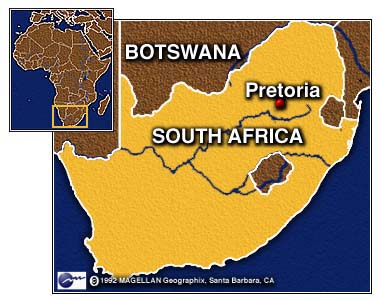
Integrity and ethical behaviour in the public service received a big boost with the launch of the draft policy that will lead to the eventual elimination of corrupt practices and help foster integrity among public servants. The Minister for the Public Service and Administration, joined by senior government officials, leaders of civil society, business and academia officially launched the new system today at the conclusion of the week-long Public Service Week in Velmore Estate in Centurion, Pretoria.
The e-Register of Financial Interests was introduced to delegates during the roundtable discussion session reflecting on the Public Service Week activities.
The new framework forms part of the Department of Public Service and Administration's Integrity Management Framework and will, once fully implemented, play a major role in managing potential conflict of interest among public service employees.
In terms of the e-Registration framework, which will apply to all public servants, electronic disclosures of business and financial interests will be much more stringently monitored to improve on the current system.
In his opening remarks, Minister for the Public Service and Administration, Mr Richard Baloyi, said the developments resulted from the government's zero-tolerance of corruption in the public service. "We have adopted zero levels of tolerance towards corruption and the low levels of compliance have prompted the introduction an electronic registering mechanism, the e-Register," Minister said.
On the same occasion delegates were introduced to the Department of Public Service and Administration (DPSA) "My Public Servant, My Future" campaign whose purpose is to place public servants at the centre of delivering quality services to the citizens in line with the values of the Constitution of the Republic.
The campaign promotes maintenance of high standards of professional ethics; impartial, fair, equitable and bias-free service; efficient, economical and effective utilisation of resources.
UNPAN Africa
Selasa, 20 September 2011
The Philippines assesses local govt performance

The Department of the Interior and Local Government (DILG) Barangay Governance Performance Management System (BGPMS) has recorded increasing compliance of local government units (Barangays) to the standards on good governance set by DILG. According to DILG BGPMS representative, Mediatrix Rubio, “Barangays are competing in complying with their mandates in the performance areas of governance, administration, social services, economic development, and environmental governance.”
One year down its implementation, BGPMS determines the level of compliance of local government units in the identified service areas through a specific scoring and rating system to improve the quality of programs and local policies.
In the performance assessment, problems by area are also identified to determine the corrective measures to be installed where necessary.
Rubio added that findings reveal that under governance, the barangay local government units are excelling in local legislation, transparency, and citizen’s participation as shown by their high performance grades gathered by assessment teams.
While previous records show that administration covering development planning, revenue generation, revenue allocation and utilization, fiscal accountability, facilities and customer service, and human resource management and development are slowly complied by the basic political unit, recent DILG monitoring boards revealed that 98 per cent of the barangays have prepared their different barangay plans, with expected budget and expenditures, and mandated councils with specific administrative roles.
futuregov.asia
Rabu, 14 September 2011
Civil Service Set To Improve Government Efficiency

Guesting in the Kapihan sa Kapitolyo, CSC Davao del Norte Provincial Director Ma. Faith Presbitero said this year’s theme for the Philippine Civil Service 111th year celebration is "Championing R.A.C.E.: Public Service at Full Speed." She said it advances the thrust of CSC to wield a much better way of providing government services and it also brings a message of building a responsive, accessible, courteous and effective public service.
Presbitero said that with the R.A.C.E. principle of public service, the government will be gaining the trust and confidence of more people. “Wala na tong mahadlok nga moadto sa opisina sa gobyerno,” she said.
The memorandum circular of CSC signed on July 22 by CSC Chairperson Francisco Duque III states that this year’s Civil Service celebration is anchored on President Benigno S. Aquino’s call for “reform, daang matuwid, and on his pledge to implement change in government.”
“The theme urges civil servants nationwide to respond to call for change and be servant-heroes,” Duque said.
CSC has lined up activities such as conducting the Honor Awards Program (HAP) rites for the 2011 Presidential Lingkod Bayan, Dangal ng Bayan, and CSC Pag-asa Awardees.
It also sets to organize R.A.C.E. to Serve Fun Run, contests on photography, chorale, essay writing and graphic designing.
The Provincial Government of Davao del Norte through the Provincial Human Resource Management Office has also lined up activities in line with the Philippine Civil Service 111th anniversary.
PHRMO department head Monica Salido said there will be training and seminars on stress management, communication skills, personality development and nutrition for elders.
Activities on physical development of provincial government employees will include the Pinoy Biggest Loser Davao del Norte Capitol Edition and Capitolympics 2011. There will also be free health care services and a talent search activity dubbed as Capitol DavNor Got Talent 2011.
UNPAN Asia & Pacific
Jumat, 09 September 2011
All of Philippine Govt to Use E-Procurement System

According to Executive Secretary Paquito Ochoa Jr., state offices have been directed to source all their common-use supplies directly from the Procurement Service of the Department of Budget and Management or from its regional depots throughout the country.
“This administration reiterates the policy that procurement of government supplies, materials, and equipment shall be done in the most transparent and competitive manner,” Ochoa said.
Common-use supplies refer to office supplies like bond paper, pens, pencils, and ink, which eat up about P19.5 billion of the government’s annual spending package.
“With a centralized supply purchasing system, the budget department has estimated that the government stands to save as much as P6 billion a year,” Ochoa said.
PhilGEPS, which can be accessed online at www.philgeps.net, provides relevant information on all procurement activities of government agencies.
At present, the system already has 53,382 registered suppliers.
Ochoa said AO No. 17, which also calls for a periodic evaluation of all procuring entities, applies to all national government agencies, including military and police units; government-owned and -controlled corporations; government financial institutions; state universities and colleges; and local government units.
In the past, only the national government agencies were required to use the PS system.
UNPAN Asia & Pacific
Selasa, 06 September 2011
Thailand to improve ranking in World Bank’s Ease of Doing Business

Thailand’s Ministry of Commerce is to push Thailand into the top ten ranks of World Bank’s Ease of Doing Business Index. Deputy Commerce Minister Siriwat Kajornprasart said the Department of Business Development was assigned to manage the matter in accord with the government’s policy to strengthen the domestic economy with improved business governance so that the country is more attractive for business operations.
Thailand is currently positioned 19th in the Ease of Doing Business Index, ranking economies from 1 to 183, with first place being the best.
According to the World Bank, a high ranking means the regulatory environment is conducive to business operations.
Strategies leading to the new target, being in the Top Ten, is so that the government will reduce complicated procedures and improve its online services in order to become an e-government.
 |
| Thailand is currently positioned 19th in the Ease of Doing Business Index, ranking economies from 1 to 183, with first place being the best. economic sectors, while Thai entrepreneurs, including small- and medium-sized entreprises (SMEs) should be promoted for business quality and management innovation. via Thailand to be pushed to enter Top 10 ‘Ease of Doing Business’ Index. Economies are ranked on their ease of doing business, from 1 – 183. A high ranking on the ease of doing business index means the regulatory environment is more conducive to the starting and operation of a local firm. This index averages the country’s percentile rankings on 9 topics, made up of a variety of indicators, giving equal weight to each topic. The rankings for all economies are benchmarked to June 2010. |

thailand-business-news.com
ICTA focuses on making more eServices accessible to the poorest

Deshapriya said so during a presentation at the National IT conference 2011 held in Colombo recently.
Elaborating on the subject under the title "Sri Lankan e-Government picture; where is the bottom of the pyramid (BoP)?" Deshapriya both stated the problem and ICTA’s measures for solving it. With the aid of statistics the ICTA Re-engineering Government Programme Director made the large audience including IT experts alive to the pressing status quo of the poorest.
If we consider the population of Sri Lanka as a pyramid, 23 per cent of the people are at the bottom of the pyramid (BoP) (Department of Census and Statistics). The individual monthly income of Bop was below the poverty line which was accepted to be Rs. 3400. Ten per cent of the population of Sri Lanka have no internet facilities while 12 per cent have no computers. Seventy-five per cent are ICT illiterate.
Having given the picture of the BoP, Deshapriya went on to place before the what ICTA has done and was in the process of doing to arrest the problem and improve the quality of life of the poorest.
Speaking about solutions to the problem Deshapriya opened the up the rays of hope : "Telephone penetration is breaking all barriers with 12,000,000 recorded as early as 2009 and becoming a tool even for BoP to improve their quality of life"
"We are doing a Proof of Concept (PoC) to utilise the popularity of GIC and mobile payments to provide "Transactional Services" to BoP", Deshapriya said giving a glimpse of what great things were in store for the BoP in the Sri Lankan e-Government picture
Parallel to the massive mobile phone penetration, Deshapriya pointed out that (Government Information Centre) GIC [1919] receives over 1 mn calls per year from citizens to get informational service as proved by 1200000 calls recorded in 2010.
GIC has already begun to bridge the gap by becoming a "Digital Intermediary" to provide ‘Emerging Information Services" and Interactive Information Services" to BoP.
Train Schedule and Foreign job opportunities are two services which have the highest demand so far. This information is available in the web as well as through GN.SMS.
So GIC gets more calls for these two services, Deshapriya underlined
Corroborating his eye-opening disclosures Deshapriya gave the following data with regard to the Web vs SMS vs Voice calls for June 2011:-
More and more interactive information services are being added to GIC everyday.
The projects ICTA has initiated for making public service more people-friendly fall into two major categories. They are enabler projects and e-Services projects. Among the enabler projects are
- (a) Lanka Government Network with 475 organisations already connected
- ( b) Lanka Gate and Country Portal which provides ‘all-in-one’ platform for offering e-services through a complete free and open source set-up including Credit Card Gateway, SMS Gateway and Lanka Interoperability Exchange
- (c) ICT Human Resource Development with 14,027 already equipped with General and 959endowed with Management and Technical ICT skills and 150 MBAs in e-Government and
- (d) Policy and standards which is concerned with the e-Government policy, Lanka Interoperability standards, LIFE (Lanka Interoperability Framework and Sri Lanka Web standards (www.emathumozhihal.lk).
Among the e-Service projects are
- Informational e-Services with the flagship project Government Information Centre (GIC) [1919] ,
- Interactive e-Services which includes ‘Find your Government Officer’, Train schedule, Foreign Employment Opportunities, and Crop Prices e-Services
- Transactional e-Services including utility payments and ‘Visa online’ and
- Connected Government e-Services in which category the most popular e-Sevice is the e-Revenue Licence e-Service which enables a person to get the revenue licence of his vehicle without the hassle of physically visiting the relevant office(s). Currently this service has entailed cooperation with 40 Divisional Secretariats the Central DMT, Provincial DMT, 12 Insurance Companies, and Two Emission Testing Companies.
The concept of E-service (short for electronic service), represents one prominent application of utilising the use of Information and communication technologies (ICTs) in different areas. All agree about the role of technology in facilitating the delivery of services which make them more of electronic services.
Such e-service includes the service element of e-tailing, customer support, and service delivery". This definition reflect three main components- service provider, service receiver and the channels of service delivery (i.e., technology). For example, as concerned to public e-service, public agencies are the service provider and citizens as well as businesses are the service receiver. The channel of service delivery is the third requirement of e-service. Internet is the main channel of e-service delivery while other classic channels (e.g. telephone, call center, public kiosk, mobile phone, television) are also considered.
.island.lk
ICT ministry targets Smart Thailand in 4 years

New Thai ICT Minister, Anudith Nakornthap recently announced the Smart Thailand Plan, to offer modern public services through high-speed internet.
Nakornthap plans to set up new committees to scrutinise existing contentious projects including a nationwide 3G network expansion. The ICT ministry is working closely with the National Broadcasting and Telecommunications Commission and private telecom operators on WiFi network installation to provide free connection by the end of the year.
Collaboration with all relevant agencies are also underway to develop a common public database needed for launching the e-services for people in all Thai regions. Provinces where the e-public services will be implemented as pilot projects will be designated over the next couple of months.
Basic e-public services mainly include those facilitating district offices’ workloads on issuing identity cards for Thai nationals, household registrations and population censuses, as well as e-education, e-health and e-agriculture services.
“Once the e-public services are launched, people can access public health services in their respective area through high-speed online programs, obviating the need for those in remote areas to travel to hospitals located far away,” Nakornthap added.
futuregov.asia
Senin, 05 September 2011
Korupsi di Kementerian Marak, SBY akan Evaluasi
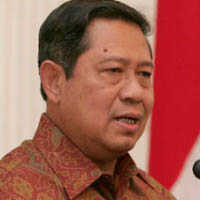
Ada dua kementerian yang akhir-akhir ini menjadi sorotan karena kasus korupsi, yakni Kementerian Pemuda dan Olahraga dan Kementerian Tenaga Kerja dan Transmigrasi. Selaku kepala pemerintahan, Presiden Susilo Bambang Yudhoyono (SBY) akan menggelar evaluasi guna mencegah hal yang sama terulang di kementerian lain.
"Iya tentu presiden nanti akan melakukan evaluasi terhadap kinerja kabinet. Ini memang tidak dilaporkan, tapi bersama-sama dengan pak wakil presiden, itu selalu dilakukan evaluasi," kata juru bicara kepresidenan Julian Aldrin Pasha di Bina Graha, Jakarta, Senin (5/9/2011).
Secara umum, Julian mengatakan bahwa Presiden SBY menyerahkan semua kasus yang melibatkan para pegawai kementerian ke proses hukum. Langkah evaluasi bukan untuk mengintervensi kasus, tapi untuk melakukan perbaikan.
"Jadi kalau memang ada satu kementerian yang perlu untuk dikoreksi atau dperiksa berkaitan dengan adanya kasus-kasus di dalamnya, tentunya dalam hal ini tidak ada tindakan atau sikap presiden yang sifatnya intervensi terhadap kasus tersebut," urainya.
Menurut Julian, sikap SBY sudah jelas dalam kasus ini. Pemberantasan korupsi harus tetap dijalankan, tanpa pandang bulu.
"Namun yang jelas pesan presiden atau sikap presiden dalam hal penegakan hukum dan pemberantasan korupsi kan jelas bahwa ya kalau memang secara sah terbukti bersalah, maka siapa pun itu diproses dan ditindaklanjuti sesuai dengan mekanisme, prosedur hukum yang berlaku. Jadi semua berkedudukan sama, equality before the law," terangnya.
detiknews.com
Selasa, 30 Agustus 2011
Philippine Presidency Outlines Social Media Strategy

Presidential Communications Operations Office (PCOO) Secretary Herminio Coloma Jr. stressed the important role of new media in pursuing the government’s Social Contract with the citizens.
According to Coloma, digital tools could be a very effective platform in bringing the government much closer to the people, establishing a healthy environment as the country inches its way towards progress and development.
“Continuing conversation and extensive consultations, from the innermost depths of ourselves, from our core… that is what the president would like to know, what is it that we truly feel about the issues that affect us in our country today,” Coloma said in an official statement.
The PCOO Secretary said that the government assures the people of a responsive and people-centered medium to directly address their concerns on certain issues, moving to accountability practices and excellence to provide responsive online citizen-centered services with the use of several media simultaneously.
“The significant data.gov is the kind of approach that is being adapted by many countries in our region, and they would like to make social media a tool to make the government more accessible,” Coloma noted, expressing the government’s plan to emulate the said portal.
The secretary added that this is a first for a Filipino Chief Executive to institutionalise a new media strategy through the PCOO and the establishment of his own website, the president.gov.ph. and such development was due to the fact that the president relied quite significantly on the internet and the mobile media in his campaign for the presidency in May, 2010.
UNPAN Europe
Sabtu, 27 Agustus 2011
Australian state forms e-Health agency

As New South Wales (NSW) Health undergoes a major overhaul, Health Minister Jillian Skinner announced the creation of eHealth NSW, a new agency to look after IT services across the state’s healthcare system.
In addition to assuming ICT responsibilities, eHealth NSW would also take e-health roles that were previously shared between the Department and Health Support Services.
“The new agency aims to drive innovation, improve implementation of vital electronic health initiatives and provide support to the districts and their facilities,” Skinner said in an official statement.
The NSW Health reform was a result of NSW Health director-general Mary Foley’s governance review which reads, “eHealth NSW would become the system leader for the NSW Health information strategy, forward planning and delivery.”
“It is critical that an early objective of eHealth NSW is a re-setting of strategy based on extensive consultation with clinicians and other users and the redesign of ICT governance to ensure clear statewide plans and an appropriate balance with local initiatives.”
According to the Health Minister, the implementation of the revamp would begin immediately and wrap up by the end of the year, freeing up over $80 million for frontline services.
futuregov.asia
Kamis, 25 Agustus 2011
Thai PM Announces Government Urgent, Long-Term Policies
The parliament meeting started from 9:15 a.m. with 484 MPs and 147 senators attended.
 |
| Thailand Government Complex Building dreamstime.com |
Yingluck said the Pheu Thai-led government will implement the following eight policies:
- The urgent policies
- The policy on national security
- The economic policy
- The policy on social and quality of life
- The policy on natural resources and environment
- The policy on science and technology, research and innovation
- The policy on foreign affairs and international economics
- The policy on good governance.
The 44-pages policies are divided into the urgent and long-term polices, which are needed to be implemented in the first year in office and in four-year term, respectively.
Those 16 urgent policies include the policies to create political reconciliation, to fight against drug trafficking, to reduce corporate tax rates and to provide soft loans to the poor.
Before the policy delivery started, approximately 200 red- shirts or the United Front for Democracy against Dictatorship (UDD) members gathered in front of the Parliament compound to show support for the prime minister and her government.
Coming also was the anti-government multi-color group who submitted an open letter to the House Speaker Somsak Kiatsuranont expressing their opposition to some of the government's policies including the move to amend the 2007 Constitution.
The House Speaker announced also that the government coalition and opposition parties had 11 hours each while the senators were allocated 7 hours 40 minutes to scrutinize the government policies.
The joint-sitting will be carried out for two days or August 23- 24. About 450 police officers have been deployed to secure order around the Parliament compound and prevent confrontation between different political groups.
UNPAN Asia & Pacific
Rabu, 24 Agustus 2011
Turkmen President: Turkmenistan needs to take urgent measures to introduce "e-government"

Turkmen President Gurbanguly Berdimuhammadov stressed "taking urgent measures" to broadly implement electronic government document control, the national TV channel "Altyn Asir" reported on Tuesday.
According to the report, the president talked about the change during a video conference with the participants of a workshop meeting on further improving the government's electronic document control, currently being held in Ashgabat.
Berdimuhammadov stressed the need to introduce "this advanced method in all sectors of the national economy".
It is expected that the new system will be implemented in the energy, chemical, processing, construction, transport, telecommunications, medicine, industry, textile, and agricultural sectors.
Berdimuhammadov earlier set a task to introduce the electronic circulation of documents in all regions throughout the country. All of these measures should contribute to the operational resolution of management issues, improving control over material-technical enterprise parts, and increasing levels of public services.
In addition, the new system will efficiently track progress of seasonal work, ensure permanent control and operational decision-making at the departmental ministry levels, as well as administration and agricultural enterprises.
Local economists believe that introducing "e-government" will enhance the efficiency of enterprise management, give opportunities for operational control at all stages of administrative business processes, reduce document passage cycles, length of time to execute basic functions, and necessary operative information searches for administrative decision-making.
The Turkmen government discusses a cooperation project in reforming and strengthening the mechanisms of state governance, including macroeconomic regulation, and "e-government" with the UN.
This issue was discussed during the advisor of the Department of Economic and Social Affairs of the UN Secretariat Alexey Tikhomirov’s visit to Ashgabat.
.trend.az
Selasa, 09 Agustus 2011
Government of Canada to Reduce Information Technology Costs and Save Taxpayers' Dollars

On behalf of the Government of Canada, the Honourable Rona Ambrose, Minister of Public Works and Government Services and Minister for Status of Women, along with the Honourable Tony Clement, President of the Treasury Board and Minister for the Federal Economic Development Initiative for Northern Ontario, today announced measures to streamline and identify savings in Information Technology (IT) through Shared Services Canada.
“Canadians work hard for their money and expect our Government to manage taxpayers dollars responsibly,” said Minister Ambrose. “Shared Services Canada will have a mandate to streamline IT, save money, and end waste and duplication.”
“The top priority of our Government is ensuring that our economy remains strong while we continue on our plan to return to balanced budgets,” said Minister Clement. “This is why we are squarely focused on finding savings for taxpayers and implementing the Next Phase of Canada’s Economic Action Plan.”
The Clerk of the Privy Council, Wayne Wouters, said that this will help “the Public Service streamline and modernize our administrative services. Through new business models, we are renewing the organization as a whole and supporting innovation and excellence across the Public Service.”
The Government has over 100 different email systems, over 300 data centres, and over 3,000 network services within the Federal Public Service. This is inefficient and wasteful. The Government will move to one email system, reduce the overall number of data centres from 300 to less than 20, and streamline electronic networks within and between government departments. This will improve services to Canadians, make IT more secure and reliable, and save taxpayers’ dollars in line with the Government of Canada’s plan to return to balanced budgets.
All resources associated with the delivery of email, data centre and network services are being transferred from 44 of the more IT-intensive departments and agencies to a new entity called Shared Services Canada. These departments and agencies will no longer provide these services internally. Rather, the services will be provided by Shared Services Canada.
Minister Ambrose will be responsible for Shared Services Canada, which will be part of the PWGSC portfolio. The President of the new entity was also appointed by the Prime Minister today, and will be leading this consolidation and transformation initiative.
gc.ca
Langganan:
Postingan (Atom)