
Tampilkan postingan dengan label Green Government. Tampilkan semua postingan
Tampilkan postingan dengan label Green Government. Tampilkan semua postingan
Rabu, 08 Agustus 2012


Senin, 05 Maret 2012
Indonesia Hosts Clean Power Asia To Embrace Cleaner and Renewable Energy

Asian Countries Increase Spend More on Renewable and Clean Power Than Other Developed Nations
“Asian countries are overtaking developed ones in terms of spending on renewable and cleaner fossil power projects,” said Daria La Valle, the conference manager of Clean Power Asia. This is clearly illustrated by the 27 case studies of recent and upcoming clean power projects in the Asian region which will be presented at Clean Power Asia 2012 which is taking place in Bali, Indonesia in May.
The annual conference and exhibition will gather some 600 leading Asian renewable and cleaner fossil power experts, utilities, energy ministries, regulators, investors and technology and service providers to discuss the latest renewable and cleaner fossil power developments in the region as well as the main challenges that utilities face to adopt greener power sources.
Future of renewable energy in developing world
The future of renewable and clean energy is now in the developing world” says Daria La Valle, “and new government policies have made it more palatable for foreign investors to finance clean power projects here in Asia through various financial instruments and clearer regulatory frameworks.”
The Clean Power Asia conference manager continues: “Indonesia has announced a master plan for the development of renewable energy resources and set a target for renewables to represent 25% of total energy consumption in 2025. Malaysia is hoping that the recently launched National Renewable Energy Policy Plan will help the country hit its targets and the new feed-in-tariffs that recently came into effect will certainly help achieving those targets. Thailand launched its 15-year Renewable Energy Development plan last year and aims to increase renewable energy from 6.4% to 20% in 2022.”
Indonesia the next regional powerhouse
Clean Power Asia’s Daria La Valle says Indonesia in particular has huge potential to be a leading power player in the region: “Indonesia is actually the country with the biggest potential for both renewable as well as cleaner fossil power generation in Southeast Asia. The country sits on the largest geothermal energy resources in the world and has great bioenergy, solar and hydropower potential. Combine this with extensive coal resources and a low electrification rate, and you can see the potential of Indonesia to be the powerhouse of the region.” ===
In addition, she notes, the fall in equipment costs and growing appetite for clean technology has resulted in increased policy support measures and increased investment in cleaner fossil power investments. She adds: “Thailand is involved in clean coal pilot projects, Indonesia is building its first ultra supercritical coal fired power plant. TNB Malaysia has increased its operational efficiency by upgrading 6 existing plants. Successful CO2 sequestration achievements are made and much effort is being made in power plant optimisation and efficiency increase resulting in tremendous CO2 emission reduction results.”
Clean Power Asia’s conference programme will feature more than 80 experts, including:
Future of renewable energy in developing world
The future of renewable and clean energy is now in the developing world” says Daria La Valle, “and new government policies have made it more palatable for foreign investors to finance clean power projects here in Asia through various financial instruments and clearer regulatory frameworks.”
The Clean Power Asia conference manager continues: “Indonesia has announced a master plan for the development of renewable energy resources and set a target for renewables to represent 25% of total energy consumption in 2025. Malaysia is hoping that the recently launched National Renewable Energy Policy Plan will help the country hit its targets and the new feed-in-tariffs that recently came into effect will certainly help achieving those targets. Thailand launched its 15-year Renewable Energy Development plan last year and aims to increase renewable energy from 6.4% to 20% in 2022.”
Indonesia the next regional powerhouse
Clean Power Asia’s Daria La Valle says Indonesia in particular has huge potential to be a leading power player in the region: “Indonesia is actually the country with the biggest potential for both renewable as well as cleaner fossil power generation in Southeast Asia. The country sits on the largest geothermal energy resources in the world and has great bioenergy, solar and hydropower potential. Combine this with extensive coal resources and a low electrification rate, and you can see the potential of Indonesia to be the powerhouse of the region.” ===
In addition, she notes, the fall in equipment costs and growing appetite for clean technology has resulted in increased policy support measures and increased investment in cleaner fossil power investments. She adds: “Thailand is involved in clean coal pilot projects, Indonesia is building its first ultra supercritical coal fired power plant. TNB Malaysia has increased its operational efficiency by upgrading 6 existing plants. Successful CO2 sequestration achievements are made and much effort is being made in power plant optimisation and efficiency increase resulting in tremendous CO2 emission reduction results.”
Clean Power Asia’s conference programme will feature more than 80 experts, including:
- Datuk Loo Took Gee, Secretary General, Ministry of Energy, Green Technology and Water, Malaysia
- Dr. Songpope Polachan, Director General, Department of Mineral Fuels, Ministry of Energy, Thailand
- Hatsady Sysoulath, Director General of Institute of Renewable Energy Promotion, Ministry of Energy and Mines, Lao PDR
- Dr Direk Lavansiri, Chairman, Energy Regulatory Commission, Thailand
- Dr Kardaya Warnika, Director General of New, Renewable Energy and Energy Conservation Ministry of Energy and Mineral Resources, Indonesia
- Nu Pamudji, President Director, PT PLN (Persero), Indonesia -Shinta W. Kamdani, Vice Chairwoman in KADIN Indonesia (Indonesian Chamber of Commerce and Industry), Owner and Managing Director of Sintesa Group, and Steering Committee of IBCSD (Indonesian Business Council for Sustainable Development)
- Y. Bhg. Dato’ Mohd Nazri Shahruddin, VP of Power Generation, Tenaga Nasional Berhad (TNB), Malaysia
- Yokihiro Hirabayashi, Department Deputy Director, International Business Development Dept., J-POWER, Japan
- Dr. Nattakit Parkpoom, Specialist System Power Planning, Generation Division, EGAT, Thailand -Heru Dewanto, Commissioner, PT Cirebon Electric Power, Indonesia
- Anupam Datta, General Manager, Calcutta Electric Supply Corporation (CESC Ltd), India
Event dates and location:
14 - 16 May 2012
Bali International Convention Centre, Bali,
Indonesia
Jumat, 24 Februari 2012
Korea Begins, Leads, and Becomes Green
 |
| US Secretary of State Hillary Clinton gives a speech during the OECD's 50th Anniversary Forum held on May 25, 2011 in Paris, France. On the same day, the OECD adopted Korea's Green Growth Declaration. (Photo: Gonggam Korea) |
The President proposed his ‘Low Carbon Green Growth’ vision during his speech on Korean National Liberation Day in 2008, during his first year as president. He emphasized that Korea can seek a way out of the economic crisis with green technology and eco-friendly policies by finding the potential of the environment and economy and making them the driving force of future growth.
Since his announcement, Korea has become a leading country of green growth. The United Nations Environment Programme (UNEP) introduced Korea's national strategy for green growth in its report Global Green New Deal in February 2009, as an example meeting the requirements of the Green New Deal. International organizations and media also have paid attention to Korea’s green policy.
The Korean government established the Five-Year Plan and Low Carbon Green Growth National Strategy to meet the objectives of the policy, strategies, and major projects of green growth. It also enacted the Framework Act on Low Carbon, Green Growth covering all green growth policies for climate change, energy, and sustainable development.
The Korean government established the Five-Year Plan and Low Carbon Green Growth National Strategy to meet the objectives of the policy, strategies, and major projects of green growth. It also enacted the Framework Act on Low Carbon, Green Growth covering all green growth policies for climate change, energy, and sustainable development.
The objectives of the five-year plan will be achieved by 2013: to become one of the four major producers of green cars, to increase the export of green products by 15%, to secure an 8% market share of green technology products in the world market, and to achieve a 3.8% penetration rate of bicycles in traffic. Based on these goals, the government is aiming to become one of the seven leading nations of the green policy by 2020.
The Korean government also has endeavored to reinforce international competiveness in major green industries including new energy, renewable energy, and smart grids. Korea held the inaugural executive committee meeting of the International Smart Grid Action Network (ISGAN) in June 2011, to great success. In addition, Korea is planning a 10.2 trillion won wind farm off the southwest coast of the nation by 2019. By 2014, it will begin with an initial 400 billion won (USD 355m) 100MW demonstration project. The government also has established a comprehensive national plan to promote wind, bio, renewable, and new energies.
Since the announcement of the vision, Korea also has focused on investing in new and renewable energies. As a result, the amount of exports related to new and renewable energies recorded USD 4.5 billion in 2010, showing significant progress in industrial indicators such as market size and employment in the new and renewable energy industries.
The penetration rate of new and renewable energies has steadily increased, with an annual rate of 6.65. The penetration rate of solar photovoltaic energy has exceeded its target, entering the world’s top ten with the accumulated penetration of 6,800,400 TOE. In order to foster the new and renewable energy industries, the government recently introduced the Renewable Portfolio Standard (RPS), a regulation that requires the increased production of energy from renewable energy sourcessince 2012. It also plans to double the size of energy R&D by 2015 compared to its size in 2011.
The administration has set a goal to create a new driving force for growth and examined similar previous projects from their starting point. The administration saw that the more unstable economic environment a country has, the more support should be given to growth industries to build an advanced economy. The government then started fostering a growth industry that will lead economic growth in the future.
The government has set different goals for each industry to enable them to create a new driving force of growth; it set the objectives of the industries that currently have a competitive edge such as semiconductor, shipbuilding, display, automobile, and mobile phone industries while setting the objectives of infrastructure industries such as energy, consulting, and financial industries to improve the competitiveness in their fields.
Moreover, the government enacted the Science Belt Special Law in April 2011, establishing legal and institutional bases to establish the International Science-Business Belt, a proposed industrial complex dedicated to science.
It also founded the Institute for Basic Science (IBS) to conduct research exclusively in basic sciences. Starting from 25 research groups in 2012, it will expand to 50 research groups employing 3,000 researchers by 2017. Currently, the IBS is considering a project for building a heavy ion accelerator in the institute.
The government also has established legal and political footing to create, use, and protect national intellectual property such as industrial property, copyright, and brands. Enacting the Framework Act on Intellectual Property in May 2011, it launched the Presidential Council on Intellectual Property to conduct the deliberation, control, and inspection of policies and strategies related to intellectual property as a government organization at large.
koreaittimes.com Thursday, February 23rd, 2012
Selasa, 27 Desember 2011
ITU approves new worldwide smart grid standards
 |
| mauinow.com |
The International Telecommunications Union (ITU) said that its standards for smart grids have been approved and now available for download.
The new standards -- Recommendations ITU-T G.9955 and G.9956 -- contain the physical layer (PHY) and the data link layer (DLL) specifications, respectively, for NB-PLC transceivers based on OFDM (orthogonal frequency-division multiplexing).
The specifications define technologies that support indoor and outdoor communications over direct current and alternating current power lines (including low and medium voltage lines), through transformer communications, for both urban and long distance rural communications and at frequencies below 500 kHz.
These standards are envisioned to enable cost-effective smart grid applications such as distribution automation, diagnostic and fault location, smart metering, demand response, energy management, smart appliances, grid-to-home communications and advanced recharging systems for electric vehicles.
ITU also said the standards are an ideal platform for smart grid applications because of their use of power lines as a communications medium, which is under the direct and complete control of power utilities. In addition, because the family supports popular protocols like Ethernet, IPv4 and IPv6, smart grid networks can easily be integrated with IP-based networks.
"The approved ITU NB-PLC family of international standards will be a fundamental building block for realizing a robust smart grid anywhere in the world, and will allow utilities to start immediate deployment of NB-PLC on a worldwide basis,” said Dr. Hamadoun Touré, Secretary General, ITU.
http://egovasia.enterpriseinnovation.net
Selasa, 20 Desember 2011
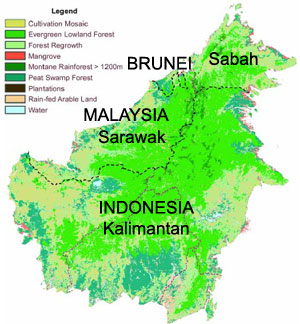
'Brunei can benefit economically from Heart of Borneo'
 |
| mongabay.com : BORNEO |
CAPITALISING on the Heart of Borneo (HoB) initiative may be contradictory considering its conservation purposes but it does not mean Brunei has to miss out on economic benefits, said a former South Korean minister.
Professor Kim Myung-Ja, Korea's former Minister of Environment, said that in her country, there is a similar issue with a conservation area which was turned into a tourist site.
"There are other alternative ways for economic growth of conservation for Brunei and the Heart of Borneo, like the promotion of tourism, or more specifically, eco-tourism," she said during a seminar organised by the e-Government Innovation Centre (eG.InC) at Universiti Brunei Darussalam (UBD) on Saturday.
Professor Kim stressed the importance of the HoB, saying that the initiative is "beautiful and preserved remarkably well". However, Kim reminded that the future of the area depends solely on the collaboration between the three involved governments: Brunei, Indonesia, and Malaysia.
"Other major international organisations such as the World Wildlife Fund (WWF) and Asian Development Bank (ADB) also play a part," she said.
Professor Kim added: "One of the keys to success for an initiative like this is funding."
"There needs to be diversified and equitable benefits for involved local communities and governments," she said, adding that it would help conservation areas to be effectively implemented.
When asked how Brunei can improve in reducing its carbon emissions, Professor Kim said that there are two obvious points she picked up on whilst in the Sultanate: the temperature of air-conditioning, and the lack of public transportation.
She told The Brunei Times that room temperatures are usually set too low, making the difference in temperatures outdoors and indoors too large.
"
This may possibly affect one's health, as the difference is too much," she said.
As for the lack of public transportation, Professor Kim said that carbon dioxide (CO2) contributes to 78 per cent of global warming.
"Research has shown that public transportation can be a way of reducing emissions," she added.
Professor Kim, who is currently President of Green Korea 21 Forum, during the seminar delivered a presentation entitled "Green Growth Initiative and Green Energy Innovation".
She highlighted the importance of renewable energy, and regional and global energy cooperation. The seminar was held at UBD's Institute for Learning, Innovation, and Advancement.
The Brunei Times
The Brunei Times
Rabu, 23 November 2011
China unveils £1 trillion green technology programme
 |
| To fulfill the spending target, the central Chinese government itself would most likely not deliver the bulk of the money, but would seek to spur spending by corporations, investment by local governments and lending by banks. Photo: AFP/Getty |
The package - equivalent to the entire GDP of Italy - is two and a half times the size of the four trillion yuan fiscal stimulus launched during the global financial crisis in 2008. There were also concerns that China would scale back some investment plans, notably the manufacturing of hi-speed railway equipment, after a deadly train crash.
But Mr Bryson said the Chinese officials in Chengdu have not scaled back their ambitions. "Much of the emphasis on the emerging industries and the $1.7 trillion investment was focused on clean energy and clean energy technology," Bryson said, following a US-China Joint Commission of Commerce and Trade meeting. Chinese officials have promised that overseas firms will have access to contracts during the growth in these sectors.
"We had a very good dialogue on China's strategic emerging industries and we welcome China's commitment that it will create a fair and level playing field for US companies in those industries," Bryson said. According to Beijing, the targeted sectors include alternative energy, biotechnology, new-generation information technology, high-end equipment manufacturing, advanced materials, alternative-fuel cars and energy-saving and environmentally friendly technologies.
To fulfill the spending target, the central Chinese government itself would most likely not deliver the bulk of the money, but would seek to spur spending by corporations, investment by local governments and lending by banks.
telegraph.co.uk
Selasa, 08 November 2011
Singapore's new power grid center to develop cleaner energy solutions
 |
"Smart grid technologies will also provide consumers with real-time information on their energy usage. Such information will allow consumers to make informed choices on how to use energy efficiently and save cost," he added. The Minister explained that EPGC will allow researchers and companies to experiment with energy technologies in a safe grid-like environment to evaluate their performance and reliability before deployment in live, operational grids.
It will also serve as a natural technology partner for companies exploring the integration of renewable energy sources in any climatic zone. Many partnerships are also in the pipeline, including a collaboration with wind technology provider Vestas to co-develop technologies to enhance the capabilities of wind turbines.
EPC is also partnering with SP Power Grid (SPPG) to improve grid reliability. After the unveiling ceremonies, EPGC has signed an agreement with the Housing and Development Board (HDB) to study the integration of distributed energy generation and electric vehicles into housing estates. "This collaboration aims to address the technological challenges in assimilating distributed energy generation and electric vehicles into housing estates," the Minister said.
enterpriseinnovation.net
Kamis, 27 Oktober 2011
“E-Government: Concepts and Practices in mature and developing Countries”

Since today are avalaible the presentation and the video of the intervention of Professor Antonio Cordella, lecturer in Information Systems at the London School of Economics and Political Science. His current research focus is on ICT in the Public Sector, with specific attention to e-government and the associated institutional changes.
In the next posts will be published the contributions of Shirin Madon (Senior Lecturer in Information Systems and International Development at the London School of Economics and Political Science), Mammo Muchie (Director of Research Centre on Development Studies and International Relations at Alborg University) , Claudio Forghieri (Scientific director of the magazine E-Gov), Flavia Marzano (President of Associazione Stati Generali dell’Innovazione.it) e Renzo Turatto (Economist, Head of DTI, Innovation and Technology Department, Italian Ministry of Public Administration and Innovation).
e-Government: have we forgotten of the public sector context?
View more presentations from Think! The Innovation Knowledge Foundation
.thinkinnovation.org
Rabu, 07 September 2011
Pushing the low carbon boundaries: South Korea's smart grid initiative
 |
| Workers install a solar panel on a household within the Jeju Smart Grid project site. More than 2,000 homes along Jeju’s northeastern coast have been connected to the test grid. SK Telecom Consortium |
One step towards increased energy independence has been South Korea's drive to become a leader in smart grid research and development. That work has transformed an agrarian island into a hub of innovation and experimentation.
For decades Jeju island, 50 miles (80km) off southwestern South Korea's shore, was known as the country's honeymoon and holiday destination. But now several of South Korea's leading chaebol (business conglomerates) and government agencies have launched the Jeju Smart Grid Roadmap.
The project started with a 64.5 billion won (£36 million) government investment to test real-time grid monitoring, digital power transmission, and digitally operated power distribution systems. That investment will quadruple by the end of the project in 2013. While South Koreans and foreigners have long complained about the chaebol's outsized influence on the country's economy and politics, the cost of developing smart grid technologies is too expensive for smaller start-up firms alone. More than 160 companies, large and small, are involved with the four-year-long Jeju experiment.
SK Telecom is one chaebol leading the national smart grid project. Paul Kim, one of SK Telecom's smart grid managers, explained in detail South Korea's investment in smart grid technologies, which includes smart appliances, electronic vehicle charging, and micro-grids for renewable energy.
Korea's Smart Grid Roadmap has five core components: smart power grid, smart transport, smart renewables, smart electricity, and smart places. SK Telecom has led the smart places core with its "Test Bed," a programme that has taken modest stucco homes in Jeju's countryside and transformed them into the homes of the future.

More than 2,000 have been revamped with solar panels on the roofs. Smart meters and energy storage batteries integrate televisions, refrigerators, washing machines, and air-conditioning units. Tablet computers allow homeowners, many of them farmers, to monitor and adjust their household energy consumption. Power is adjusted according to peak demand and outside temperatures, and local utilities reflect that in the price. "All the appliances are interconnected with one another," said Kim. "The power-saving mode is in place in accordance with real-time pricing."
For SK Telecom, the capital and human resources necessary to support this project should pay off in the long run. SK's Smart Places Test-Bed focuses only on homes at the moment but SK Telecom has developed the Network Operation Centre Building Energy Management System, a smart grid system that can be scaled up for commercial use. Cloud software will manage both large clusters of buildings as well as an organisation's properties dispersed across a wide region.
The technology is still in its infancy, and the final analysis of the Jeju project, which finishes in May 2013, will determine how the chaebol and the South Korean government pursue the smart grid, said Kim. Despite public service announcements touting smart grid's potential, he said that public awareness was still thin. That could change with a more cost-effective smart grid technology and rising fossil fuel prices.
Rabu, 17 Agustus 2011
Government officials slow to develop, implement smart grid cyber security laws
 |
| forcechange.com |
The rapid development of the smart grid over the past few years has resulted in the electric grid's increased effectiveness, among other benefits. Industry experts worry, however, that critical infrastructure protection (CIP) regulations are lacking, and according to a published report, lawmakers are to blame.
According to a report from Government Computer News, a number of government agencies are responsible for developing comprehensive cyber security protocols. Nonetheless, various groups are charged with protecting different sectors, and experts are concerned that those tasked with crafting and implementing smart grid cyber security measures are failing to deliver comprehensive guidelines.
Federal officials from the Department of Homeland Security, along with those from the Pentagon and other government agencies, met in Washington D.C. in July to discuss the vulnerability of computer networks to hackers, but little has been done since the meetings to improve smart grid cyber security protocols, analysts say.
In fact, though federal information security has been listed as a high-risk priority by the Government Accountability Office (GAO) since 1997, many industry experts contend that there has been very little accomplished in terms of improving cyber security standards.
The race to improve CIP regulations is of the utmost importance, government officials have said, but with so little accomplished over the past decade, many critics have charged the government with failing to deliver on its promises.
The Obama Administration unveiled in June a guideline of how it believes the smart grid should be developed over the coming years. While Obama Administration officials called for enhanced cyber security protocols, government officials are at odds over how exactly - and in what manner - such regulations should be developed, implemented and enforced.
"Despite the actions taken by several successive administrations and the executive branch agencies, significant challenges remain to enhancing the protection of cyber-reliant critical infrastructures," GAO director of information security issues Gregory Wilshusen told the House Energy and Commerce Committee's Oversight and Investigations Subcommittee in July.
"The threats to information systems are evolving and growing, and systems supporting our nation’s critical infrastructure are not sufficiently protected to consistently thwart the threats," he added.
With researchers discovering new vulnerabilities in computer defense systems nearly every day, the pressure is on government regulators to develop a comprehensive set of cyber security regulations. Critics, however, are afraid that officials will fail to unveil such rules in a timely manner.
subnet.com
Jumat, 05 Agustus 2011
Obama Orders U.S. Green-Car Buys Starting With GM's Volt
 |
A Chevrolet Volt sits plugged into a newly installed electric vehicle charging station outside General Motor Co world headquarters in Detroit, Michigan October 12, 2010. The Chevrolet Volt plug-in electric car, the centerpiece of a revitalized General Motors Co, was named 2011 Green Car of the Year on Thursday. Credit: Reuters/Rebecca Cook/Files |
The Obama administration plans to purchase 116 plug-in electric vehicles for the U.S. government, led by 101 Chevrolet Volts from General Motors Co., saying it wants to increase the number of these cars in the fleet.
Nissan Motor Co. and Think Global AS vehicles also will be acquired as part of a directive announced today, to ensure that all new government vehicles can use alternative fuels by 2015, according to the General Services Administration.
Energy Secretary Steven Chu and additional federal officials presented the plan to buy vehicles that run on low- emission fuels such as ethanol blends. The proposal may trim the size of the federal fleet, which has about 600,000 cars and trucks, according to a White House statement.
“We are in a global race to capture the growing market for alternative vehicle technologies,” Chu said at a press conference in Washington.
The directive puts into effect Obama's statement in March that the government should be buying only alternative-fuel vehicles within four years. These could include electric, natural gas, clean diesel and flex-fuel cars that use E85, a blend of 85 percent ethanol and 15 percent gasoline.
The electric-vehicle purchases are intended to be a start to expanding the number of plug-in cars in the federal fleet. The U.S. government began boosting its purchases of hybrid- electric cars in 2009, including buying 3,100 with $300 million the GSA received in federal economic stimulus money.
Tax Credits
The government, which negotiates vehicle-purchase prices, is paying $38,500 for each Volt, $33,000 for the Leaf and about $32,500 for Oslo-based Think Global's Think City cars, according to the GSA. While that's less than the Volt's $41,000 suggested retail price, federal agencies don't qualify for a $7,500 tax credit for plug-in vehicles bought by individuals.
“The GSA made the right call in choosing the Volt to help lead its electric-vehicle fleet initiative,” Greg Martin, a spokesman for Detroit-based GM, said in an e-mail. “The Volt is a ‘no-excuses' car designed to meet the rigors of daily use with gas-free driving under most circumstances.”
 |
A General Motor Co employee shows the plug from a newly installed electric vehicle charging station for the Chevrolet Volt outside GM's world headquarters in Detroit, Michigan October 12, 2010. G Credit: Reuters/Rebecca Cook |
The Think City vehicles will be manufactured at a factory in Elkhart, Indiana, according to the GSA statement.
The directive issued today excludes conventionally powered vehicles that run solely on gasoline. Obama said last month in a speech at a United Parcel Service Inc. facility in Landover, Maryland, that purchases for the federal fleet by 2015 would have to be “fuel-efficient or clean energy.” The Volt can be powered as a plug-in electric and also has a gasoline-powered engine as a backup.
1 Million Cars
Obama has promoted the purchase of plug-in and hybrid- electric vehicles, saying he wants 1 million such cars and trucks on U.S. roads by 2015. The government has mostly bought cars and trucks capable of running on E85 or gasoline.
Federal employees last year received waivers to substitute gasoline in 55 percent of fleet vehicles capable of running on E85 because the ethanol blend wasn't available, the Government Accountability Office found.
The administration, with today's announcement, is trying to help agencies match alternative-fuel vehicle technologies with fueling infrastructure.
The GSA has bought about 35,000 vehicles so far this year, with 22,000 of them being alternative-fuel capable, according to the agency, which manages vehicle purchases for about two thirds of non-military federal vehicles.
businessweek.com
Kamis, 04 Agustus 2011
Economics or Politics? Moving Forward with Smart Grid


As national energy policy is slow to move, how will future economic, environmental, and local policy drivers impact how Smart Grid evolves?
Will Smart Grid communities that are driven by individuals, neighborhoods, and municipalities emerge? As gas and electricity prices continue to rise, individuals and municipalities will likely start taking matters into their own hands — and without knowing it, begin building a smarter grid at the grassroots level. Adoption of cost-effective EVs will likely pick up, people will find the independence of at-home generation -- like solar panels -- more desirable, and consumers may consider back-up storage to help their homes be more autonomous in the event of an emergency. But, what happens when individuals begin trading power (which is actually illegal in some states) and when communities consider decentralized energy markets? Where does the utility play into this scenario, and how does the system evolve so everyone benefits?
Will the global focus on carbon reduction impact how we do business? Unfortunately, this topic is currently as much a political question as an environmental one. Carbon-reduction efforts undertaken to mitigate climate change — whether at a government or individual level — will certainly impact how utilities and manufacturers do business. The big question prevails: how do businesses make sound and strategic decisions as uncertainty looms, particularly on the policy front? In this case, the economics of Smart Grid are clearly tied to the politics.
Will policy innovation happen at the state level? With uncertainty at the top levels of government, will state governments take energy and Smart Grid policy matters and legislation into their own hands? We’re already seeing states adopt individual renewable portfolio standards and energy efficiency guidelines. If this trend continues, how does this impact different parts of the electricity supply chain — particularly those doing business across state lines?
While Washington DC may be slow to move on national energy policy, DC will be host to another gathering of minds — Smart Grid minds -- at the fifth annual GridWeek this September, where these topics and others related to the way forward for Smart Grid will be discussed. Don’t miss your chance to meet with the industry’s energy leaders to help plan Smart Grid’s future, with the best interest of our nation at the forefro
====================================
Anto Budiardjo is President and CEO of Clasma Events, a global event company specializing in conferences at the center of the worldwide energy discussion. Focusing on Smart Grid, connectivity, and the new energy economy, Clasma’s major events include: ConnectivityWeek, GridWeek, and Grid-Interop. Anto can be reached at Anto@Clasma.com. Follow him on Twitter @AntoBud.
Kamis, 28 Juli 2011
"Smart Government" Membangkitkan Persoalan Akuntabilitas

Kini pemerintah di tingkat daerah dan para penyelenggara pelayanan publik yang sedang dibujuk agar mau mengadopsi "Smart Government" mulai dirundung berbagai masalah yang disebabkan oleh kompleksitas dan kerancuan akuntabilitas. Hal ini diungkapkan analis firma Gartner.
Gartner menggambarkan "Smart Government" sebagai sesuatu yang menekankan pada interoperabilitas dan layanan-layanan yang digunakan secara bersama-sama ( shared services) dan meningkatkan nilai publik berbagai layanan yang disediakan. Akan tetapi, saat memadukan berbagai layanan dan data yang berasal dari banyak elemen yang harus dirangkai menjadi satu, ada hal yang sangat pelik, dan dalam pelaksanaannya kerap tidak jelas siapa yang memimpin.
Akan tetapi Gartner berpendapat bahwa bobot keuntungan-keuntungannya melampaui biaya yang harus dikeluarkan, dan firma ini melampirkan sejumlah contoh terkait hal ini berserta berbagai rekomendasi yang dikatakan akan membantu mengeliminasi persoalan-persoalan yang menyertai.
Keuntungan-keuntungan yang dimaksud termasuk layanan-layanan publik yang lebih baik dan tepat waktu, tetapi untuk mewujudkannya harus terjadi kolaborasi horisontal dan vertikal antara para pemilik data yang ada di dalam dan luar pemerintah, jelas Gartner.
Gartner menyontohkan informasi "Neighborhood Watch" yang dikumpulkan oleh warga masyarakat secara online dapat digunakan untuk meningkatkan keamanan masyarakat. Contoh lainnya lagi penyediaan data-data warga masyarakat dari ragam platform seperti SeeClickFix, dimana penyelenggara pemerintahan lokal dapat menggunakan data tersebut untuk merencanakan rencana kerja perbaikan sehingga dapat meminimalisasi gangguan.
Lebih lanjut lagi semua penyelenggara pemerintah dapat memperoleh keuntungan dari peningkatan efisiensi operasional, dengan mencegah duplikasi dan penggunaan aset secara bersama-sama. Berbagai contoh lainnya lagi : membuat keputusan-keputusan pengadaan barang dan jasa berdasarkan pada informasi reputasi dan resiko semua rekanan penyedia barang dan jasa yang terkini dan yang selalu diperbarui, dan memodifikasi kebutuhan penyediaan staff di semua pusat custosmer service.
Terakhir, badan-badan pemerintah dapat melihat semakin meningkatnya sokongan politik dari Smart Government, sebuah contoh akan hal ini adalah meningkatnya deteksi penyimpangan atau fraud sebagai akibat pengkombinasian data pemerintah terkait pembayar pajak individual atau para penerima manfaat.
Berbagai rekomendasi yang disampaikan oleh firma ini untuk membantu mengatasi berbagai masalah yang ada disekitar "Smart Government" termasuk menjamin para eksekutif pemerintah yang non IT untuk menyiapkan proposisi nilai publik pada Smart Government sebelum proyek Smart Government dijalankan.
Rekomendasi lain yang sewarna, semua CIO pemerintah harus menerapkan dengan ketat berbagai pendekatan interoperabilitas dengan membentuk berbagai inisiatif. Mereka yang ditugasi untuk menjalankan proyek-proyek ini akan bertanggungjawab terhadap interoperabilitas. Ini akan membantu melenyapkan kompleksitas sebab proyek-proyek ini tidak akan menjadikan semua hal/layanan yang telah dibentuk sebelumnya menjadi interoperabilitas.
Akhirnya, semua vendor haru mengembangkan dan mengklarifikasi sebuah visi "Smart Government" yang masuk akal dan semua klien pemerintah dapat dengan jernih terhubung dengan Smart Government sesuai dengan prioritas nilai-nilai publik yang dimilikinya sendiri.
Computing.co.uk | Martin Simamora
Smart Government Is Not About Supremacy: It Is About Survival
The way these terms are used suggest the pervasive use of technology in operational systems, such as public lighting, road tolls, electrical grid, video-surveillance cameras and the improved connectivity between these systems and IT applications that allow to better manage resources, improve traffic flows, make public safety more effective.
However there is another, and – I would argue – far more important dimension of “smartness” that has not to do with being a cool and progressive jurisdiction, but with being able to survive. Survival means sustaining statutory services and processes. I appreciate that after so many years of waving the flag of the transformative and innovative role of IT speaking about survival may sound a tad depressing. However reality is biting in many parts of our planet, from Greece to Minnesota, from Washington DC to Ireland, from Iceland to Spain.
I have covered this in a recent post, and will be speaking about what smart government really means in a session entitled Smart Government: Beyond Cities and Planets in four Gartner Symposia (Cape Town in August, Orlando in October, Barcelona and Gold Coast in November). There will be an increasing amount of research on smart government in the coming months and Gartner clients are welcome to look at what has already been published under the “smart government” key initiative.
We have been many times through cost containment and efficiency review discussions between 2003 and today. When a shutdown approaches (which is the case for the US federal debt these days), there is a heightened attention to the need for changes in IT planning, management and sourcing. However after the emergency is over, there are only marginal changes to the way IT and business executives behave.
What is happening is that the margins for such an “elastic” behavior are becoming thinner and thinner, and we have to accept that the statutory services that agencies deliver may not be sustainable at all, or at least not without radical changes in how they are managed. This is compound by the difficulty (if not the sheer impossibility) of securing sufficient budget for radical transformation initiatives, let alone having the luxury of waiting for such initiatives to deliver results (should the budget not be a problem).
It is time to stop about looking at IT as a way to be better than other jurisdictions, and to think closely (and smartly) to how to leverage IT to stay afloat – and improve along the way.
blogs.gartner.com
==========================
Andrea Di Maio is a vice president and distinguished analyst in Gartner Research, where he focuses on the public sector, with particular reference to e-government strategies, Web 2.0, open government, cloud computing, the business value of IT, open-source software, green IT and the impact of technology on the future of government.
Rabu, 27 Juli 2011
Bengal offers e-governance scheme for SME units

The West Bengal Government on Monday announced an e-governance scheme to help the small and medium enterprises sector of the State to file e-return of sales tax and also enable online refund of value added tax (VAT) through the electronic clearing schemes.
The five schemes introduced include the e-registration for VAT and dematerialisation of registration certificates, filing of sales tax e-returns, e-payment under the industrial promotion assistance scheme, e-VAT refund and payment through ECS and e-submission of option under Composition Scheme in Form 16.
The State Finance Minister, Mr Amit Mitra, said that the initiatives would not just cut down on the harassment faced by small and medium traders; it is also expected to reduce corruption in the Finance Department.
“We expect an increase in tax buoyancy as well as improved compliance by the people,” Mr Mitra said.
thehindubusinessline.com
Philippines launches “green job” website
 |
| Add caption |
The Philippine Department of Labor and Employment (DOLE), in partnership with labour groups and “green” advocates, have launched a “green” website aimed at generating awareness on green jobs in the workplace.
According to department secretary, Rosalinda Dimapilis-Baldoz, the green job site is meant to spread awareness not only in environmental protection but also for workers and employers to learn new skills and competencies required in this emerging field.
The Green Workplace Advocacy program is focused on generating awareness on green jobs, and recently-launched Green Our DOLE Program (GODP) that aims to make the department a model, environment-friendly agency pursuing the best practices in its own practice.
“Hand-in-hand with our Green Partners, the green jobs advocacy shall be sustained as a collaborative policy and promotion initiative among the various sectors and stakeholders to come up with practical and doable greener solutions in an increasing number or workplaces across the country,” Baldoz said.
The department’s local and international “Green Partners”- Climate Change Commission, the National Youth Commission, Trade Union Congress of the Philippines, Federation of Free Workers, Employers’ Confederation of the Philippines, and the International Labor Organization, and private sector partner, STI Education Services Group, has helped DOLE with the project and the site launching.
futuregov.asia
Kenya plans to sell open data portal
 |
| Information Permanent Secretary Dr. Bitange Ndemo |
The Kenyan government plans to sell its open data portal to stakeholders barely four weeks after the official launch.
President Mwai Kibaki launched the open data portal on 15 July 2011 in a bid to make government information available to the general public.
According to Information Permanent Secretary Dr. Bitange Ndemo, this will allow more Kenyans access to public data, ensure transparency and accountability.
“Our role as a ministry is to take data and convert it into information so that it can be used for economic development. We have more than one hundred applications from our young people. They are going to be replicated in many countries,” says Ndemo adding that, as a result, resources will come into Kenya.
This will allow free access by the public to data such as the national census, geospatial information on health, education and other national statistics.
The project has earned the praise of international institutions, among them the World Bank.
Aleem Walji, Practice Manager at the World Bank Institute for Innovation says the bank has urged the government to take the next step and establish partnerships with Kenyans so as to transform the country into a knowledge-based economy.
“Almost overnight, you have taken a step that has not only catapulted Kenya but Africa to the global stage and created the opportunity to move from what I’d like to call e-government to we-government,” says Walji.
.itnewsafrica.com
Senin, 18 Juli 2011
UK: Ahead in a Cloud

Between 2008 and 2009 over £16bn was spent by the public sector on ICT. Launching the new government ICT strategy, Cabinet Office Minister Francis Maude declared that for too long the government has wasted vast amounts of money on ineffective and duplicative ICT systems. Addressing this, the minister unveiled plans for the public sector to share and re-use ICT solutions and services by using a common ICT structure, otherwise known as G-Cloud.

The Cabinet Office has tasked the Local Chief Information Office (CIO) Council with leading a local perspective on the government ICT strategy, 'Planting the Flag'. In an interview with Public Service Review's Laura Ferguson, Chief Information Officer at Leeds City Council Dylan Roberts examines how central government ICT policy is likely to influence delivery of local authority ICT and services.
"Cuts levied against local government were particularly front loaded," he explains. "As such, the opportunity for local authorities to uphold quality services and meet the cuts by reconfiguring and joining-up local public services across place was absent. The forthcoming local public service ICT strategy will provide an outline on how these efficiencies can be made, by installing an ICT structure that will aid the delivery of services."
The strategy will articulate how local public services will deliver the following:
- Significantly more value from ICT – a revolution in the way that people and employees interact with local public services using digital forms of communication to achieve desired outcomes;
- Significantly lower unit costs of ICT – reduced costs through aggregated procurement, standardisation and common, shared infrastructure, networks and applications delivered through an appropriate mix of local, sub-regional, regional and national solutions.
"From a local perspective, our definition of G-Cloud is about the adoption of cloud principles in all that we do, about shared infrastructure and consolidating data centres as much as it is about consuming applications and services from private cloud providers," continues Roberts. "For instance, at Leeds we are already working with a number of partners to join up delivery of ICT services."
 |
| silicon.com |
 The ICT professionals association Socitm has suggested the recent government strategy fails to recognise the scope and opportunity for innovation and efficiency that can be delivered locally across traditional local public service organisational boundaries, instead focusing on big national framework contracts and a top down approach to ICT.
"Price points are typically dictated by the government as a whole," says Roberts. "However, through work carried out with Socitm, we have found that local government ICT costs are much lower than the central government ICT. Information Technology in Leeds only accounts for1.22% of overall operational spend. Central government departments tend to spend more due to their reliance on big outsource contracts with integrators."
One of the greatest challenges G-Cloud presents is whether services can be delivered by private providers, at a price point sufficiently compelling for local as well as central government. Roberts believes there is much to be learnt from cost-effective local ICT.
"If national frameworks and programmes hold value for us at a local level, then we will use them," Roberts states. "If they do not, then we will potentially look to procure our own – one size does not always fit all. The local public service approach taken on Public Service Networks (PSN) and G-Cloud will be to source the appropriate mix of services from local, regional and national frameworks/contracts as appropriate. By following a multi-source approach councils will be able to have the optimum mix of providers delivering against outcomes."

Where the Cloud concept begins, concerns regarding security are sure to follow. Critics have implied that G-Cloud provides even less security than present systems and ultimately jeopardises the safety of data held by local government.
"The benefit of G-Cloud as opposed to standard Cloud applications is that they will be accessed via a PSN compliant network, developed in partnership with CESG," describes Roberts. "As such, connection to these will be subject to compliance to codes of connection and information assurance standards. Therefore, G-Cloud will be hosted 'in government for government' with the associated security."
 |
| silicon.com |
Roberts is clear that for a strong local ICT network to take shape there firstly needs to be a robust network of Central Information Officers (CIOs) and heads of ICTs across local government and the public sector. Upholding ICT professionalism is integral to build on internal capability and reduce reliance on contractors.
"If a joined-up and integrated 'pan-local' or 'pan-public sector' ICT is to be successful, then there needs to be common competency frameworks for ICT professionals," he says.
Although the government advocates breaking up ICT projects into smaller manageable chunks through 'agile' methods, there is still much debate on whether this can be realised. Roberts recognises that boundaries and protectionism are the biggest barriers currently facing the advancement of, and joined-up delivery of, local government ICT.
"If we are going to provide joined-up services, then there needs to be a more joined-up approach," urges Roberts. "In an ideal world I would like to see people developing and delivering ICT strategies not based on the silos of different organisations, such as health or voluntary sectors, but on the needs of a whole. If we become 'pan-local' by joining up services with partners across place, then we can save a significant amount of money by aggregating and de-duplicating people, processes and technologies."
Government aspirations for IT-enabled service efficiency and technology consolidation are plausible. However, care needs to be taken to ensure these ambitions are not compromised by a top-down structure, which has long characterised government ICT. As Roberts suggests, central government can learn a great deal from local government practices. Local heads of IT also need to be more proactive in stepping up to help share said good practice and contribute to setting the wider agenda.
"G-Cloud provides economies of scale that will enable us to deliver more cost-effective ICT across local government," Roberts concludes. "The opportunities for further efficiencies from here and onwards are great."
UNPAN Europe
Rostelecom, Sochi sign agreement on e-government.

“Under the agreement, the sides will work jointly on organization in Sochi of a municipal segment of the electronic government project, which will use Rostelecom’s basic solution,” the company said.
By now, Rostelecom has agreements with all Russia’s constituents, and now it starts having similar agreements on municipal levels.
The unique solution by Rostelecom offers the full range of services and components necessary for providing municipal services in the electronic form. The solution enables city authorities to start providing their services electronically without much extra expenses.
“Thus, clients in Sochi will be among Russia’s first users who will be able to have an access to municipal services via the united portal of state services,” the source said.
Rostelecom is a long-term investor in the state-private partnership for organization of the electronic government project.
.itar-tass.com
Sabtu, 16 Juli 2011
US military learning cybersecurity lessons from businesses

The "Defense Strategy for Operating in Cyberspace" calls for industry best practices such as promoting secure computing by users, sound network design and secure network management.
It calls for mimicking private-sector businesses practices for securing networks. "DoD will integrate the private sector's continuous renewal method to harden its own computing devices and sustain its cyber hygiene best practices," the strategy says.
"Cyber hygiene must be practiced by everyone at all times; it is just as important for individuals to be focused on protecting themselves as it is to keep security software and operating systems up to date."

The initiative relies on the private sector to carry out some of its goals. For example, it calls on ISPs to work with the government to mitigate risks that affect military networks.
The strategy calls for cooperation with private industry to shore up supply chains and minimize risks posed by products and services that come from firms in other countries. Counterfeit products also pose a risk that needs to be mitigated, the DoD says.
The military will shorten its lifecycle for network infrastructure to fall in line with common private industry practices -- 12 to 36 months versus the current seven or eight years.
"To replicate the dynamism of the private sector and harness the power of emerging computing concepts, the DoD's acquisition processes for information technology will adopt five principles," the document says. These principles are:
- Match the acquisition process with technology development lifecycles.
- Employ incremental testing and development rather than deploying monolithic systems.
- Sacrifice some customization for speed of deployment.
- Impose different levels of oversight-based department prioritization of critical systems.
- Improved security evaluation of all new systems. "No backdoor can be left open to infiltration; no test module can be left active."
In addition to drawing on corporate practices, the Pentagon policy statement offers up some initiatives that businesses might learn from, but often are too vague to offer clear steps that might be taken.
- Build a culture of information assurance through training and imposition of higher penalties for malicious activity.
- Employ secure cloud computing. (The document doesn't offer details on how it will secure its cloud resources, which is an ongoing challenge of corporate IT security professionals.)
- Develop more secure architectures and operating concepts. (The document doesn't detail what they are.)
The Pentagon says it will rely on Silicon Valley to rapidly produce new technologies that could bolster defenses and change the way the Internet works. "DoD will explore game changing approaches, including new architectures, to strengthen DoD's defense capabilities and make DoD systems more resistant to malicious activity. DoD will pursue revolutionary technologies that rethink the technological foundations of cyberspace," the cyberspace strategy says. "To do so, DoD will partner with leading scientific institutions to develop new, safe, and secure cyberspace capabilities that are significantly more resistant to malicious activity."
That could be a boon for high-tech businesses, particularly those businesses that can act quickly to develop new technologies. "DoD will also promote opportunities for small and medium-sized businesses, and the Department will work with entrepreneurs in Silicon Valley and other U.S. technology innovation hubs to move concepts rapidly from innovative idea, to pilot program, to scaled adoption across the DoD enterprise," the strategy says.
This work will include collaboration with academia and other elements of the government as well.
networkworld.com
Langganan:
Postingan (Atom)