Editor : Martin Simamora, S.IP |Martin Simamora Press
Tampilkan postingan dengan label Cybersecurity. Tampilkan semua postingan

Minggu, 11 Agustus 2019

Cybersecurity Pros Name Their Price as Hacker Attacks Swell

By.Anders Melin

 
It took a $650,000 salary for Matt Comyns to entice a seasoned cybersecurity expert to join one of America’s largest companies as chief information security officer in 2012. At the time, it was among the most lucrative offers out there.

This year, the company had to pay $2.5 million to fill the same role.
“It’s a full-on war for cyber talent,” said Comyns, a managing partner at executive search firm Caldwell Partners who specializes in information security. “CEOs know that, so they play hardball. Everyone’s throwing money at this.”

The threat of digital breaches -- and the fines, lawsuits and occasional executive resignations that sometimes follow -- has left companies scrambling to scoop up scarce security experts. The growing compensation packages and broadened responsibilities are a dramatic shift for a group of workers who once confined to obscure IT departments, little more than an afterthought to senior management.

Kamis, 23 Agustus 2018

Election Security: What Can Governments Do Now?

By Dan Lohrman


Protecting the integrity of elections is a hot topic. From cyberattacks to fake news influencing public opinion to other forms of external manipulation that could undermine democracies, voting security has risen to become a top issue for global governments. Here’s what you need to know and potential next steps for the public and private sectors.

  • What really happened with Russia in the U.S. 2016 presidential election?
  • Were any votes changed as a result of hacked voter machines?
  • How did social media and fake news play into influencing voter decisions on candidates?
  • What must be done now to better protect upcoming elections?
These questions, and many similar inquiries, have been asked for the past 15 months, and some important new information has now surfaced to help in formulating judgments and hopefully gain closure. But regardless of pronouncements from leaders on the left, right and center of the political spectrum (who generally see this issue very differently), there is a growing sense of urgency for new actions to be taken regarding protections for future election security.

This election security topic is of paramount importance to our nation. As Juan C. Zarate, chairman and co-founder of the Financial Integrity Network and former deputy national security advisor for combating terrorism, recently wrote: “Fair elections are at the core of every democracy. Russia's actions surrounding the 2016 American election were aimed at undermining the confidence of the democratic process.”

What follows are several excellent recommendations to protect our votes. After framing the top election issues, this blog focuses on actions that governments need to take now.

Selasa, 21 Agustus 2018

The Cybersecurity 202: Voters' distrust of election security is just as powerful as an actual hack, officials worry

 
As millions of people across the country vote in eight different primaries today, state officials are working hard to secure the elections from hackers. But officials say there’s a more pressing, albeit abstract, challenge: Keeping voters confident that their vote is safe.
The U.S. intelligence community has concluded that a major goal of Russia’s campaign to interfere in the 2016 presidential election through cyberattacks on 21 states and national political organizations was to undermine public faith in the U.S. democratic process. By that count, election officials say, they're already succeeding in this cycle  without breaching a single system. 

Just the fear of digital sabotage — and the perception that voting machines are hackable — is enough to scare voters into a lack of confidence in the democratic process, election officials lament.

“What terrorists do is instill fear into the general population — if they’ve done that they’ve accomplished their goals,” said Alex Padilla, secretary of state of California, which holds its primary Tuesday. That's why election interference, Padilla says, is "in and of itself is an attack on our democracy. Any enemy, foreign or domestic, that’s trying to sow doubts, that’s a form of voter suppression." 

What is Cyber Security?


A Definition of Cyber Security

Cyber security refers to the body of technologies, processes, and practices designed to protect networks, devices, programs, and data from attack, damage, or unauthorized access. Cyber security may also be referred to as information technology security.

The Importance of Cyber Security

Cyber security is important because government, military, corporate, financial, and medical organizations collect, process, and store unprecedented amounts of data on computers and other devices. A significant portion of that data can be sensitive information, whether that be intellectual property, financial data, personal information, or other types of data for which unauthorized access or exposure could have negative consequences. Organizations transmit sensitive data across networks and to other devices in the course of doing businesses, and cyber security describes the discipline dedicated to protecting that information and the systems used to process or store it. As the volume and sophistication of cyber attacks grow, companies and organizations, especially those that are tasked with safeguarding information relating to national security, health, or financial records, need to take steps to protect their sensitive business and personnel information. As early as March 2013, the nation’s top intelligence officials cautioned that cyber attacks and digital spying are the top threat to national security, eclipsing even terrorism.

Rabu, 08 November 2017

Eric Schmidt on AI: ‘Trust me, these Chinese people are good’


The billionaire believes that the US government needs to do more to maintain its lead in artificial intelligence. China released an AI strategy in July, which revealed that it plans to become a world leader in the field by 2030.
Eric Schmidt, the executive chairman of Google parent company Alphabet, has warned that China is poised to overtake the US in the field of artificial intelligence (AI) if the US government doesn’t act soon.

Speaking at the Artificial Intelligence and Global Security Summit on Wednesday, the former Google CEO said: “Trust me, these Chinese people are good.”

He added: “They are going to use this technology for both commercial as well as military objectives with all sorts of implications.”

China published its AI strategy in July and said that it wanted to be the world leader in AI by 2030.

Worry about the spies, not thieves, who may have breached Equifax


The Equifax breach stole names, addresses, birth dates, and credit card numbers for over 200,000 consumers. One might immediately assume that cyber criminals made the attack in order to sell the information to identity thieves who will run up fraudulent charges, file fake tax returns, defraud mortgages and loans, purchase goods with stolen credit cards or steal a subscription to HBO in time for next season’s Game of Thrones.

But where most see thieves, I see spies.
The cyber intrusion also stole documents used in disputes for approximately 182,000 people. This includes personal identifiable information that sophisticated attackers could use to gain entry into medical records, bank accounts, employer email accounts and networks — virtually anywhere that a person has an online presence. Most consumers are still slow to adopt secondary protection schemes like two-factor authentication and continue to use challenge questions that relate directly to their personal lives. If a spy agency in China, North Korea or Russia (the three most likely culprits in the Equifax breach) has this information, they could use it to infiltrate other accounts of targeted individuals, particularly those persons of interest in government agencies.

Sabtu, 19 September 2015

Buku : Managing Catastrophic Loss of Sensitive Data: A Guide for IT and Security ...

Cek Status NIK Pada www.dukcapil.kemendagri.go.id Tidak Berfungsi


Tidak dapat diketahui sejak  kapan “cek status NIK” pada situs resmi kemendagri  ini tak berfungsi baik, namun, saat penulis memasukan data NIK, tidak mengeluarkan informasi yang diharapkan, sebagaimana diperlihatkan melalui salinan gambar di bawah ini:


Padahal database NIK ini, digambarkan  canggih sebagaimana situs kemendagri.go.id menyatakannya:
Karena kerahasiaan data, penjagaan ruang database ini cukup ketat. Untuk masuk, pengunjung harus melewati dua pintu. Setiap pintu dipasang kunci otomatis dengan sistem finger print. Hanya petugas yang sidik jari sudah direkam yang bisa membuka ini. Dua orang petugas keamanan juga berjaga setiap saat di belakang daun pintu.

Pusat database sendiri terdapat dalam ruangan khusus berukuran 9x10 meter persegi. Belasan lemari kabinet setinggi dua meter berjejer dipenuhi server dengan lampu yang kedap-kedip. Untuk menjaga server bekerja normal, suhu ruangan diatur maksimal 23 derajat celcius.

Jumat, 18 September 2015

Book: Counterterrorism and Cybersecurity: Total Information Awareness

ASEAN and China to step up crackdown on cyber crime

Lu Wei speaks at the China-ASEAN Information Harbor Forum
held in Nanning, Sept. 13. (Photo/CNS)

An official with China's Ministry of Public Security on Monday called on his country and members of the Association of Southeast Asian Nations to strengthen cooperation in the fight against cross-border cyber crime.

"There are new trends in cyber crime, for example terror cells using the internet to spread extremism, recruit members, plot attacks and conduct money laundering," said Zhong Zhong, deputy chief of the ministry's Internet Security Bureau.

Addressing the China-ASEAN Information Harbor Forum held in Nanning, capital of south China's Guangxi Zhuang autonomous region, Zhong said more than 90% of online fraud and gambling sites that target Chinese citizens use overseas servers and virtual private networks (VPNs).

Zhong said China-ASEAN cooperation has yielded results. In a joint-police operation against online gambling between China, Vietnam and Myanmar in 2014, 119 suspects were arrested and 64 million yuan (US$10 million) was frozen, he said.

Minggu, 13 September 2015

Book: "Cyber Threat!: How to Manage the Growing Risk of Cyber Attacks" - By MacDonnell Ulsch

US and China officials talk cybersecurity after Obama's warning about attacks

 
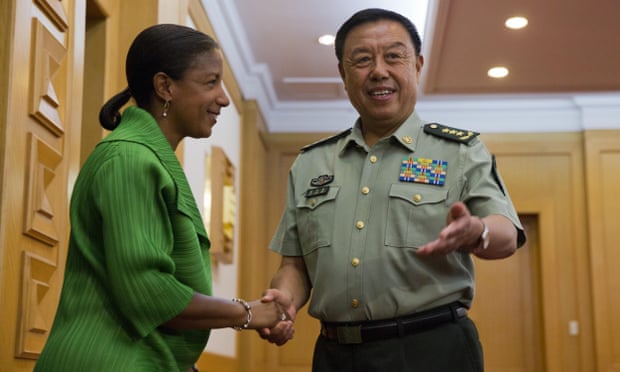
Susan Rice with Fan Changlong at the Chinese Ministry of National Defense in Beijing on August 28 during a visit aimed at resolving tensions over cyber attacks. Talks between US and China officials have continued in Washington. Photograph: Ng Han Guan/AFP/Getty Images
Four days of talks wrap up to help prepare for president Xi Jinping’s visit later this month including a ‘frank and open exchange’ about thorny cyber issues

Senior US and Chinese officials have met to discuss cybersecurity and other issues ahead of Chinese president Xi Jinping’s visit to Washington later this month.

Cybersecurity is a thorny topic between the two powers and China has long been blamed for cyber attacks on US commercial interests and sensitive government personnel records.

The discussions included a “frank and open exchange about cyber issues” between the president’s national security adviser, Susan Rice, and Meng Jianzhu, a senior Communist party secretary for political and legal affairs, the White House said.

Sabtu, 12 September 2015

Data dangers: Can data be too open?


It's a sunny day and canoeists across England head for the nearest river. Before setting out, they check an app that tells them how fast that river is flowing. Too swiftly or too slowly? Then perhaps they'll head to the beach, checking an app for bathing water quality. Afterwards they might relax with a glass of English wine, much improved since growers have been able to identify the most propitious soils in which to plant their vines.

This is the kind of scenario that environment secretary Liz Truss hopes will unfold as the Department for Environment, Food and Rural Affairs (Defra) rolls out its Open Data initiative. It is, she claims, the biggest single government "data give-away". By making 8,000 data sets available to the public, the government says it will make it easier for people to experience the countryside and improve the environment, and save money for businesses.

Rabu, 06 Juni 2012

Vietnam conducts comprehensive assessment of govt websites

On 25 May, Workshop on Information Security Policies towards Developing of E-Governance was hosted by Vietnam Information Security Association (VNISA) and Vietnam Computer Emergency Response Team (VNCERT), to implement Prime Minister’s Instruction and the Guidelines of Ministry of Information and Communications (MIC) on the protection of websites.

Jumat, 02 Maret 2012

CARTES in Asia to Showcase Government Identity Technology

The convergence of biometrics, global operational standards and the integration of public and private services are forging government identity technology ahead in the Asia Pacific region. Identity technology developers and government decision makers at CARTES in Asia conference and exhibition on 28 and 29 March will be able to see and hear about new developments in this sector. On the second day of the exhibition, there will be a full day dedicated to ID Management and e-Government covering innovations, privacy and security issues.

With a population that reaches nearly four billion, the biometric identity industry has been going from strength to strength in Asia Pacific. In the last couple of years countries in South East Asia such as Brunei, Cambodia, Indonesia, Malaysia, Myanmar, Philippines, Singapore, Thailand and Vietnam have embraced technologies such as ePassports, eIDs and eVisas in a bid to communicate with their people and protect their identities. Vietnam is due to issue its first electronic passport by the end of this year and by 2014 the Philippines is expected to be the world’s sixth-largest issuer of ePassports, behind India, the US, Brazil, and Britain.
In order to facilitate interoperability across countries, the ICAO (International Civil Aviation Organization) has introduced e-passport standards: Basic Access Control (BAC) and then Supplemental Access Control (SAC). These new security standards are designed to help countries migrate from traditional paper-based travel documents and protect the passport’s data confidentiality, integrity and anti-cloning.

Isabelle Alfano, Director of CARTES events, Comexposium, said: “A new era of government biometric technology is upon us here in Asia Pacific and across the world. The concept is also changing with more functions being incorporated including social security information, driving licenses, healthcare, banking and transportation applications. And standardization is making the technology more secure and interoperable across different countries. Visitors and exhibitors to CARTES in Asia will be able to find out about all of this and much, much more at CARTES in Asia next month.”

Present in more than 70 countriesworldwide, Oberthur Technologies is one of the key players in identity sector, providing secure documents and issuance systems for more than 60 government programs.

“Oberthur Technologies participates in identity document programs in Asian countries including national electronic ID cards in Cambodia, electronic Driving Licenses for Bangladesh and Passports or electronic Passports in Thailand, Philippines, Taiwan and Nepal” said Mr Cheong Chung Chin, Vice president ID division Asia Pacific. “Oberthur Technologies is glad to take part in the third session of CARTES IN ASIA exhibition to meet our customers and show our latest innovations, products and solutions expertise at our booth”.

On March 28 CARTES in Asia will also provide an insight into major trends shaping ID Management and eGovernment at their conference. The ID Management and eGovernment all-day session will include speakers from Datacard, Gemalto, Global Platform, HID Global, JDSU, Keynectis, Komsco, Natural Security and Oberthur Technologies. The two day conference, which will bring together more than 300 high level conference attendees and over 70 keynote speakers will also cover Mobile Payment, NFC Applications, e-Transaction/e-Banking, Prepaid & Loyalty Programmes, IT Security & Internet of Things.

About CARTES in Asia
Date: 28-29 March 2012
Opening times: 9.30am to 5.30pm
Place: Hong Kong – AsiaWorld-Expo
Organizer: Comexposium
Website: www.cartes-asia.com

koreaittimes.co.id

Selasa, 28 Februari 2012

Authenticating users: Going beyond the password

Passwords are the most common way users confirm their identities so they can be granted access to a given system. However, passwords are also considered a weak form of authentication, so alternative or complementary methods are being used to verify the identity of the user. In this post, I will describe the factors that are most commonly used along with their strengths and weaknesses in order to provide the foundation for a discussion of a multi-factor authentication strategy.

What is authentication?


Authentication is basically the process to confirm that a person (or user) is who they say they are. There are three classic "factors" that can be used to confirm a users' identity:
  • Using something only the user knows
  • Using something unique the user has 
  • Using something that only the user is

    Other factors that can sometimes be used are based on time and location. For example, you could limit valid logon hours to a particular user given their work schedule or limit the locations from where a user can attempt to log in, using geo-location information. These factors tend to be used only in very specific scenarios so they are mostly relegated to complement the classic authentication factors. Let's take a closer look at each of the classic authentication factors.

Something you know

Authentication through something only the user knows (most commonly a password) is the most widely used of all the classic factors. Passwords provide a simple and mostly inexpensive way to perform authentication. Passwords can range from simple 4-digit PIN numbers to complex alphanumeric passphrases. 

Due to their prevalence, the use of passwords has been subject to intense scrutiny and is generally considered to be a weak form of authentication. Their biggest weakness is that users tend to have some bad habits when it comes to choosing their passwords, basing them on information that can be easily guessed or not making them complex enough to withstand a brute force attack. Sometimes however, bad password policy has something to do with it. Some of these weaknesses can be addressed with education and training (for both users and the IT staff).

Something you have


This factor is also in widespread use, most commonly in the form of ATM cards. The basic principle is that the "something you have" is a unique item possessed only by a certain person and the system will accept it as proof of identity of an authorized user.

There are many ways this factor can be implemented in computer systems, using items ranging from smartcards, USB tokens, wireless tokens/cards and more recently, using mobile phones as tokens (via SMS text or downloaded apps). There are several issues to consider when evaluating the use these types of solutions, including deployment costs, hardware/software requirements, usability, user acceptance, item durability, etc.

Stealing the item is the first way an attacker could attempt to compromise this type of system. In this scenario, the attacker has a limited window of opportunity before the owner reports the loss and the stolen item rendered invalid. Copying the item may be more effective, though some items include copy-protection mechanisms to prevent the success of such an attack. Man-in-the-middle attacks may be more complex to execute in some cases, but they can be far stealthier and effective. Take for example the recent compromise of RSA tokens. Another example is the rise of mobile malware, where the compromise of the mobile phone also leads to the compromise of the authentication factor.

Something you are

Using something you are as an authentication factor is essentially using a biometric reading from the user (via a fingerprint, voiceprint or iris scan) and comparing it to an archived recording for that user.

Biometric readings are usually stored as a hash resulting from a mathematical algorithm applied to the reading. The comparison is then made between two hashes and if they have enough similarities, it will be accepted as good enough and the user granted access. Biometric devices therefore can result in a false reading being accepted as true (false positive) or a valid reading being rejected (false negative).

Manufacturers measure these errors using the False Acceptance Rate (FAR) for the percentage of false positives and the False Rejection Rate (FRR) for the percentage of false negatives. To better compare the accuracy between two readers however, the Equal Error Rate (EER, the rate at which both types of errors are equal) should be used. A device with a lower EER is usually more accurate. This type of authentication also presents other challenges in its implementation, including higher costs, user resistance and hardware requirements. Also of consideration is the process of capturing the initial reading of the user ("enrollment") into the biometric system.

Some biometric readers are also vulnerable to man-in-the-middle attacks, where an attacker can capture the reading, record it as it is being sent and replayed at will. Also, biometric readings can be copied or faked (duplicating a fingerprint with a gelatin fake or capturing a voice recording for instance) and are more difficult to change. A user can change a compromised password or receive a new smartcard, but a user cannot easily change their voiceprint for instance.

Another aspect that has sometimes been linked to biometrics category is "how you behave". This aspect is usually used as a way to corroborate an already established identity, rather than provide the initial verification. The best-known example is when a credit card transaction breaks known usage patterns and casts doubt on its validity. Currently, DARPA is looking for new ways to authenticate users through their behavior without interrupting their normal activities.

Here, we examined the different authentication factors available and some of their individual strengths and weaknesses. Next time, we will take a look at what true multi-factor authentication is and what to look for when considering the use of a multi-factor strategy.

Alfonso is a technology specialist with experience in multiple IT roles with the latest one being in information security. 

zdnetasia.com

Rabu, 22 Februari 2012

RIM finally sets up BlackBerry server in Mumbai

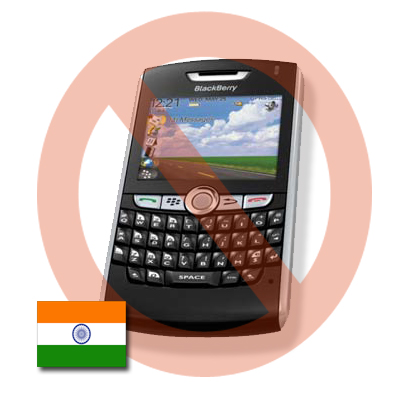
Research In Motion (RIM) has finally set up a server in Mumbai, acceding to requests by Indian government to access data on its BlackBerry enterprise servers, says report. Citing a presentation made at the office of the Home Secretary, the Times of India reported Monday that the BlackBerry servers were inspected by a team of officers and permission to directly access the data for lawful interception was expected to be issued shortly.

The presentation also noted that the Department of Telecom has ordered Finnish phonemaker Nokia to set up a similar server in the country. In the past, RIM had been reluctant to allow India to monitor its enterprise servers. In 2010, the government even warned that it will ban BlackBerry service in the country if RIM does not loosen up on its security.

However, the threat was not carried out as the Canadian phonemaker presented various proposals to allow the government to monitor its users' communications, among one of the suggestions was to install a server in India.

The Times of India report noted that licensing conditions in India dictated that service providers need to have a mechanism to allow security agencies to intercept any conversation or message of any subscribers when required. India had been pressing RIM to do so as security agencies had pointed out that such closed platforms could be used by terrorist groups.

zdnetasia.com

Selasa, 07 Februari 2012

Faster progress needed on cyber-security, says adviser

Dame Pauline Neville-Jones is the government’s special representative to business on cyber-security. Photograph: Graeme Robertson/Getty Images
Ministers need to speed up work on cyber-security because the public and a vast swathe of business have yet to appreciate the threats posed by online crime, a government adviser has said. Dame Pauline Neville-Jones said the strategy was heading in the right direction but needed a push to raise awareness because people were still doing "silly things". "I think the direction is right but the speed is not nearly enough … it needs much more momentum behind this," said Neville-Jones.

She suggested the need for some advertising that would stick in everyone's minds, like the "clunk-click" campaign to encourage people to wear seatbelts. The government could not do the work by itself, she said, but it did need to take a proper lead. "People are entitled to look to government to take a lead and impress upon people the importance of this.

It has a responsibility to strengthen its own systems, and … it needs to strengthen rather modest police capability. "I do think that the Cabinet Office, which is in the lead on this, needs to plot some metrics, have a timetable of various stages that need to be achieved, and audit the progress."

Neville-Jones is a former security minister who is now the government's special representative to business on cyber-security. In a speech for the Global Strategy Forum thinktank, she said people were struggling to understand the threats confronting them, and not nearly enough businesses take the issue seriously. The government had to be prepared to use the "bully pulpit" to raise consciousness and understanding, she said.
"There is a vast swathe of corporates who have valuable intellectual property, much more valuable than they understand, which is inadequately protected," she said.
"They don't even realise it has been stolen. They don't even know they have been the subject of attack. They usually have to be told about it by a third party, most of them do not discover it for themselves. The level of awareness is nothing like it needs to be.

This is a very, very serious state of affairs." She added: "Despite all the scare stories, all the horror stories in the press, people go on doing silly things and careless things. Human nature is a problem." Neville-Jones said she supported the recent decision by Michael Gove, the education secretary, to scrap the teaching of computer science in schools, and said universities needed to design relevant courses that attracted British graduates, "and not just Chinese graduates".

The lessons in school were "no more than jumped up PA studies that are being deserted by children who understand the subject better than their teachers". She said the skills base in this country was "totally inadequate" and that addressing this was "urgent and vital".

Hackers were becoming more sophisticated in the ways they attacked systems, she added, citing the case last year when 2m tonnes of carbon credits were stolen from the EU in the Czech Republic. Neville-Jones said the attack was preceded by a bomb scare that led to back-up computer systems being brought into use. The attack then took place on this back-up system, which was more vulnerable.

guardian.co.uk

Jumat, 03 Februari 2012

ICT Ministry plans cyber-security framework

acceler8or.com
The Information and Communications Technology Ministry will draw up a national cyber-security policy framework to fight online crime and fraud, expecting to submit it to the Cabinet by the end of the year. ICT Minister Anudith Nakornthap said the framework would comprise four areas: national security, the economy, peace in the country, and national infrastructure. The fourth area would include network infrastructure, utility services and energy. The ministry will set up a National Cyber Security Policy Committee to develop the draft of the framework in the near future. It will also revise two relevant laws, the Cyber Crime Law and the E-Transaction Law, to support the policy framework.

Moreover, the ministry has set up two new agencies to handle online malfeasance, the Cyber Security Operation Centre and the Thai Computer Emergency Response Team (ThaiCERT). About 300 cyber-attacks have been reported to ThaiCERT and the agency has been able to solve about 80 per cent of the problems, usually within a couple of days.
Prinya Hom-anek, president of ACIS Professional Center, said this was the right time to develop a framework for cyber-security policy. However, he urged the ministry to choose experts and specialists with experience both internationally and domestically to help develop the draft. Anudith said: "I think this is the first step in Thailand's creation of a security framework to give people, businesses and government confidence to run online transactions, which will drive e-commerce and protect it from cyber-attacks and crime.

As the next step, the framework will lead to a national master plan for cyber-security." He said the ministry expected that the first draft would be completed by next month, and then it would be submitted for public hearing. The ministry will submit it to the Cabinet by year-end. He said various cyber-attacks such as phishing, spam and malware were causing damage and waste for business and the country as a whole.

"I think the national cyber-security policy framework will create confidence [that we will] cope with threats and protect against illegal attacks in cyberspace," Anudith said. On another matter, he said the ministry would submit to the Cabinet within a few days the conclusion of its evaluation of the performance of the executive board of the Software Industry Promotion Agency.

nationmultimedia.com

Sabtu, 31 Desember 2011

Pemerintah Korea Integrasikan Data Center, Tetapkan Patok Ukur Baru Pada IT E-Government (Bagian 1)


Badan negara komputasi dan Informatika Korea Selatan "National Computing & Information Agency-NCIA", telah mulai mewujudkan sebuah ide agar pemerintah menempatkan semua sumber daya IT yang dimiliki semua lembaga pemerintah secara terpusat di satu tempat dan mengelolanya sebagai sumber daya IT yang terintegrasi,hal ini diungkapkan oleh Kim Kyung-sup, presiden NCIA. NCIA menjadi satu-satunya didunia yang berfungsi sebagai Pusat Data Pemerintah Terintegrasi atau GIDC (Government Integrated Data Center). Saat ini, NCIA menjadi rujukan untuk "Tolak Ukur untuk GIDC" dan diakui sebagai salah satu solusi e-Government terbaik di dunia, ujar Dr. Kim. Klaimnya mengenai ini dikuatkan oleh Survey e-Government PBB tahun 2010, dimana Korea menempati peringkat pertama dari 192 negara yang disurvei. Pada tahun 2005 menduduki peringkat ke-5 dan pada tahun 2002 peringkat ke-15. 

"Tidak ada pemerintah lain di dunia ini yang pernah mencoba pekerjaan ini. Pada mulanya, sejumlah orang bersikap skeptis terhadap capaian sukses proyek ini, mengingat berbagai potensi konflik kepentingan diantara berbagai kementerian dan skalanya", ujar Kim .


Menuju Smart E-Government melalui layanan Government Cloud Computing 

Jumlah pengguna telepon cerdas di Korea kita jumlahnya melampaui 20 juta. Berarti 4 dari 10 orang Korea mengguna telepon selular cerdas. Komunikasi yang interaktif telah menjadi fitur yang krusial dalam era cerdas. Di jantung tren, ada layanan komputasi awan atau cloud computing. 

Pemerintah menilai bahwa komputasi awan penting untuk mendekatkan pemerintah dengan masyarakat dan dengan berbagai tren yang sedang berkembang dalam layanan-layanan publik, sehingga pemerintah memutuskan untuk memperkenalkan paradigma baru, Layanan Pemerintah Berbasis ICT. 

Idenya adalah menghadirkan berbagai layanan e-Government yang cerdas melalui Layanan Komputasi Awan Pemerintah atau G Cloud. Pemerintah Korea telah memetakan sebuah rencana untuk menyediakan sebuah komputasi awan dan mobilitas yang mengacu kepada lingkungan. NCIA telah menetapkan 3 sasaran :
  1. mentransfer 50% proses bisnis di berbagai lembaga pemerintah pusat yang bekerja dengan sistem yang berlaku saat ini kedalam sistem berbasis Komputasi Awan,
  2. meningkatkan adaptasi perangkat lunak Open Source hingga 40% dan memotong berbagai biaya operasional hingga lebih dari 30%,
  3. menawarkan Layanan Komputasi Awan Pemerintah yang terbaik di dunia. 

"Untuk mewujudkan tujuan ini, pemerintah kini dalam proses membangun sebuah landasan Komputasi Awan Pemerintah yang berfokus menciptakan berbagai layanan yang terpercaya, memiliki efisiensi dalam pengoperasian, memperkenalkan lebih banyak berbagai standard berbasis open source, untuk menyukseskan migrasi proses bisnis pemerintah kedalam lingkungan baru. 

Berbagai Capaian dan Tantangan Menuju E-Government yang Cerdas 

Sejak terbangunnya NCIA enam tahun yang lalu, lembaga ini telah membuat e-Government menjadi lebih stabil, aman dan efisien. NCIA juga telah melejitkan pertumbuhan perusahaan-perusahan IT kelas menengah dan kecil dan menunjang berbagai aktivitas ekspor model GIDC. 

Komputasi Awan Pemerintah buatan Korea akan diingat sebagai sebuah usaha mengatasi tantangan-tantangan e-Government secara menyeluruh yang paling sukses. Sistem keamanan e-Government kini telah semakin ketat. 

"Sederhananya, sejumlah rangkaian ketentuan pengamanan bekerja secara otomatis menangkal berbagai serangan Cyber yang memperlihatkan betapa keamanan semakin meningkat secara dramatis," jelas DR. Kim. " Jumlah ketentuan pengamanan yang teregistrasi pada awal berdirinya NCIA berjumlah 8.000. Namun ditahun 2011 humlahnya telah bertambah menjadi dua kali lipat. 

NCIA telah mengembangkan sebuah sistem pertahanan yang menyeluruh yang disebut e-ANSI (Advanced National Security Infrastructure) yang mencakup kemanan fisik dan cyber. Terimakasih kepada e-ANSI, NCIA telah sukses mempertahankan semua sistem sekalipun jumlah ancaman Cyber yang terus meningkat. 

Isu keamanan komputasi Awan tetap menjadi perhatian utama dalam inisiatif ini. Orang kerap berpikir bahwa berbagai resiko dapat meningkat sejak semua data dikonsentrasikan di satu tempat. NCIA telah melenyapkan kekhawatiran ini dengan menyediakan sebuah mekanisme pertahanan yang sistematik dan membuat Komputasi Awan bekerja optimal selama 24/7. 

"Kami telah berhasil dalam mengurangi tak hanya biaya-biaya peralatan tetapi juga biaya-biaya operasional seperti gaji, utilitas dan pemeliharan. Oleh karena itu, kita dapat meningkatkan efisiensi dalam mengelola berbagai sumber daya IT milik pemerintah," jelas Dr. Kim. 

NCIA membeli peralatan dan software untuk kepentingan berbagai kementerian dan menawarkan perangkat-perangkat ini melalui virtualisasi dan teknologi otomatisasi. Semua upaya ini ahirnya terbayarkan. Biaya pemeliharaan dan operasional telah berkurang sebesar 30%. 

Pada saat yang sama, jumlah pengeluaran dana yang alokasinya  tumpang tindih telah berkurang secara meyakinkan. Pemerintah juga telah melakukan penghematan sebesar KRW63,4 miliar (USD54,8 juta) semenjak NCIA beroperasi. 

"Kami sedang mengimplementasikan berbagai kebijakan yang bertujuan untuk membentuk sebuah lingkungan pasar  yang mendukung pertumbuhan perusahaan-perusahaan berskala sedang dan kecil," ujar Dr.Kim. "NCIA tidak hanya memperkuat kapabilitasnya dengan menjalankan kemitraan dengan perusahaan-perusahan lokal tetapi juga aktif memperkenalkan tren-tren baru serta berbagai teknologi baru dan menyebarkannya kesemua sektor pemerintah."Perusahaan-perusahaan berskala menengah dan kecil berpartisipasi pada 50% proyek-proyek NCIA setiap tahunnya.

Bersambung : Bagian 2

Martin Simamora | koreaittimes.com

Corruption Perceptions Index 2018

Why China is building islands in the South China Sea

INDONESIA NEW CAPITAL CITY

World Economic Forum : Smart Grids Explained

Berita Terbaru


Get Widget