
Tampilkan postingan dengan label Good Clean Government. Tampilkan semua postingan
Tampilkan postingan dengan label Good Clean Government. Tampilkan semua postingan
Jumat, 13 September 2019


Rabu, 18 Maret 2015
Sabtu, 07 Maret 2015
Rabu, 04 Maret 2015
Rabu, 04 Desember 2013
Corruption Perceptions Index 2013
Corruption Perceptions Index 2013
Corruption Perceptions
Index 2013
The Corruption Perceptions Index 2013 serves as a reminder
that the abuse of power, secret dealings and bribery continue to ravage
societies around the world.
The Index scores 177 countries and territories on a scale
from 0 (highly corrupt) to 100 (very clean). No country has a perfect score,
and two-thirds of countries score below 50. This indicates a serious, worldwide
corruption problem.
Hover on the map above to see how your country fares.
Hover on the map above to see how your country fares. - See more at:
http://www.transparency.org/cpi2013/results#sthash.f3vikl6U.dpuf
Hover on the map above to see how your country fares. - See more at:
http://www.transparency.org/cpi2013/results#sthash.f3vikl6U.dpuf
Senin, 04 Februari 2013
Transparansi Internasional : Indeks Korupsi Sektor Pertahanan Indonesia Mencemaskan

Transparansi Internasional Inggris belum lama ini telah merilis hasil survei global terkait indeks korupsi. Dalam survei tersebut, Indonesia diberi nilai E, satu tingkat diatas nilai terendah, dalam GovernmentDefense Anti Corruption Index. Skor ini berarti bahwa Indonesia dikategorikan korupsi dengan “resiko sangat tinggi.” Hal ini dipertanyakan oleh Wakil Ketua Komisi I DPR, Ramadhan Pohan terkait validitasnya.
Menurut Ramadhan hasil survei tersebut tak berdasar. “Siapa yang terlibat, dimanakah buktinya? Jika seseorang menuding tanpa menyajikan bukti, itu adalah tindakan tirani,” ujar Ramadhan, seorang legislator dari Partai berkusa, Demokrat.
Senin, 26 Desember 2011
More 1M’sia Products, Services In The Pipeline: PM
 |
| NJOI , TV Satelit Gratis bagi segenap rakyat Malaysia |
The government plans to roll out more 1Malaysia products and services for the rakyat, Prime Minister Datuk Seri Najib Abdul Razak announced.
Speaking at the launch of the country’s first free satellite TV station called NJOI, Najib said the government is committed to ensuring the people experience the benefits put in place by his administration.
“This free satellite TV launched today is truly a 1 Malaysia product for the people,” Najib said after launching NJOI at the PPR Cochrane flats.
“For the good of the rakyat, God willing, there will be more of such products and services in time to come,” he said. Najib said more than 50,000 households, especially from the lower income group, will soon enjoy the services of NJOI, made available through Astro in collaboration with the government’s e-Kasih programme.
NJOI will feature 18 TV channels, including Bernama TV and 19 radio stations. Astro will distribute 50,000 NJOI decoders and satellite dishes to recipients under the e-Kasih programme for free. “1Malaysia is not just a philosophy to guide us in nation building,” Najib said. “It is also used to develop products and services that will benefit Malaysians of all walks of life.
All Malaysians must be able to enjoy the benefits and facilities provided by the Government,” he added. On Sunday, Najib launched the first internet protocol television station called 1Malaysia TV which can be accessed online. The 1Malaysia TV, Najib said, was to disseminate fast and accurate information in real-time to the people so that they would not have to rely on other news sources which are often inaccurate and false.
The NJOI service is aimed at narrowing the digital gap, especially among the rural folks and those from the low income category. NJOI services will be made available to all customers by the first quarter of next year. Customers will only need to purchase the decoder and satellite dish without having to pay a monthly subscription fee like conventional Astro users. Meanwhile, Astro’s chief executive officer, Datuk Rohana Rozhan said Astro would introduce NJOI in three phases.
She said in the first phase, Astro would distribute 50,000 NJOI decoders and satellite dishes to recipients under the eKasih programme. “The second phase involves making the NJOI service available to all by the first quarter of 2012, where a customer can purchase the decoder and dish, install them and start to enjoy the services.
“In the third phase, NJOI customers can choose to buy additional content at their own discretion, from a menu of product and services through a prepaid mechanism, which will be available by the middle of 2012,” she said at the launch of NJOI here today, reports Bernama. Rohana said NJOI’s customers could enjoy the 37 TV and radio services such as Astro Tutor, Astro Vanavil, Astro Prima, Astro Oasis, Astro Awani, Bernama TV, Astro AEC, Jia Yu, Makkal TV, iView, iMus, TVi, TV1 and TV2. She also said Astro planned to offer its services or selection of its services via smart devices for its existing customers. “This will be made available in the second quarter of next year,” she said.
.thesundaily.my
Jumat, 07 Oktober 2011
Criticizing KPK, Politician Under Spotlight
Fahri Hamzah urges that Indonesia's Corruption Eradication Commission is shut down.
For information, Fahri reportedly had received Rp150 million from Rokhmin Dahuri. Fahri received the money during the period of between 2002 and 2004 from Ministry of Maritime Affairs and Fisheries’ non-budgetary funds. He claimed to have received the funds for composing Rokhmin’s speech. However, Fahri denied his motive of shutting down KPK was due to a certain sentiment.
"What does it have to do with the case? I was not hurt for being mentioned. Not necessarily everyone who does criticism is ever hurt," he said when contacted by VIVAnews on Wednesday. He also denied the allegation saying that he was put down because his colleague, Misbakhun, being declared as linking to Bank Century case.
"The KPK was set up to go along with the police and prosecutors to combat corruption cohesively. But the fact is, the discordancy is very strong," he said. He also compared the achievements of KPK with similar institution in Hong Kong.
Hongkong’s anti-corruption institution managed to eradicate corruption in three years, so Indonesia’s KPK should have only taken two years, he said. KPK through its chairman Busyro Muqoddas, has directly addressed Fahri’s remark. "If Mr. Fahri has an agenda of disbanding KPK, we'll wait through PKS faction and others through legal channels. We are only implementing the mandate," said Busyro.
VivaNews.com
 |
| Add caption |
Justice and Prosperous Party (PKS) politician, Fahri Hamzah is under the spotlight following his statement during the consultative meeting between the Corruption Eradication Commission (KPK) and the House leaders. Fahri, who is Deputy Chairman of Commission III announced his intention to disband KPK.
His statement stirred up controversy. Some agreed with his opinion, but more denounced it and accused him of being against corruption eradication. In fact, this was not the first time he conveyed the idea. What is wrong between KPK and Fahri? Could this be related to corruption case where the defendant, former Minister of Maritime Affairs and Fisheries, Rokhmin Dahuri pointed his involvement?
 |
| news.okezone.com |
For information, Fahri reportedly had received Rp150 million from Rokhmin Dahuri. Fahri received the money during the period of between 2002 and 2004 from Ministry of Maritime Affairs and Fisheries’ non-budgetary funds. He claimed to have received the funds for composing Rokhmin’s speech. However, Fahri denied his motive of shutting down KPK was due to a certain sentiment.
"What does it have to do with the case? I was not hurt for being mentioned. Not necessarily everyone who does criticism is ever hurt," he said when contacted by VIVAnews on Wednesday. He also denied the allegation saying that he was put down because his colleague, Misbakhun, being declared as linking to Bank Century case.
Fahri said the base of his remark was the many issues surrounding the KPK. For example, the case of Bibit-Chandra, also the discordant relations among KPK, the National Police and Attorney General's Office (AGO) in combating corruption.
"The KPK was set up to go along with the police and prosecutors to combat corruption cohesively. But the fact is, the discordancy is very strong," he said. He also compared the achievements of KPK with similar institution in Hong Kong.
Hongkong’s anti-corruption institution managed to eradicate corruption in three years, so Indonesia’s KPK should have only taken two years, he said. KPK through its chairman Busyro Muqoddas, has directly addressed Fahri’s remark. "If Mr. Fahri has an agenda of disbanding KPK, we'll wait through PKS faction and others through legal channels. We are only implementing the mandate," said Busyro.
VivaNews.com
KPK Terus Kawal Proyek E-KTP
Boleh saja Kementerian Dalam Negeri mengklaim pihak mereka telah melaksanakan enam rekomendasi Komisi Pemberantasan Korupsi (KPK) pada program kartu tanda penduduk elektronik (e-KTP).
Meskipun demikian, lembaga antisuap itu tetap akan mengawasi proyek tersebut hingga 2012 untuk mencegah adanya praktik korupsi.
Hal itu dikemukakan Wakil Ketua KPK Mochammad Jasin yang mengurusi bidang pencegahan kepada Media Indonesia, Rabu (5/10). "Yang terpenting bagi KPK adalah tidak ada praktik korupsi di dalam pengadaannya. Ini kan belum final pengadaannya dan masih ditelusuri," ujar Jasin saat ditemui di kantor KPK, Jakarta.
MediaIndonesia.com
Hal itu dikemukakan Wakil Ketua KPK Mochammad Jasin yang mengurusi bidang pencegahan kepada Media Indonesia, Rabu (5/10). "Yang terpenting bagi KPK adalah tidak ada praktik korupsi di dalam pengadaannya. Ini kan belum final pengadaannya dan masih ditelusuri," ujar Jasin saat ditemui di kantor KPK, Jakarta.
MediaIndonesia.com
KPPU Curigai Tender Program E-KTP

Komisi Pengawas Persaingan Usaha (KPPU) menyelidiki tender KTP Elektronik (E-KTP) senilai Rp5,84 triliun karena diduga ada persengkokolan proyek tersebut di sejumlah daerah. "Rincian nilai tendernya mencapai Rp5.841.896.144.999," kata Kepala KPPU KPD Surabaya, Dendy Rahmad, Jumat (30/9).
Menurut dia, KPPU telah menindaklanjuti laporan yang masuk ke pihaknya pada tanggal 14 Juli 2011 dengan Nomor Laporan 131/KPPU-L/VII/2011 terkait dugaan persekongkolan tender pada proyek E-KTP.
"Penyelidikan ini berdasarkan tugas dan kewenangan kami yang diatur dalam pasal 35 juncto pasal 36 Undang - Undang Nomor 5 Tahun 1999 tentang Larangan Praktek Monopoli dan Persaingan Usaha Tidak Sehat," ujarnya. Setelah melakukan serangkaian klarifikasi, ia mengemukakan, sejak tanggal 28 September 2011 KPPU mulai meningkatkan laporan ini ke tahap penyelidikan.
"Penyelidikan ini bertujuan untuk memperdalam dan mengumpulkan bukti-bukti atas dugaan pelanggaran pasal 22 UU No.5/1999 terhadap potensi persekongkolan tender pelelangan pekerjaan penerapan KTP berbasis NIK Nasional (KTP Elektronik) tahun 2011," katanya. Ia menambahkan, dugaan tersebut melibatkan Terlapor I yakni panitia pelelangan pekerjaan penerapan KTP berbasis NIK Nasional (KTP Elektronik) tahun 2011. Lalu, Terlapor II yaitu Konsorsium PN dan Terlapor III Konsorsium AG.
"Sementara, pasal 22 UU No. 5/1999 mengatur bahwa pelaku usaha dilarang bersekongkol dengan pihak lain untuk mengatur dan atau menentukan pemenang tender sehingga dapat mengakibatkan terjadinya persaingan usaha tidak sehat," katanya. Sesuai kewenangan dan dugaan pelanggaran pasal tersebut, ulas dia, Tim Penyelidik KPPU akan fokus pada isu apakah terjadi persekongkolan atau pengkondisian pemenang tender.
MediaIndonesia.com
Selasa, 27 September 2011
Corruption in India : A million rupees now

THE prime minister’s loyalty to his friends looks to be ever more a fault. This week parliament grilled Manmohan Singh over his latest failure to fight corruption and his habit of sticking with compromised allies. The grilling concerned P.J. Thomas, the man Mr Singh appointed to lead India’s fight against corruption.
Mr Thomas was, to put it politely, an unorthodox choice to lead the national “vigilance” commission. A former official in the scandal-besmirched telecoms ministry, he faces a longstanding charge over an import scam. He has done himself few favours by pointing out that 28% of sitting lower-house members of parliament also face criminal charges or inquiries. Worse was the government’s claim that a vigilance chief need not have an impeccable character (presumably on the grounds that it takes one to know one). On March 3rd the Supreme Court forced him out. The prime minister fended off opposition demands that he should resign.
His poor judgment over Mr Thomas fits a pattern. Nobody says the prime minister is personally corrupt. But he looks weak by seeming to let others steal. Last year the Supreme Court ticked him off and the opposition called for him to quit over the government’s failure to look into suspicious licensing of the 2G telecom spectrum. Now the Central Bureau of Investigation is starting an inquiry into corruption at the highest levels over the shoddily run Commonwealth games. Mr Singh, again, is bound to be embroiled.
The Supreme Court has its tail up. Its rulings refer ever more often to corruption—over 50 did so last year. Now it lambasts the government for failing to take on crooks who funnel “black money” overseas. Some say that $450 billion of ill-gotten gains or untaxed earnings are sitting in foreign banks. The court seems to imply that the Congress party, which heads the government coalition, has protected powerful friends.
On March 7th the hyperactive Supreme Court justices scored another victory, with the arrest of Hasan Ali Khan. A flamboyant horse-owner, he has been charged with money laundering, which he denies. He is alleged to have $8 billion stuffed in Swiss bank accounts.
India’s “season of scams” was launched late last year, thanks to the breakdown of an unspoken political truce in which no party fussed too much about corruption, allowing all to prosper from it. Now the opposition Bharatiya Janata Party (BJP) has broken ranks, betting that it can tap into widespread fury over corruption and so dent Mr Singh’s clean image, if not topple him. The BJP may be on to a good thing: over 80% of Indians tell pollsters that graft is worse than ever.
Though a general election is not due until 2014, and despite facing corruption scandals of its own, the BJP is pushing on. By boycotting parliament, it closed most of the winter session, until it won the inquiry into graft that it had demanded. In turn the press, the courts and street protesters picked up the campaign. The opposition may be keeping in mind an earlier defeat for Congress, in 1989, when voters punished the party over huge kickbacks that flowed from an arms deal with Bofors, a Swedish company.
In response, Mr Singh and his (and Congress’s) boss, Sonia Gandhi, say they will soon announce sweeping reforms. These may include state funding for political parties, the removal of discretionary powers abused by politicians and civil servants, and the ratification of a UN corruption convention. They might do well to look, too, at Bihar state, where elected officials and civil servants must now publish a list of all their private assets. Even more importantly, they could push on with cleaner ways to help the poor. By one estimate, two-fifths of state paraffin subsidies are stolen, earning a “fuel mafia” $2 billion a year. In Uttar Pradesh reportedly over $40 billion of food and other subsidies have been bilked over five years.
From the grassroots up
How all this will shake out at the polls will become clearer next month, when four states—West Bengal and Assam in the east, Tamil Nadu and Kerala in the south—hold assembly elections. Perhaps voters will punish dirty politicians. Too often, though, for all their harrumphing about ghotala (Hindi for scams), voters are swayed during election campaigns by candidates’ gifts of rice, rupees, saris and television sets.
Yet hopeful initiatives do exist among those truly fed up with corruption. Technology looks to provide especially promising solutions. Last year Swati Ramanathan helped to found a website, www.ipaidabribe.com. Indians post details of how they are forced to bribe. “Rather than moralise about corruption,” she says, “we need first to know the details of what is happening, and uncover its market price.”
In seven months the site has lodged 5,000 reports of paying bribes. On March 9th, for example, someone in Belgaum, Karnataka, admitted shame after giving 200 rupees ($4) to pass a driving test. In Mumbai it costs 1,000 rupees to register a baby. Bigger bribes are usually paid when land is at stake. Perhaps when Indians are better informed they will feel more empowered and refuse to pay. Reportedly, Bangalore’s transport commissioner likes the site too, as it lets him see how corrupt his junior officials have become.
More hopeful yet are reforms that take away the chance for officials to behave improperly. Gujarat’s anti-graft commissioner, Manjula Subramaniam, praises a tendering system where companies bid online for public contracts, for example for road-building. This helps her anti-graft department spot anything suspicious. She can also watch funds that sit unused in state coffers, and move them before any light-fingered officials get there.
For ordinary people, more obviously valuable is a four-year-old system for homeowners to assess property tax online, rather than have crooked inspectors visit their homes. And the benefits of technology are spreading fast, as every village in Gujarat has been hooked up to broadband and to state databases.
In one of them, Uvarsad, a farming district, a privately managed local e-government office allows Suryakant Patel to print off the title deeds to his 20-acre wheat and rice farm. It takes two minutes and a ten-rupee fee. Then he walks around the corner to a bank, to raise a loan to buy a new irrigation pump. In the past, he says, getting the deed would have taken days, and might have depended on the whim of a civil servant. Change can come fast, he reckons. Mr Singh, take note.
economist.com
Selasa, 20 September 2011
The Philippines assesses local govt performance

The Department of the Interior and Local Government (DILG) Barangay Governance Performance Management System (BGPMS) has recorded increasing compliance of local government units (Barangays) to the standards on good governance set by DILG. According to DILG BGPMS representative, Mediatrix Rubio, “Barangays are competing in complying with their mandates in the performance areas of governance, administration, social services, economic development, and environmental governance.”
One year down its implementation, BGPMS determines the level of compliance of local government units in the identified service areas through a specific scoring and rating system to improve the quality of programs and local policies.
In the performance assessment, problems by area are also identified to determine the corrective measures to be installed where necessary.
Rubio added that findings reveal that under governance, the barangay local government units are excelling in local legislation, transparency, and citizen’s participation as shown by their high performance grades gathered by assessment teams.
While previous records show that administration covering development planning, revenue generation, revenue allocation and utilization, fiscal accountability, facilities and customer service, and human resource management and development are slowly complied by the basic political unit, recent DILG monitoring boards revealed that 98 per cent of the barangays have prepared their different barangay plans, with expected budget and expenditures, and mandated councils with specific administrative roles.
futuregov.asia
Selasa, 06 September 2011
Thailand to improve ranking in World Bank’s Ease of Doing Business

Thailand’s Ministry of Commerce is to push Thailand into the top ten ranks of World Bank’s Ease of Doing Business Index. Deputy Commerce Minister Siriwat Kajornprasart said the Department of Business Development was assigned to manage the matter in accord with the government’s policy to strengthen the domestic economy with improved business governance so that the country is more attractive for business operations.
Thailand is currently positioned 19th in the Ease of Doing Business Index, ranking economies from 1 to 183, with first place being the best.
According to the World Bank, a high ranking means the regulatory environment is conducive to business operations.
Strategies leading to the new target, being in the Top Ten, is so that the government will reduce complicated procedures and improve its online services in order to become an e-government.
 |
| Thailand is currently positioned 19th in the Ease of Doing Business Index, ranking economies from 1 to 183, with first place being the best. economic sectors, while Thai entrepreneurs, including small- and medium-sized entreprises (SMEs) should be promoted for business quality and management innovation. via Thailand to be pushed to enter Top 10 ‘Ease of Doing Business’ Index. Economies are ranked on their ease of doing business, from 1 – 183. A high ranking on the ease of doing business index means the regulatory environment is more conducive to the starting and operation of a local firm. This index averages the country’s percentile rankings on 9 topics, made up of a variety of indicators, giving equal weight to each topic. The rankings for all economies are benchmarked to June 2010. |

thailand-business-news.com
Senin, 05 September 2011
Korupsi di Kementerian Marak, SBY akan Evaluasi
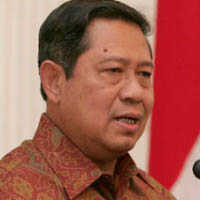
Ada dua kementerian yang akhir-akhir ini menjadi sorotan karena kasus korupsi, yakni Kementerian Pemuda dan Olahraga dan Kementerian Tenaga Kerja dan Transmigrasi. Selaku kepala pemerintahan, Presiden Susilo Bambang Yudhoyono (SBY) akan menggelar evaluasi guna mencegah hal yang sama terulang di kementerian lain.
"Iya tentu presiden nanti akan melakukan evaluasi terhadap kinerja kabinet. Ini memang tidak dilaporkan, tapi bersama-sama dengan pak wakil presiden, itu selalu dilakukan evaluasi," kata juru bicara kepresidenan Julian Aldrin Pasha di Bina Graha, Jakarta, Senin (5/9/2011).
Secara umum, Julian mengatakan bahwa Presiden SBY menyerahkan semua kasus yang melibatkan para pegawai kementerian ke proses hukum. Langkah evaluasi bukan untuk mengintervensi kasus, tapi untuk melakukan perbaikan.
"Jadi kalau memang ada satu kementerian yang perlu untuk dikoreksi atau dperiksa berkaitan dengan adanya kasus-kasus di dalamnya, tentunya dalam hal ini tidak ada tindakan atau sikap presiden yang sifatnya intervensi terhadap kasus tersebut," urainya.
Menurut Julian, sikap SBY sudah jelas dalam kasus ini. Pemberantasan korupsi harus tetap dijalankan, tanpa pandang bulu.
"Namun yang jelas pesan presiden atau sikap presiden dalam hal penegakan hukum dan pemberantasan korupsi kan jelas bahwa ya kalau memang secara sah terbukti bersalah, maka siapa pun itu diproses dan ditindaklanjuti sesuai dengan mekanisme, prosedur hukum yang berlaku. Jadi semua berkedudukan sama, equality before the law," terangnya.
detiknews.com
Senin, 29 Agustus 2011
KPK Masih Telaah Dugaan Korupsi e-KTP

Komisi Pemberantasan Korupsi (KPK) membantah telah membuat rekomendasi kepada Kementerian Dalam Negeri terkait proyek pengadaan Kartu Tanda Penduduk Elektronik (E KTP).
Juru Bicara KPK Johan Budi menegaskan, kerjasama KPK dengan Kemendagri bukan untuk proyek pengadaan E KTP, akan tetapi kajian penggunaan E KTP untuk menerapkan Single Identity Number (SIN) sebagai upaya pencegahan kasus korupsi dan pencucian uang.
"Kalau proyek pengadaan E KTP, KPK nggak ikut. Kalau pengadaan itu ada LKPP dan auditnya ada di BPK," kata Johan Budi di Kantor KPK, Kamis malam, 25 Agustus 2011.
Sementara terkait laporan dugaan korupsi pengadaan E KTP oleh Government Watch (GOWA), Selasa lalu, yang mencapai Rp1 triliun, Johan mengatakan laporan tersebut tengah ditelaah di Bagian Pengaduan Masyarakat KPK (Dumas KPK).
"Masih kita telaah di Dumas. Tidak mungkin setiap orang lapor, terus besoknya sudah ada yang jadi tersangka," pungkasnya.
Sebelumnya laporan investigasi yang dilakuka GOWA sejak Maret hingga Agustus 2011, ditemukan dugaan kolusi pada penyelenggaraan lelang pengadaan e-KTP tahun 2011. Lelang ini diadakan oleh Direktorat Jenderal Kependudukan dan Catatan Sipil Kementerian Dalam Negeri RI.
Hasil audit forensik GOWA tersebut menemukan tak kurang dari 11 penyimpangan, pelanggaran, dan kejanggalan yang kasat mata dalam proses pengadaan lelang tersebut.
GOWA mengklasifikasi fakta penyimpangan selama proses pelaksanaan pengadaan e-KTP dalam tiga tahapan lelang. Tahapan tersebut meliputi sebelum, penyelenggaraan lelang dan pelaksanaan pekerjaan yang dilelangkan.
vivanews.com
Kamis, 25 Agustus 2011
Thai PM Announces Government Urgent, Long-Term Policies
The parliament meeting started from 9:15 a.m. with 484 MPs and 147 senators attended.
 |
| Thailand Government Complex Building dreamstime.com |
Yingluck said the Pheu Thai-led government will implement the following eight policies:
- The urgent policies
- The policy on national security
- The economic policy
- The policy on social and quality of life
- The policy on natural resources and environment
- The policy on science and technology, research and innovation
- The policy on foreign affairs and international economics
- The policy on good governance.
The 44-pages policies are divided into the urgent and long-term polices, which are needed to be implemented in the first year in office and in four-year term, respectively.
Those 16 urgent policies include the policies to create political reconciliation, to fight against drug trafficking, to reduce corporate tax rates and to provide soft loans to the poor.
Before the policy delivery started, approximately 200 red- shirts or the United Front for Democracy against Dictatorship (UDD) members gathered in front of the Parliament compound to show support for the prime minister and her government.
Coming also was the anti-government multi-color group who submitted an open letter to the House Speaker Somsak Kiatsuranont expressing their opposition to some of the government's policies including the move to amend the 2007 Constitution.
The House Speaker announced also that the government coalition and opposition parties had 11 hours each while the senators were allocated 7 hours 40 minutes to scrutinize the government policies.
The joint-sitting will be carried out for two days or August 23- 24. About 450 police officers have been deployed to secure order around the Parliament compound and prevent confrontation between different political groups.
UNPAN Asia & Pacific
Jumat, 19 Agustus 2011
E-portal to the future
Universal online government services is the goal by 2015 through a planned all-purpose website.
 |
| Customers can check vessel or plane availability on the Customs Department site |
In just a few short years, new small businesses will be able to apply for their permits and access other services electronically via a planned new government website that will automatically forward their information to the relevant state agencies.
The e-government portal will provide the public and local businesses with more convenient access to one-stop information and services.
Unlike the more conventional paper-based registration for new startups, the e-portal will encourage greater participation in democratic institutions and processes while improving the quality of state services.
"The goal is for Thailand to offer universal government services online by 2015, allowing public access via any device around the clock," said Sak Segknoonthod, director of the Information and Communications Technology Ministry's recently established Electronic Government Agency (EGA).
 |
| file taxes with the Revenue Department |
The EGA is already playing an important role as technology adviser to state agencies while coordinating efforts among them.
A UN study on e-government readiness ranked Thailand 76th globally last year, slipping from 64th in 2009. The country also dropped from third place to fourth within Asean.
"Legal issues and broadband availability are major constraints impeding state agencies from offering full e- services," said Mr Sak.
The EGA will assess all e-government services this year while encouraging greater use of information technology and IT professionals in government agencies.
Early this year, it conducted a survey of 700 e-government services, with the results showing a distinct lack of interagency communication.
Of the total, only 5% were able to provide anything resembling full services with form submission and inquiries accepted, while 3% had some level of multimedia interaction.
The vast majority, 92%, offered only a basic service level such as posting information to be read on the website.
As a start, the EGA will introduce its first e-service this year, the "national single window", allowing citizens to access electronic data and share and integrate information among 35 state agencies and private organisations in the areas of import, export and logistics.
International cross-border data sharing is also in the pipeline.
Led by the Customs Department, the national single window will provide one-stop service for documentation procedures for exporters and importers.
 |
| check the breadth of services on the all-purpose e-government portal |
The system will reduce many time-consuming manual processes and cut transport costs for the current 125,000 exporters and importers in Thailand by at least US$3.2 billion annually.
The shortened time frame will improve companies' competitiveness, especially for SMEs, in turn strengthening the country's overall competitiveness.
Mr Sak said the EGA will extend its reach to handset devices in order to accommodate the increasing numbers of mobile users.
Kiosks will be set up to help expand e-government service to remote rural areas.
"Thailand now has 20 million internet users, while the other 45 million have no access," said Mr Sak, adding that the EGA will work with Thailand Post branches nationwide.
To date, the EGA has provided 120,000 e-mail accounts for civil servants. Mr Sak said planned cloud services will allow officials to choose their storage, server, operating system and database software on a pay-per-use basis.
This will eliminate current IT constraints, particularly time-consuming procurement procedures.

In October, the EGA will test government cloud services on its existing internal data centre as a pilot project using Microsoft Office 360, the online version of Microsoft Office.
"then we'll evaluate the results and provide services in line with existing laws," said Mr Sak.
He said the EGA has asked cloud service providers in Thailand including TOT Plc and CAT Telecom to assist by using their networks. This will allow the agency to manage service quality while not having to invest on its own.
The infrastructure for the cloud services will be a collaborative effort including a government backup site and disaster recovery service paid monthly or per use without an upfront investment.
Mr Sak said adopting cloud technology will increase IT use among state agencies and ease the IT staff shortage.
"At the end of the day, cloud computing will an IT response to the changing needs of agencies. IT staff will switch from an operational role to systems analysis," Mr Sak added.
bangkokpost.com
Jumat, 12 Agustus 2011
Kasus Korupsi E-KTP Baru Tahap Penyidikan
 |
| Warga di masuakan datanya saat pembuatan e-KTP di kelurahan Menteng, Jakarta, Selasa (9/8). Pembuatan kartu tanda penduduk elektronik / e-KTP mengalami keterlambatan disebabkan oleh jaringan yang bermasalah sehingga penerapannya hingga kini baru di lima kelurahan di Jakarta. TEMPO/Tony Hartawan |
Kejaksaan Agung memastikan penanganan kasus korupsi proyek kartu tanda penduduk elektronik (e-KTP) masih dalam tahap penyidikan. Kejaksaan membantah pernyataan yang beredar sebelumnya bahwa kasus ini sudah diserahkan ke penuntutan. "Siapa bilang, masih di penyidikan, kok," kata Jaksa Agung Muda Tindak Pidana Khusus, Andhi Nirwanto, di kantornya, Selasa, 9 Agustus.
Kepada sejumlah media cetak dan eletronik, Kepala Pusat Penerangan Hukum Noor Rachmad pada 16 Maret lalu menyatakan kejaksaan secara resmi telah menyerahkan berkas 4 tersangka ke penuntutan. Hal senada juga diungkapkan Direktur Penyidikan Pidana Khusus Jasman Pandjaitan.
Namun saat dikonfirmasi ulang, Noor Rachmad membantah pernah menyampaikan pernyataan itu. Ia menyatakan bahwa tim penyidik pidana khusus masih menulusuri dugaan korupsi dalam proyek itu. "Saya tidak pernah bilang begitu (ke penuntutan)," katanya.
Kejaksaan agung menelusuri pengadaan e-KTP dari Direktorat Jenderal Administrasi Kependudukan, Kementerian Dalam Negeri pada 2009. Anggaran proyek ini mencapai Rp 15,4 miliar.
Kejaksaan menduga proyek ini dikorupsi lantaran pengadaan alat pembuat e-KTP yang tercantum dalam dokumen penawaran berbeda dengan alat yang disediakan konsorsium PT Karsa Wisesa Utama dan PT Inzaya Raya selaku pemenang tender. Bahkan alat tersebut tidak mampu menyimpan biodata, sidik jari, dan foto baru.
Kejaksaan kemudian menetapkan empat tersangka yakni H Irman, Direktur Pendaftaran Penduduk Kementerian Dalam Negeri selaku Pejabat Pembuat Komitmen, Dwi Setyantono selaku Ketua Panitia Pengadaan Barang, Suhardjijo selaku Direktur PT Karsa Wira Utama, serta Indra Wijaya selaku Direktur Utama PT Inzaya Raya.
Noor mengatakan jaksa tidak mungkin menyerahkan berkas tersangka ke penuntutan. Sebab jaksa belum mengantongi perhitungan kerugian negara dari Badan Pengawasan Keuangan dan Pembangunan (BPKP). "Badan pengawasan sedang merampungkan perhitungannya," ucap dia.
TempoInteraktif.com
Rabu, 10 Agustus 2011
Moscow’s e-government plan outdated – audit
 |
| Russia Time |
Accountants checking the books for a Moscow-government project worth a quarter of City Hall's annual budget have found numerous violations.
The project is aimed at turning the capital into an information society by installing Wi-Fi points all over the city, computerization of all schools and sites of public importance, as well as launching a convenient e-government system.
The auditors, however, say that the program is not transparent enough: While more than $10 million (one-fourth of Moscow’s budget) for this project were spent on the program, there are still practically no results.
The scandal started when independent specialists reported that by the time the operating systems are installed around the city, it will be outdated. The government agreed with the experts, and is now launching an investigation into the case.
Moscow Mayor Sergey Sobyanin, upon coming to power, promised to alter the program of his predecessor by making it cheaper and more effective. However, in less than a year the new mayor also encountered harsh criticism from the government.
The money was allocated at making Moscow a hi-tech city of the future. The program comprised four major sections, among them development of IT in order to improve quality of life in the Russian capital, an improved management program for the city’s affairs, a revamped communications system and the development of new media and advertising in the capital.
Russia Time
Langganan:
Postingan (Atom)