
Tampilkan postingan dengan label ICT. Tampilkan semua postingan
Tampilkan postingan dengan label ICT. Tampilkan semua postingan
Jumat, 21 Agustus 2020


Kamis, 23 Agustus 2018
Election Security: What Can Governments Do Now?
By Dan Lohrman

Protecting the integrity of elections is a hot topic. From
cyberattacks to fake news influencing public opinion to other forms of
external manipulation that could undermine democracies, voting security
has risen to become a top issue for global governments. Here’s what you
need to know and potential next steps for the public and private
sectors.
- What really happened with Russia in the U.S. 2016 presidential election?
- Were any votes changed as a result of hacked voter machines?
- How did social media and fake news play into influencing voter decisions on candidates?
- What must be done now to better protect upcoming elections?
These questions, and many similar inquiries, have been asked for the
past 15 months, and some important new information has now surfaced to
help in formulating judgments and hopefully gain closure. But regardless
of pronouncements from leaders on the left, right and center of the
political spectrum (who generally see this issue very differently),
there is a growing sense of urgency for new actions to be taken
regarding protections for future election security.
This election security topic is of paramount importance to our
nation. As Juan C. Zarate, chairman and co-founder of the Financial
Integrity Network and former deputy national security advisor for
combating terrorism, recently wrote:
“Fair elections are at the core of every democracy. Russia's actions
surrounding the 2016 American election were aimed at undermining the
confidence of the democratic process.”
What follows are several excellent recommendations to protect our
votes. After framing the top election issues, this blog focuses on
actions that governments need to take now.
Rabu, 08 November 2017
Eric Schmidt on AI: ‘Trust me, these Chinese people are good’

The
billionaire believes that the US government needs to do more to maintain its
lead in artificial intelligence. China released an AI strategy in July,
which revealed that it plans to become a world leader in the field by 2030.
Eric Schmidt, the executive chairman of Google
parent company Alphabet, has warned that China is poised to overtake the US in
the field of artificial intelligence (AI) if the US government doesn’t act
soon.
Speaking at the Artificial Intelligence and
Global Security Summit on Wednesday, the former Google CEO said: “Trust me,
these Chinese people are good.”
He added: “They are going to use this
technology for both commercial as well as military objectives with all sorts of
implications.”
China published its AI strategy in July and said that it wanted to be the world leader in AI by
2030.
New technologies, new content opportunities

Across the globe, news organizations are investing in new methods
for producing and delivering content. What are the motivations behind these
investments and what benefits do they bring?
Let's explore how publishers have
been experimenting with new ways of storytelling...
Most Asia-Pacific regions are smartphone-first. Should you be?

Reuters Institute research, which looked at seven
Asia-Pacific markets, confirms that Hong Kong, Singapore, South Korea, Taiwan,
and Malaysia are all mobile-first markets.
In three of these markets mobile-use has
reached or is approaching 60%. This widespread use of smartphones has been
facilitated by higher penetration rates of smartphone making and mobile
broadband in the region.
These figures are much higher than in some
developed markets in North America and Western Europe, but indicate future rises
in mobile use.
Publishers are already adapting to this new
revenue stream with investment and experimentation in mobile alerts and notifications to reach news
audiences.
Hong Kong govt's digital transformation commitment detailed

Apart
from the unprecedented focus on technology and innovation development, the
latest Policy Address announced last month also demonstrates Chief Executives
Carrie Lam’s commitment to transform the government’s technology practice.
Policies that include a new procurement arrangement and CE-led Steering
Committee on Innovation and Technology are considered by industry veterans and
former civil servants as a digital transformation within the Hong Kong SAR
Government.
“The
overall direction is positive and encouraging, but it also raises a lot of
question marks, particularly around the implementation,” Raymond Wong, the
former assistant director (information systems) of the Hong Kong Immigration
Department said.
“With
Carrie’s personal commitment in technology development and close collaboration
between her executive council members, I am confident with the upcoming
development in technology,” said Fanny Law, chairman of the board of directors
at the Hong Kong Science and Technology Park (HKSTP). “Of course, the results
remain to be revealed upon the deployment of these policies.”
Sabtu, 12 September 2015
What is holding up Philippines' e-government?

If you lament the
slow-moving traffic in the Philippines, you shouldn’t feel impatient with other
things that may move even slower in this country when it has something to do
with public administration and governance.
Next to the snail’s
pace in the delivery of justice in this country, we nominate the formation of
an overseer for information and communications technology (ICT) as the next
worst.
Now over a decade in
the making, the establishment of a government body that would be in charge of
developing, planning, and promoting the government’s ICT agenda is still in
limbo despite being tagged as a priority measure. How difficult can this task
be?
On closer scrutiny,
this is a case where the horses are running full speed ahead, except someone
forgot to hitch them to the chariot. We have individual ICT programs for most
government agencies that thinks it needs one.
Kamis, 21 Februari 2013
e-Government Di Jerman - Bagian 1

Walaupun teknologi mengalami banyak kemajuan, mengantri untuk mengisi bentuk-bentuk dan menyelesaikan rencana-rencana kartu-kartu identitas penduduk dan isu-isu administrasi, hal ini sama sekali bukanlah sebuah hal pada masa lalu, Banyak warga Eropa masih menghabiskan waktu berjam-jam untuk mengurus hal-hal semacam ini. Itu sebabnya mengapa konsep e-Government, begitu pentingnya, karena konsep ini menjanjikan untuk menciptakan efisiensi-efisiensi dan secara signifikan mempersingkat waktu yang dipergunakan oleh masyarakat.
Rabu, 06 Juni 2012
Vietnam conducts comprehensive assessment of govt websites

Jumat, 02 Maret 2012
CARTES in Asia to Showcase Government Identity Technology

The convergence of biometrics, global operational standards and the integration of public and private services are forging government identity technology ahead in the Asia Pacific region. Identity technology developers and government decision makers at CARTES in Asia conference and exhibition on 28 and 29 March will be able to see and hear about new developments in this sector. On the second day of the exhibition, there will be a full day dedicated to ID Management and e-Government covering innovations, privacy and security issues.
With a population that reaches nearly four billion, the biometric identity industry has been going from strength to strength in Asia Pacific. In the last couple of years countries in South East Asia such as Brunei, Cambodia, Indonesia, Malaysia, Myanmar, Philippines, Singapore, Thailand and Vietnam have embraced technologies such as ePassports, eIDs and eVisas in a bid to communicate with their people and protect their identities. Vietnam is due to issue its first electronic passport by the end of this year and by 2014 the Philippines is expected to be the world’s sixth-largest issuer of ePassports, behind India, the US, Brazil, and Britain.
With a population that reaches nearly four billion, the biometric identity industry has been going from strength to strength in Asia Pacific. In the last couple of years countries in South East Asia such as Brunei, Cambodia, Indonesia, Malaysia, Myanmar, Philippines, Singapore, Thailand and Vietnam have embraced technologies such as ePassports, eIDs and eVisas in a bid to communicate with their people and protect their identities. Vietnam is due to issue its first electronic passport by the end of this year and by 2014 the Philippines is expected to be the world’s sixth-largest issuer of ePassports, behind India, the US, Brazil, and Britain.
In order to facilitate interoperability across countries, the ICAO (International Civil Aviation Organization) has introduced e-passport standards: Basic Access Control (BAC) and then Supplemental Access Control (SAC). These new security standards are designed to help countries migrate from traditional paper-based travel documents and protect the passport’s data confidentiality, integrity and anti-cloning.
Isabelle Alfano, Director of CARTES events, Comexposium, said: “A new era of government biometric technology is upon us here in Asia Pacific and across the world. The concept is also changing with more functions being incorporated including social security information, driving licenses, healthcare, banking and transportation applications. And standardization is making the technology more secure and interoperable across different countries. Visitors and exhibitors to CARTES in Asia will be able to find out about all of this and much, much more at CARTES in Asia next month.”
Present in more than 70 countriesworldwide, Oberthur Technologies is one of the key players in identity sector, providing secure documents and issuance systems for more than 60 government programs.
“Oberthur Technologies participates in identity document programs in Asian countries including national electronic ID cards in Cambodia, electronic Driving Licenses for Bangladesh and Passports or electronic Passports in Thailand, Philippines, Taiwan and Nepal” said Mr Cheong Chung Chin, Vice president ID division Asia Pacific. “Oberthur Technologies is glad to take part in the third session of CARTES IN ASIA exhibition to meet our customers and show our latest innovations, products and solutions expertise at our booth”.
On March 28 CARTES in Asia will also provide an insight into major trends shaping ID Management and eGovernment at their conference. The ID Management and eGovernment all-day session will include speakers from Datacard, Gemalto, Global Platform, HID Global, JDSU, Keynectis, Komsco, Natural Security and Oberthur Technologies. The two day conference, which will bring together more than 300 high level conference attendees and over 70 keynote speakers will also cover Mobile Payment, NFC Applications, e-Transaction/e-Banking, Prepaid & Loyalty Programmes, IT Security & Internet of Things.
About CARTES in Asia
Date: 28-29 March 2012
Opening times: 9.30am to 5.30pm
Place: Hong Kong – AsiaWorld-Expo
Organizer: Comexposium
Website: www.cartes-asia.com
koreaittimes.co.id
Selasa, 28 Februari 2012
Authenticating users: Going beyond the password

Passwords are the most common way users confirm their identities so they can be granted access to a given system. However, passwords are also considered a weak form of authentication, so alternative or complementary methods are being used to verify the identity of the user.
In this post, I will describe the factors that are most commonly used along with their strengths and weaknesses in order to provide the foundation for a discussion of a multi-factor authentication strategy.
What is authentication?
Authentication is basically the process to confirm that a person (or user) is who they say they are. There are three classic "factors" that can be used to confirm a users' identity:
What is authentication?
Authentication is basically the process to confirm that a person (or user) is who they say they are. There are three classic "factors" that can be used to confirm a users' identity:
- Using something only the user knows
- Using something unique the user has
- Using something that only the user is
Other factors that can sometimes be used are based on time and location. For example, you could limit valid logon hours to a particular user given their work schedule or limit the locations from where a user can attempt to log in, using geo-location information. These factors tend to be used only in very specific scenarios so they are mostly relegated to complement the classic authentication factors. Let's take a closer look at each of the classic authentication factors.
Something you know
Authentication through something only the user knows (most commonly a password) is the most widely used of all the classic factors. Passwords provide a simple and mostly inexpensive way to perform authentication. Passwords can range from simple 4-digit PIN numbers to complex alphanumeric passphrases.
Due to their prevalence, the use of passwords has been subject to intense scrutiny and is generally considered to be a weak form of authentication. Their biggest weakness is that users tend to have some bad habits when it comes to choosing their passwords, basing them on information that can be easily guessed or not making them complex enough to withstand a brute force attack. Sometimes however, bad password policy has something to do with it. Some of these weaknesses can be addressed with education and training (for both users and the IT staff).
Something you have
This factor is also in widespread use, most commonly in the form of ATM cards. The basic principle is that the "something you have" is a unique item possessed only by a certain person and the system will accept it as proof of identity of an authorized user.
There are many ways this factor can be implemented in computer systems, using items ranging from smartcards, USB tokens, wireless tokens/cards and more recently, using mobile phones as tokens (via SMS text or downloaded apps). There are several issues to consider when evaluating the use these types of solutions, including deployment costs, hardware/software requirements, usability, user acceptance, item durability, etc.
Stealing the item is the first way an attacker could attempt to compromise this type of system. In this scenario, the attacker has a limited window of opportunity before the owner reports the loss and the stolen item rendered invalid. Copying the item may be more effective, though some items include copy-protection mechanisms to prevent the success of such an attack. Man-in-the-middle attacks may be more complex to execute in some cases, but they can be far stealthier and effective. Take for example the recent compromise of RSA tokens. Another example is the rise of mobile malware, where the compromise of the mobile phone also leads to the compromise of the authentication factor.
Something you are
Using something you are as an authentication factor is essentially using a biometric reading from the user (via a fingerprint, voiceprint or iris scan) and comparing it to an archived recording for that user.
Biometric readings are usually stored as a hash resulting from a mathematical algorithm applied to the reading. The comparison is then made between two hashes and if they have enough similarities, it will be accepted as good enough and the user granted access. Biometric devices therefore can result in a false reading being accepted as true (false positive) or a valid reading being rejected (false negative).
Manufacturers measure these errors using the False Acceptance Rate (FAR) for the percentage of false positives and the False Rejection Rate (FRR) for the percentage of false negatives. To better compare the accuracy between two readers however, the Equal Error Rate (EER, the rate at which both types of errors are equal) should be used. A device with a lower EER is usually more accurate. This type of authentication also presents other challenges in its implementation, including higher costs, user resistance and hardware requirements. Also of consideration is the process of capturing the initial reading of the user ("enrollment") into the biometric system.
Some biometric readers are also vulnerable to man-in-the-middle attacks, where an attacker can capture the reading, record it as it is being sent and replayed at will. Also, biometric readings can be copied or faked (duplicating a fingerprint with a gelatin fake or capturing a voice recording for instance) and are more difficult to change. A user can change a compromised password or receive a new smartcard, but a user cannot easily change their voiceprint for instance.
Another aspect that has sometimes been linked to biometrics category is "how you behave". This aspect is usually used as a way to corroborate an already established identity, rather than provide the initial verification. The best-known example is when a credit card transaction breaks known usage patterns and casts doubt on its validity. Currently, DARPA is looking for new ways to authenticate users through their behavior without interrupting their normal activities.
Here, we examined the different authentication factors available and some of their individual strengths and weaknesses. Next time, we will take a look at what true multi-factor authentication is and what to look for when considering the use of a multi-factor strategy.
Alfonso is a technology specialist with experience in multiple IT roles with the latest one being in information security.
zdnetasia.com
Rabu, 22 Februari 2012
RIM finally sets up BlackBerry server in Mumbai
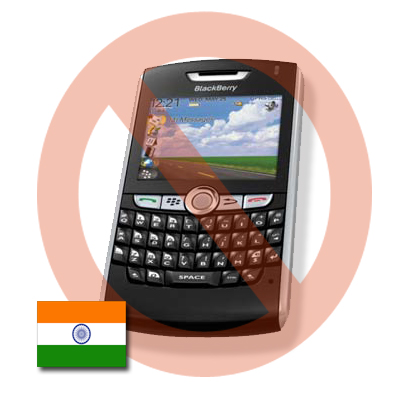
Research In Motion (RIM) has finally set up a server in Mumbai, acceding to requests by Indian government to access data on its BlackBerry enterprise servers, says report.
Citing a presentation made at the office of the Home Secretary, the Times of India reported Monday that the BlackBerry servers were inspected by a team of officers and permission to directly access the data for lawful interception was expected to be issued shortly.
The presentation also noted that the Department of Telecom has ordered Finnish phonemaker Nokia to set up a similar server in the country. In the past, RIM had been reluctant to allow India to monitor its enterprise servers. In 2010, the government even warned that it will ban BlackBerry service in the country if RIM does not loosen up on its security.
However, the threat was not carried out as the Canadian phonemaker presented various proposals to allow the government to monitor its users' communications, among one of the suggestions was to install a server in India.
The Times of India report noted that licensing conditions in India dictated that service providers need to have a mechanism to allow security agencies to intercept any conversation or message of any subscribers when required. India had been pressing RIM to do so as security agencies had pointed out that such closed platforms could be used by terrorist groups.
zdnetasia.com
The presentation also noted that the Department of Telecom has ordered Finnish phonemaker Nokia to set up a similar server in the country. In the past, RIM had been reluctant to allow India to monitor its enterprise servers. In 2010, the government even warned that it will ban BlackBerry service in the country if RIM does not loosen up on its security.
However, the threat was not carried out as the Canadian phonemaker presented various proposals to allow the government to monitor its users' communications, among one of the suggestions was to install a server in India.
The Times of India report noted that licensing conditions in India dictated that service providers need to have a mechanism to allow security agencies to intercept any conversation or message of any subscribers when required. India had been pressing RIM to do so as security agencies had pointed out that such closed platforms could be used by terrorist groups.
zdnetasia.com
Senin, 20 Februari 2012
Finland tops UNCTAD statistics on ICT

Finland leads the world in the share of its economy based on the production of goods and services related to information and communication technology (ICT), recent UNCTAD statistics show.
The statistics, released online indicate that ICT in Finland employs almost one tenth of the country's total non-agricultural business sector.
However, the ICT sector including the availability of statistics is still nascent in many developing economies.
Currently, the relevant UNCTAD database contains information on 57 economies. The lack of more comprehensive data can be seen as yet another illustration of the digital divide. In fact, none of the world's least developed countries (LDCs) reports statistics on the size of its ICT sector. UNCTAD's data are sourced principally from national statistical offices, which at the request of developing countries are supported by an UNCTAD technical assistance program to build domestic capacity for measuring ICTs.
Based on the latest available data, the proportion of ICT-sector employment in the total business sector of economies ranges from less than 2 percent in Azerbaijan, Croatia and Kazakhstan to more than 8 percent in Finland, Israel and Sweden. Such economic activity is significant. As documented in UNCTAD's Information Economy Report 2011, the ICT sector is playing a growing role in a number of developing countries. For example, in India, the contribution of the ICT sector to gross domestic product (GDP) rose from 3.4 percent in 2000/01 to 5.9 percent in 2007/08.
In Kenya, the sector has expanded annually by more than 20 percent over the past decade and accounted for a staggering 24 percent of Kenya's GDP growth during that period. The health of the ICT sector affects governments, companies, individuals, and society at large. It creates jobs, spurs innovation, and not least supports the sustained use of ICTs in domestic economies, which has the effect of making them more productive and efficient.
Recent research shows that a thriving ICT sector can make a major contribution to economic growth in low-income countries. Jobs in ICT have proved to be more productive than those in other sectors. In the countries of the Organisation for Economic Cooperation and Development (OECD), between 1995 and 2008, labour productivity grew faster in the ICT sector than in the rest of the business sector.
The data confirms that the ICT sector's contribution to domestic economies is typically higher in terms of value added than in terms of employment. However, the ICT sector employs relatively young people with above-average levels of education. Hence, it offers jobs that may provide upward mobility, job security, and future training opportunities.
sundayobserver.lk
Kamis, 09 Februari 2012
Dubai launches online direct debit for govt payments

Dubai eGovernment Department has launched a virtual account for making government payments online, in collaboration with Commercial Bank of Dubai (CBD). The service, called “Cash Online”, will be available to both CBD account holders and non-CBD account holders. Corporate and individual users are able to open a free virtual account following the submission of required official documents. The account is linked to Dubai eGovernment’s ePay portal such that payments for government services could be directly made from customer’s account with five of the major banks in United Arab Emirates. No minimum balance is required for the virtual account.
Ahmed Bin Humaidan, Director General of Dubai eGovernment, says that the government seeks “to ease the life of customers with Dubai government entities as much as possible”, and “to provide innovative electronic channels of easy access anywhere and at any time.”
Last year, the government ePay portal collected a total amount of AED3.3 billion (US$898 million) through credit card payments, and usage of direct debit services rose by 10 fold, from 54,538 transactions in 2010 to 522,815 transactions in 2011.
.futuregov.asia
.futuregov.asia
Jumat, 27 Januari 2012
E-gate provides service for voters

The official “e-gate” website with cooperation of Ministry of Interior have provided a service for voters to inquire about their information through registration number.
The service is put by Ministry of Interior, to offer the voter’s information, regarding the name and place of constituency headquarters, said head of the e-government in Central Agency for Information Technology (CAIT), Dr Ittihad Al-Bahar.
The service simplifies the voter’s usage of gathering information through entering their ID number or ministry of interior reference number, she added. Al-Bahar pointed out that the service aims to prepare the parliamentary elections that being held on the second of February to support the efforts of government and neutrality to the elections.
The CAIT is responsible of granting citizens services to strengthen the electoral and democratic process in Kuwait, she noted. Al-Bahar called for all voters to view the information services through the e-gate or ministry of interior website.
.kuwaittimes.net
Rabu, 25 Januari 2012
Public sector ICT in ASEAN: a tale of five cities

Part of this time was invested in recruiting journalists and researchers, to beef up FutureGov’s Country Intelligence Reports. This is an emerging area of focus for FutureGov as we look to distil the hundreds of conversations we have with senior officials in Asia Pacific in to monthly market assessments.
We now have specialists covering Indonesia, The Philippines, Thailand, Australia, New Zealand, Taiwan, Hong Kong, mainland China - and are about to put the last piece of the jigsaw puzzle in place with the recruitment of an analyst covering Malaysia.
This has helped us really increase our bandwidth to cooperate with governments in the region - an example of which is the work we’re now doing with the Department of Communications and Informatics, the State Ministry of Research & Technology, and the National ICT Council in Indonesia, as part of our fourth annual FutureGov event in Indonesia, as well as on their data centre consolidation plans in a number of agencies.
The work of Ministry of Finance, as well as the Immigration Department is particularly noteworthy - and underlines that the country’s highly decentralised bureaucracy is still capable of delivering major transformation programmes.
Despite progress on the recruitment front, the primary reason for my travels was simply to sit down and directly discuss the plans of senior officials. I’m lucky enough, after eight years with FutureGov, to have ended up with a role that satisfies my twin passions: coffee & curiosity. And as always, if you ask enough questions, patterns emerge.
I’ll be sharing more detailed assessments of individual agencies in the coming months in FutureGov’s country-by-country reports, but here’s a few observations from six weeks living out of a suitcase:
Politics is local, but… One of the reasons I’ve stayed in the region for the last 14 years is that I fell in love with the cultural diversity of Asia in general, and ASEAN in particular. So it follows that searching for commonalities between differing bureaucratic cultures would be a fool’s errand. And yet if you scratch the surface - the key countries of ASEAN are looking to create greater value from their interactions, through a mixture of information leverage and automation, with the emphasis on the former. The language of implementation reflects domestic political priorities - but what’s being done is essentially the same. Thailand may be focused on applying technology to education, flood prevention, and disaster management - whereas Indonesia is pushing ahead with consolidating government data centres and providing a common accounting platform for government. But look closer - Indonesia’s data centre consolidation is partially driven by a requirement to have disaster recovery centres established for all key agencies. Meanwhile Indonesia’s US$250 million move to a common accounting platform is intended to improve the productivity of central government spending in rural areas - which is the same driver as Thailand’s ambitious plans to overhaul education.
Central government is centralised, but… From the outside government looks so big, but it never feels that way when you’re inside the corridors of power looking out. It is hard to underestimate the tension between departments when they are called to collaborate - which explains why collaboration remains so infrequent. I asked a Director-General of one Finance department whether he’d compared notes with his counterparts from other agencies in government, as I knew that they were approaching the same issue from a different angle. His response was that he didn’t care what other departments were doing, didn’t care what the central IT agency had recommended, and was happy to build his own team to oversee the project with minimal inputs from elsewhere. The same approach can be seen, sadly, with the growing turf war between India’s Planning Commission and the Ministry of Home Affairs over the status of the Unique ID Authority’s Aadhar card.
CIOs have been appointed, but… There’s a big difference between someone who is nominally, as opposed to functionally, the CIO of the organisation. This has a huge impact on an agency’s ability to digest and contextualise its technology options. Those countries with a pan-government CIO have a more mature approach to ICT deployment. For now nominal CIOs with other ‘primary’ job responsibilities remain in the majority. It can be a challenge to keep these nominal CIOs engaged with longterm, technically demanding projects.
These observations will have to do for now, but if you’re looking for a bit more meat, then look out for the first of the Country Intelligence Reports I mentioned earlier - the countries we’ll be covering each month are: Malaysia, Indonesia, Vietnam, Thailand, Taiwan, and The Philippines. Watch this space (as well as the weekly newsletter) for further details.
futuregov.asia
Selasa, 24 Januari 2012
90 Percent of Passports to be e-Passports by 2016

Within five years 90 percent of passport holders will be using e-passports that integrate a smart card IC chip. This is one of the conclusions drawn from IMS Research's recent report “Electronic Government and Health Care ID Cards – World – 2011.” A rapid migration from paper or machine readable passports to smart card-based passports (complying with the ICAO standard for ePassports) started in 2007. This has led to nearly half of all passports now in use being e-passports.
“This trend is set to continue” stated the report author Alex Green. “There are still a few countries around the world that are not yet issuing e-passports. However, most have started and with the typical five to ten year replacement rates for passports, it is only a matter of time before all passports in circulation are e-passports.”
The report goes on to explore to what extent biometrics are being recorded on these e-passports. Interestingly, even for passports issued in 2010, in the majority of cases no biometric data is held on these secure ICs except for a digital image of the holders face. IMS Research forecast that this will change. “
By 2014, the situation is forecast to have been reversed” states Green. “By this time the majority of passports being issued will also include additional biometric data such a one or more finger print, iris scans, etc.”
The e-passport market is examined for 40 countries in IMS Research’s report “Electronic Government and Healthcare ID Cards – World – 2011.” Similar analysis is also provided for the national ID cards, healthcare cards, electronic driver’s licenses and a number of other government related card types.
thecuttingedgenews.com
“This trend is set to continue” stated the report author Alex Green. “There are still a few countries around the world that are not yet issuing e-passports. However, most have started and with the typical five to ten year replacement rates for passports, it is only a matter of time before all passports in circulation are e-passports.”
The report goes on to explore to what extent biometrics are being recorded on these e-passports. Interestingly, even for passports issued in 2010, in the majority of cases no biometric data is held on these secure ICs except for a digital image of the holders face. IMS Research forecast that this will change. “
By 2014, the situation is forecast to have been reversed” states Green. “By this time the majority of passports being issued will also include additional biometric data such a one or more finger print, iris scans, etc.”
The e-passport market is examined for 40 countries in IMS Research’s report “Electronic Government and Healthcare ID Cards – World – 2011.” Similar analysis is also provided for the national ID cards, healthcare cards, electronic driver’s licenses and a number of other government related card types.
thecuttingedgenews.com
Jumat, 20 Januari 2012
Are ‘Cloud Hubs’ the Way of the Future?
 |
| greenfudge.org |
The pressure of moving government applications into a cloud-computing environment is rapidly building as government agencies look to cut IT costs. According to a new report, the concept of “regional community cloud hubs” among government entities will greatly change the way state and local government procure cloud services.
The report, Best Practices: Regional Community Cloud Hubs — The New “Trickle Down” Effect That’s Boosting State and Local Computing by IDC Government Insights defines regional community cloud hubs as one government agency — most likely at the state level — that could serve as a host facility and offer cloud-computing services to other government agencies (most likely local governments), which can then be shared.
The report, Best Practices: Regional Community Cloud Hubs — The New “Trickle Down” Effect That’s Boosting State and Local Computing by IDC Government Insights defines regional community cloud hubs as one government agency — most likely at the state level — that could serve as a host facility and offer cloud-computing services to other government agencies (most likely local governments), which can then be shared.
The host facility could then gain revenue by selling the cloud services to other government agencies, which in turn would help the host facility gain revenue to offset their own IT costs, according to the report. If local governments buy the cloud services from the host facility instead of looking for cloud services on their own, the cloud services could be purchased at a lower cost. Shawn McCarthy, an IDC Government Insights research analyst, said the concept of the cloud hub has already started to be used in states like Michigan and Utah and have been deemed successful. “They’re dipping their toe in the water saying, this is the way we want to start offering these things,” McCarthy said.
“The smaller governments seem interested because it allows them to get out of the infrastructure business, which can be very capital intensive and very maintenance intensive, so where we are is a toe over the starting line.”
McCarthy said for Utah’s case, the state began segmenting data storage for local government end users. By offering the data storage, some local governments showed interest in tapping into the available storage space. Eventually the state offered to host a server, which triggered more local governments to want to connect into the “hub.” Local governments are interested in moving systems such as applications used to manage its human resources information to the cloud because updating an existing system may cost more, McCarthy said. As the market for cloud computing evolves, local governments may want to look to see if other entities, particular surrounding ones, have a human resources application both entities can share through the cloud.
But providing the cloud doesn’t have to be the responsibility of the state governments. Through the regional community cloud hubs, vendors can play an important role in providing cloud space. McCarthy said state governments (the host facilities) could make agreements with cloud providers for cloud storage, offer the same services to local governments who want to join the hub, and negotiate costs down.
Because there are different types of private clouds, state governments that act as the hosting facilities could either host the private cloud with or without the use of a cloud vendor, McCarthy said. Although the concept of a regional community cloud hub is not quite a trend yet, McCarthy expects state and local governments to start adopting the practice within the next couple of years.
http://www.govtech.com/e-government/Are-Cloud-Hubs-the-Way-of-the-Future.html
Senin, 16 Januari 2012
Australia announces location-based emergency management system

Australia’s Federal Minister for Emergency Management, Robert McClelland, and Acting Victorian Premier Peter Ryan have unveiled an ambitious new revamp of the country’s national Emergency Alert telephone warning system. This revamp incorporates a “world-first” mobile emergency alert service, to be fully operational by November 2012, while tapping into carrier-class mobile communications networks.
The location-based mobile emergency alert service will send warnings to mobile phones that are physically in an emergency zone when a disaster strikes. Australia’s emergency warnings are currently limited to using a residential address associated with individual subscribers, as a result relying on outdated emergency notifications like radio warnings.
The upgraded mobile emergency alert will use location-based mobile communications services to send anywhere, anytime warnings directly to mobile phones using SMS. Minister McClelland says Victoria will lead the way by developing technology for a national location-based telephone emergency warning system. Acting Victorian Premier Peter Ryan says this new technology has no national or international precedent. The mobile emergency alert service, when fully operational, will subscribe to mobile communications networks through carrier arrangements.
This emergency alert upgrade adds another layer of safety to existing warnings across cities, towns and regional areas. This location-based warning system will use SMS as one feature of Australia’s emergency management services, enabling affected communities to get alerts in real-time, regardless of their location.
The new service will be complemented by traditional radio and emergency services website updates. In December last year, McClelland canvassed community feedback on its emergency messaging systems, including a Common Alerting Protocol.
This protocol would enable emergency messages to be sent out simultaneously over different warning systems including radio, television, smartphones, email and social media. Minister McClelland also launched a DisasterWatch app for iPhone and Android smartphones last year.
DisasterWatch offers communities up-to-the-minute public information about disaster via direct feeds from official state, territory and national sources. This week’s Commonwealth and Victorian Government mobile communications initiative comes in the wake of the Victorian bushfires in late 2009. More than 173 people died during these bushfires, leading to a Victorian Bushfire Royal Commission inquiry.
This inquiry recommended streamlining Australia’s emergency alert capabilities, while reaching out more quickly to widely dispersed communities. Telstra has been awarded a contract for the latest Commonwealth and Victorian government emergency alert upgrade – with negotiations underway with other carriers.
.futuregov.asia
Jumat, 13 Januari 2012
UK “Behind Europe” In 3-D Mapping

The UK is falling behind the leading European nations in implementing a national 3-D mapping framework, a leading practitioner has told E-Government Bulletin.
Carsten Rönsdorf, corporate data manager at the UK’s national mapping agency Ordnance Survey, told E-Government Bulletin the UK is “quite a bit behind” several other European countries and parts of the rest of the world including the Middle East, Asia and the US, in creating a national framework using the “CityGML” standard.
CityGML was developed by the International Open Geospatial Consortium, building on its two-dimensional GML (Geography Markup Language) standard. It has applications in a wide range of areas from tourism to urban planning, city management, environmental protection, training and real estate management.
However use of CityGML in 3-D mapping in the UK to date has been fragmented, Rönsdorf said. A number of projects have successfully created 3-D citymodels which are not based on CityGML such as the Glasgow Urban Model regeneration project, a 3-D representation of the city centre and River Clyde corridor, or the “Virtual London” project of the Bartlett Centre for Advanced Spatial Analysis at UCL.
But “there is a danger that authorities spent a lot of money on a project that serves one particular purpose, and end up with results that are not sustainable – these one-off models often don’t play with some of the other resources they have”, Rönsdorf said.
In contrast, almost every German city has a CityGML model; and the national mapping agencies in France and the Netherlands are working on projects, he said. For Great Britain, his own organisation Ordnance Survey could create a national framework independent of area, allowing other public or private bodies to add in local detail as it developed, he said. Such activity was likely to come initially from the business districts of larger cities: “there might be more money to create nicer looking models for central London, for example.”
CityGML was developed by the International Open Geospatial Consortium, building on its two-dimensional GML (Geography Markup Language) standard. It has applications in a wide range of areas from tourism to urban planning, city management, environmental protection, training and real estate management.
However use of CityGML in 3-D mapping in the UK to date has been fragmented, Rönsdorf said. A number of projects have successfully created 3-D citymodels which are not based on CityGML such as the Glasgow Urban Model regeneration project, a 3-D representation of the city centre and River Clyde corridor, or the “Virtual London” project of the Bartlett Centre for Advanced Spatial Analysis at UCL.
But “there is a danger that authorities spent a lot of money on a project that serves one particular purpose, and end up with results that are not sustainable – these one-off models often don’t play with some of the other resources they have”, Rönsdorf said.
In contrast, almost every German city has a CityGML model; and the national mapping agencies in France and the Netherlands are working on projects, he said. For Great Britain, his own organisation Ordnance Survey could create a national framework independent of area, allowing other public or private bodies to add in local detail as it developed, he said. Such activity was likely to come initially from the business districts of larger cities: “there might be more money to create nicer looking models for central London, for example.”
The OGC is an international consortium of more than 430 companies, government agencies, research bodies and universities to develop publicly available standards to “geo-enable” the web and wireless services. The consortium’s communications director Steven Ramage said many UK local authorities are already using at least some of the 33 OGC open standards for tasks such as web mapping, though CityGML is a newer standard.
“Glasgow is quite far ahead, but there are other areas where people are using 3-D information for things like planning purposes, noise mapping and 3-D city modelling, looking at things like trees, geological sub-surfaces, building information modelling.
There are lots of potential environmental applications.” Last year the consortium created a category of membership for local and regional government, GovFuture, offering bodies access to best practice materials and resources, Ramage said. “I’m hoping as open data, open source, open government all develops [that UK public sector bodies] understand the need for open standards.”
NOTE: Article originally published in E-Government Bulletin issue 344.
Langganan:
Postingan (Atom)